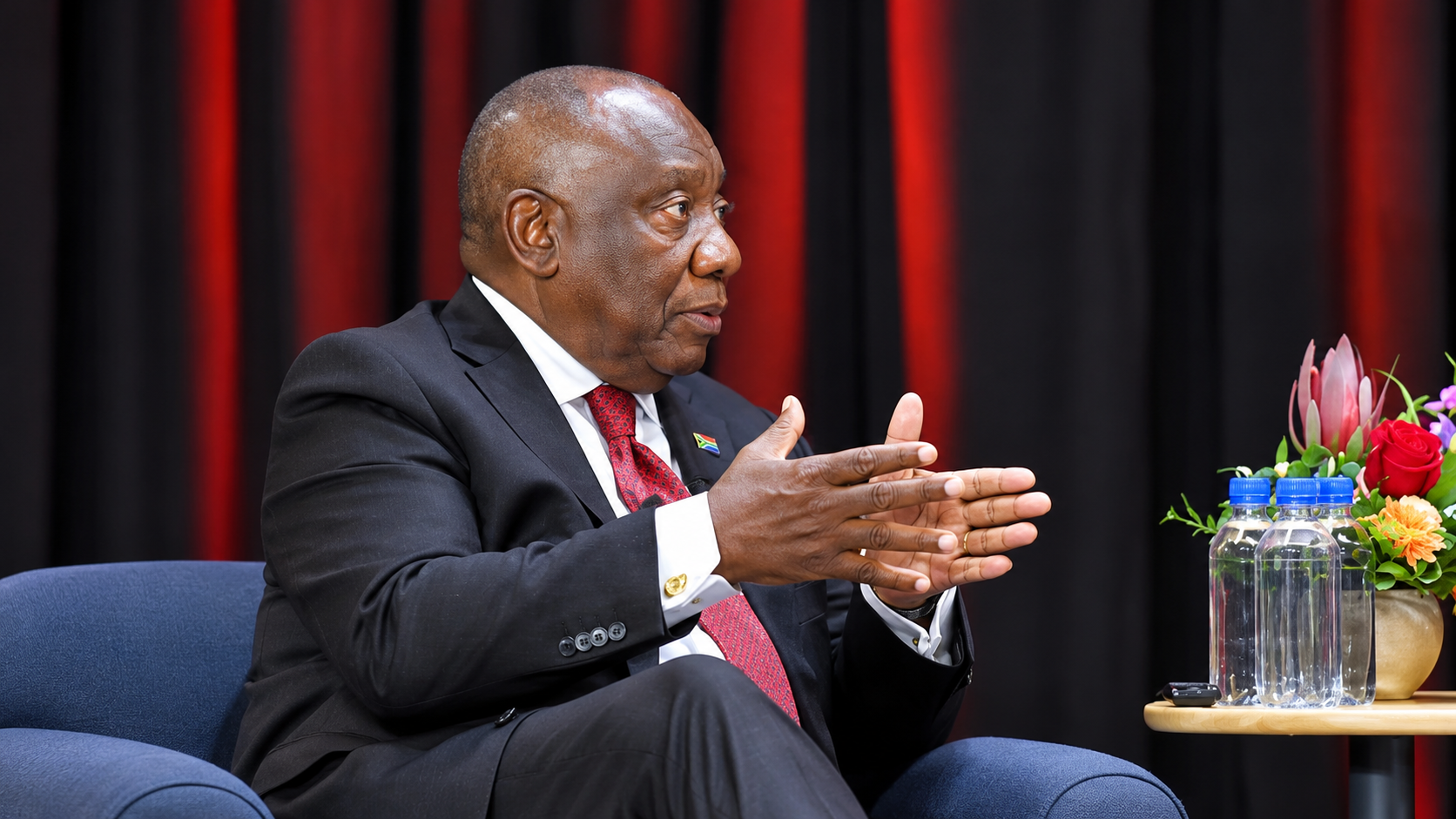
Barely a week after President Cyril Ramaphosa led the largest overseas delegation of his presidency to Silicon Valley in the United States, parliamentary scrutiny is turning towards what ordinary South Africans stand to gain from the expedition.
Select Committee on Economic Development and Trade chairperson Sonja Boshoff has warned that international trade missions, policy blueprints and investment announcements cannot substitute for tangible economic outcomes.
Of particular interest to Boshoff is the proposed R100-million artificial intelligence (AI) venture capital fund announced during the trip, which is intended to help South African entrepreneurs develop commercially viable technologies.
“While this proposed funding is encouraging, it is equally important to establish how accessible it will be to South African SMMEs [small, medium and micro enterprises] and whether it will enable them to develop, commercialise and scale their innovations,” said Boshoff.
From Silicon Valley to struggling municipalities
Ramaphosa’s delegation of about 300 people, which included eight cabinet ministers, government officials, captains of industry, academics and students, descended on California between November 15 and 21.
READ MORE: WATCH | Ramaphosa heads to Silicon Valley to unlock AI opportunities for SA
However, Boshoff cautioned that South African businesses remained crippled by domestic challenges that could undermine the country’s ambitions of becoming a competitive player in the global AI economy.
These include escalating electricity costs, deteriorating municipal infrastructure, logistics bottlenecks, bureaucratic red tape and policy uncertainty.
“These structural impediments undermine investment, productivity and international competitiveness, irrespective of how many alternative export markets we secure,” she said.
Boshoff said South Africa could not afford to become a mere consumer of technologies developed elsewhere while neglecting its own industrial and manufacturing capabilities.
She intends to propose that the Department of Trade, Industry and Competition appear before the committee to explain its plans to strengthen domestic AI capabilities, protect existing jobs and create new employment opportunities.
Presidential promises and the price tag
Ramaphosa previously defended the size of his entourage, telling journalists that sponsorships and participating companies would shoulder much of the expenditure.
READ MORE: South Africa seeks greater role in global AI industry, says President Ramaphosa
However, the full cost to the public purse and the breakdown of corporate sponsorships have yet to be established.
Speaking at the conclusion of the mission on November 20, Ramaphosa announced that a national AI action plan would be developed within 90 days, with key interventions expected to feature in his February 2027 State of the Nation Address.
The president also acknowledged the danger of returning home with ambitious ideas that never translate into practical results.
Boshoff, meanwhile, wants the government’s industrial policies subjected to greater scrutiny, arguing that their success should not be measured by the volume of strategies, agreements or overseas missions undertaken.
“Industrial policy must anticipate economic disruption rather than merely respond to its consequences,” she said.
The proposed parliamentary briefing could provide an opportunity for lawmakers to establish how the government intends to turn the Silicon Valley engagements into measurable economic benefits for South Africans.
Subscribe To Our Newsletter or get the news delivered to your phone via our WhatsApp Channel.
- President Cyril Ramaphosa led a delegation of about 300 people, including ministers and industry leaders, to Silicon Valley from November 15 to 21 to explore AI opportunities for South Africa.
- A proposed R100-million AI venture capital fund was announced during the trip to help South African entrepreneurs develop commercially viable technologies.
- Select Committee chairperson Sonja Boshoff emphasized the need for the fund to be accessible to South African SMMEs and to enable scaling of innovations.
- Boshoff highlighted domestic challenges such as electricity costs, infrastructure issues, logistics, bureaucracy, and policy uncertainty as barriers to South Africa's AI competitiveness.
- Ramaphosa announced a national AI action plan to be developed within 90 days, with key interventions planned for the February 2027 State of the Nation Address.