


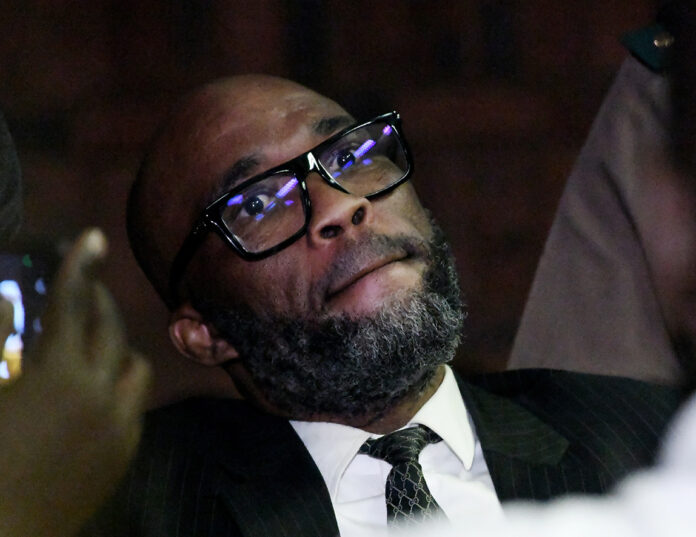
Vusimuzi “Cat” Matlala’s refusal to answer questions at the Madlanga Commission raised a basic legal question. When a commission demands answers, does a witness have the right to remain silent?
The short answer is yes, but with important limits.
A commission of inquiry has wide powers. It can summon witnesses, put them under oath, demand documents and require people to answer questions. But a commission is not above the Constitution.
Privilege against self-incrimination
The legal principle behind Matlala’s refusal is known as the privilege against self-incrimination. It protects a person from being forced to provide information that could later be used to expose them to criminal liability.
In simple terms, the law does not allow the state to force someone to help build a criminal case against themselves.
In South Africa, this protection is found in section 35 of the Constitution, which protects the rights of arrested, detained and accused persons.
The principle is built around three ideas.
The first is the right to silence. A person cannot be forced to make admissions or provide answers that may later be used against them in a criminal trial.
The second is the presumption of innocence. The state carries the responsibility of proving guilt beyond reasonable doubt. An accused person does not have to assist prosecutors by explaining why they should not be convicted.
The third is the right to a fair trial. A person facing criminal charges must be allowed to prepare their defence without being forced to reveal their version of events before the trial begins.
In a criminal court, the position is clear. An accused person cannot be forced to testify. They can choose to remain silent.
Commission’s powers must be within constitutional boundaries
The more complicated question is what happens when the questioning takes place at a commission of inquiry.
Unlike a criminal court, a commission does not determine guilt. It does not convict people or impose sentences. Its purpose is to investigate issues of public importance and make findings or recommendations.
Because of this, commissions are given strong powers.
The rules of the Madlanga Commission allow it to summon witnesses and require them to answer lawful questions. But the key word here is “lawful”.
Those powers must still operate within constitutional boundaries.
The Constitutional Court made this clear during litigation involving the State Capture Inquiry. A commission’s investigative powers are broad, but they cannot override constitutional protections.
This is particularly important in Matlala’s case because he is not appearing before the commission as someone facing only allegations.
He has already been charged in connection with an alleged R228 million SAPS tender involving Medicare24.
READ: Matlala’s meeting Nhlanhla Mkhwanazi focused on Medicare24 tender, arrest warrant
His concern is that answering questions about those issues could expose him to further criminal consequences.
The danger is not only that his exact answers could later be presented in court. Evidence given under compulsion at an inquiry generally cannot simply be used against a witness in a criminal trial.
The concern is broader.
Forced answers can provide investigators with information they did not previously have. A witness may reveal where documents can be found, identify other people involved or point investigators towards new evidence.
In legal terms, this is sometimes referred to as derivative use. Even if the original answer cannot be used directly, it may help the state build another part of its case.
That is why the protection against self-incrimination exists.
Privilege not free licence to avoid questions
However, the privilege is not a licence for a witness to avoid every difficult question. A person cannot refuse to answer simply because the question is embarrassing, politically damaging or uncomfortable. The refusal must be connected to a genuine risk of criminal exposure.
The commission can test whether the privilege has been properly claimed. The witness may have to explain why a particular question could place them at risk. The refusal must also be considered question by question.
A person facing criminal charges cannot automatically refuse every question on every subject. The connection between the question and the possible criminal risk must be established.
So what options does Justice Mbuyiseli Madlanga have?
He cannot simply order Matlala to answer questions that may violate his constitutional rights. But he can ensure that the privilege is not abused. He can require Matlala to follow the commission’s procedures, explain objections where necessary and answer questions that fall outside the scope of possible self-incrimination.
This is the difficult balance facing commissions of inquiry. The public has a legitimate interest in getting answers, particularly when allegations involve public money, law enforcement and state institutions. But accountability cannot come at the cost of removing basic legal protections.
The privilege against self-incrimination does not determine whether a person is guilty or innocent. It simply protects a fundamental principle of justice that the state must prove its case without forcing a person to become a witness against themselves.
- Vusimuzi “Cat” Matlala invoked the privilege against self-incrimination by refusing to answer questions at the Madlanga Commission due to concerns about criminal liability.
- The privilege against self-incrimination in South Africa is protected under section 35 of the Constitution, ensuring the right to silence, presumption of innocence, and right to a fair trial.
- Commissions of inquiry, like the Madlanga Commission, have wide powers to summon witnesses and require answers but must operate within constitutional boundaries.
- Evidence and answers forced under compulsion at inquiries generally cannot be directly used in criminal trials but may lead to derivative evidence against a witness.
- The privilege against self-incrimination requires a genuine risk of criminal exposure to refuse answering; refusal must be justified and considered question by question by the commission.


