


In the northern suburbs of Cape Town, a seemingly ordinary street probably conceals a criminal economy where trafficked women are being held through intimidation, debt and drug dependency. Many women who arrived believing they had secured legitimate jobs instead found themselves trapped in brothels after being recruited through informal “pop-up” employment agencies.
These are the findings of the ninth edition of the Western Cape Gang Monitor by the Global Initiative Against Transnational Organised Crime, released recently.
The report alleges that women are first supplied with heroin and tik on credit before being forced into sex work to repay debts they can never repay.
“They give them the drugs on book,” a survivor, who is under police protection, told researchers. At least 25 women have been rescued from a trafficking network in recent months. Most of them were recruited from KwaZulu-Natal and Gauteng, with promises of work. Those who were paid earned about R1 500 a month.
“For Cape Town’s suburban sex trade, particularly in areas such as Rugby, Brooklyn, Tijgerhof, Landsdowne and Wynberg, Nigerian trafficking syndicates are generally responsible for recruiting and grooming victims from outside the province and neighbouring countries,” the report states.
“One of their methods is to target women with informal ‘pop-up’ employment agencies that obscure coercion, deception and exploitative labour practices behind promises of legitimate work.”
The report alleges that organised crime groups have also built a lucrative property network to support the trade. A property owner with alleged links to the 28s gang is said to control 48 properties across Cape Town.
“Ratepayers’ associations in several Cape Town suburbs, including Milnerton, Brooklyn, Rugby and Tijgerhof, have expressed concerns about the systematic purchase of properties for use as brothels. In some cases, private owners rent out their premises to gangs; in others, gang bosses own the properties and sublet them to Nigerian sex-trafficking networks.”
A sex worker described the conditions inside the brothels as inescapable. “The environment is brutal for women,” she told investigators. “If you are in with a pimp or a handler, it is very difficult to leave.”
The report alleges that the 28s gang, under a leader known only as “Anwar”, controls much of the trade in Brooklyn by collecting payments from brothels, supplying drugs and taxing those working there.
A gang member quoted in the report said everyone involved was expected to pay: “The girls and the pimps as well.”
The report says gang members described the trade as a significant source of income.
Interviewees also suggest that the gang supplies the brothels with mandrax (methaqualone) and tik, which are then sold to both clients and the women working there.
Beyond the suburban brothels, the report identifies Hout Bay Harbour as a key entry point for transnational organised crime. It describes the harbour as “a critical logistics node within the Western Cape’s criminal economy”, linking local gangs to international trafficking networks.
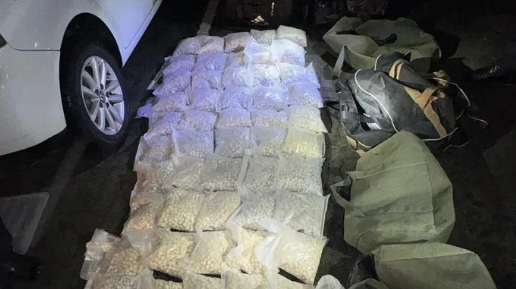
Researchers say cocaine and poached marine wildlife enter through the harbour before being stored and distributed through nearby Hangberg.
“In Hangberg, a community adjacent to the harbour, illicit markets for firearms, drugs and poached marine wildlife converge in a highly integrated system of organised crime. Central to these operations is the Terrible Josters,” the report states.
“The gang holds a near-monopoly over criminal markets in Hangberg, operating alongside affiliated criminal entrepreneurs with links to international trafficking syndicates.
“Together, these groups are shaping broader gang dynamics in the Western Cape, contributing to shifts in drug markets – particularly rising cocaine sales – and fuelling cycles of violence across the province.”
Gang intimidation has hindered efforts to enhance security at the harbour.
“By controlling illicit markets and logistical infrastructure, including the harbour and internal distribution networks, the gang and its affiliates have established themselves as a parallel authority that operates largely beyond the reach of the state,” the report states.
Hout Bay ward councillor Rob Quintas said it was difficult to determine whether the report’s findings were accurate without independent data for comparison. “However, from my experience and information received from community members over time, I would say that I believe it to be fairly reliable,” he said.
“The alleged deep entrenchment of gangsters, poachers, drug dealers and gunrunners, which are all intertwined as cartel-type operations, is a challenge to overcome. People feel they know those involved, and due to relationships as family, friends or neighbours, are unwilling to come forward.
“Also, there is very obvious fear about coming forward with information, as witnesses will be at risk of retribution from sinister forces deeply embedded in the community.”
Quintas said the investigation of organised crime was the responsibility of police and crime intelligence but the city was pushing for the devolution of policing powers.
The Western Cape police referred Sunday World’s questions to the Hawks.
Responding to Sunday World’s enquiry, the Hawks could only confirm that in the trafficking case “they are busy with covert operations, and we are at no liberty to share much”. On the Hout Bay matter, they also told this publication that due to the sensitive nature of the case, they will not be commenting.
- Northern Cape Town suburbs may hide a criminal network exploiting trafficked women.
- Women are held captive through intimidation, debt bondage, and drug dependency.
- Many victims were misled by fake job offers from informal "pop-up" employment agencies.
- These women often end up trapped in brothels rather than legitimate employment.
- Full details of the story are available by purchasing the Sunday World e-edition.


