


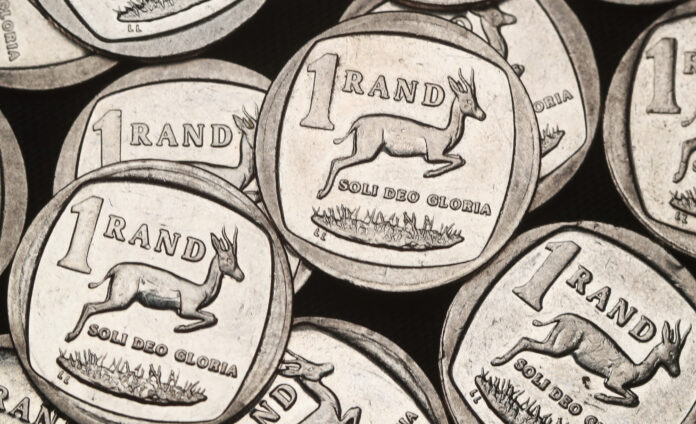
The South African rand gained in early Thursday trade as the U.S. dollar wavered, while renewed strikes by Iran and the United States and higher oil prices kept broader risk appetite subdued ahead of key domestic data.
• At 0645 GMT, the rand traded at 16.5375 against the US dollar, up 0.2% from its previous close.
• The US and Iran traded air attacks for a second successive day, with President Donald Trump vowing further strikes if Tehran does not immediately agree to a peace deal.
• The greenback eased slightly against a basket of currencies, and oil prices jumped after Tehran declared the Strait of Hormuz closed following the US strikes on Iran.
• “Not even the overnight geopolitical developments were enough to erode sentiment towards the rand, leaving it trading within its recent three-day range,” ETM Analytics said in a research note.
• Like other risk-sensitive currencies, the rand has been driven largely by global market sentiment, particularly since the start of the US-Israeli war on Iran.
• The South African Reserve Bank will publish first-quarter current account data at 0900 GMT.
• Statistics South Africa will then release April mining output at 0930 GMT and manufacturing production data at 1100 GMT.
• South Africa’s benchmark 2035 government bond was slightly weaker in early deals, as the yield rose 1 basis point to 8.645%.
- The South African rand rose 0.2% to 16.5375 against the US dollar amid a weakening greenback and subdued risk appetite due to US-Iran tensions and higher oil prices.
- The US and Iran exchanged air attacks for the second day, with President Trump threatening further strikes unless Iran agrees to a peace deal.
- Oil prices spiked after Iran declared the Strait of Hormuz closed following US strikes, impacting global market sentiment.
- Despite geopolitical risks, the rand remained stable within its recent range, driven largely by global risk sentiment amid the US-Israeli-Iran conflict.
- Key South African economic data releases are due: first-quarter current account, April mining output, and manufacturing production, occurring shortly after market open.


