


President Cyril Ramaphosa might have delivered one of his most important economic speeches in years at this week’s 9th Southern African Customs Union (Sacu) Summit. Not because he announced a bold new policy. Not because he unveiled another economic recovery plan. But because he finally articulated a simple truth that South Africa has spent far too long avoiding.
In his opening address, the president said: “Shared infrastructure requires shared investment.”
He went further: “We must attract private investment by creating conditions in our region that are conducive to both international and domestic investment.”
These are not ordinary political remarks. They represent an important acknowledgement of how economies actually grow.
Governments do not create prosperity; they create the conditions in which prosperity becomes possible.
Investment drives growth. Growth creates jobs. Jobs create opportunity.
On this point, the president is right. The question is why South Africa has taken so long to embrace the reality.
For much of the past 15 years, South Africa has struggled to generate meaningful economic growth. While many emerging economies and several of our neighbours have expanded, our economy has largely stagnated. Growth has remained weak, unemployment among the highest in the world and investor confidence fragile.
The problem has never been a shortage of plans. It has been a shortage of execution.
The president spoke about investment, industrialisation, export promotion, logistics, regional cooperation and competitiveness.
He spoke about creating the right conditions for both domestic and international investment.
These are precisely the ingredients required to build a growing economy. But investors do not make decisions based on speeches. They make decisions based on what they experience.
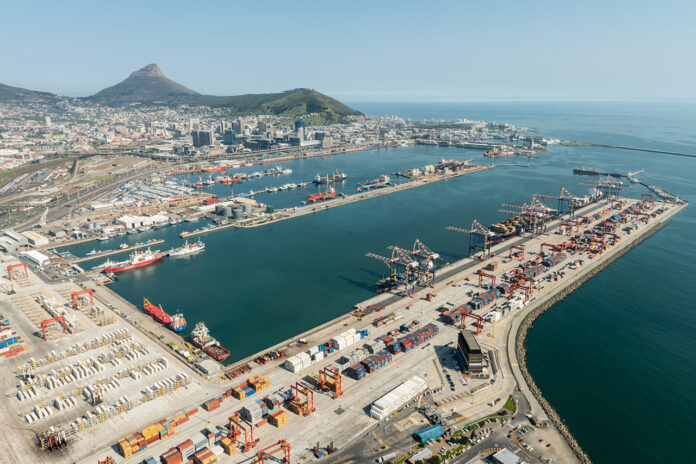
Do they see reliable electricity? Do they see efficient ports and freight rail? Do they see municipalities that function? Do they see competent public administration? Do they see policy certainty? Do they see accountability when government fails?
Too often, the answer is no.
Johannesburg stands as the clearest reminder of the gap between aspiration and reality.
Africa’s economic powerhouse is battling deteriorating infrastructure, unreliable service delivery, decaying public spaces and failing municipal governance.
This is not simply a local government crisis. It is an economic crisis. Every power interruption, every delayed freight train, every congested port and every broken traffic light increases the cost of doing business in South Africa.
Capital notices. Investors always have choices. They can invest in South Africa or they can invest almost anywhere else in the world.
Capital is mobile. It flows to countries where governments create certainty, protect investment, maintain infrastructure and deliver reliable public services.
South Africa is not competing in isolation. Every day we compete with dozens of economies for investment, skills and business confidence.
South Africa must earn that capital. Government cannot compel investment; it can only earn it.
That means creating confidence through competent institutions, reliable infrastructure, policy certainty, the rule of law and consistent delivery.
The president deserves credit for recognising that private investment must play a central role in South Africa’s future. That is the correct diagnosis.
But diagnosis without treatment changes nothing. South Africans do not need another strategy document. They do not need another investment conference. They do not need another set of ambitious targets.
They need municipalities that work. Reliable electricity. Efficient ports and rail. Safe, well-managed cities. Professional public administration. And above all, accountability.
People who fail in public office must be held responsible. Institutions that underperform must be fixed. Service delivery must become the measure of success, not the number of plans produced or speeches delivered.
South Africa has never lacked ideas; it has lacked execution. The president has finally acknowledged what drives economic growth.
Now his government must demonstrate that it has the resolve to deliver it. Not with another speech but with visible action, measurable reform and accountable leadership. If South Africa creates an environment where investment is welcomed, infrastructure functions and institutions are trusted, growth will follow. And with growth will come jobs, opportunity and renewed confidence.
The challenge is no longer knowing what needs to be done. The challenge is finally doing it.
Van Doesburgh is an economist, head of economics at CPUT and a regular commentator on SA’s economic landscape, focusing on financial markets, policy and business strategy. vandoesburghm@cput.ac.za
- President Cyril Ramaphosa emphasized at the 9th Southern African Customs Union Summit that shared infrastructure requires shared investment and stressed the need to attract both international and domestic private investment to foster economic growth.
- South Africa's economic stagnation over the past 15 years is attributed not to a lack of plans but to poor execution, particularly in infrastructure, public administration, and policy certainty.
- Reliable infrastructure and effective municipal governance are critical for creating an investment-friendly environment, yet issues like power interruptions, inefficient ports, and failing city services increase business costs and deter investors.
- The government must focus on transforming aspiration into reality by ensuring accountability, fixing underperforming institutions, and delivering consistent service rather than producing more strategies or speeches.
- Economic growth hinges on creating conditions for investment through competent institutions, reliable infrastructure, and policy certainty, with the urgent need for visible action and reform to restore investor confidence, create jobs, and build opportunity.


