


Much has been said and written about the state of youth unemployment in South Africa, which stands at 60.9% for those aged between 15 and 24, followed by those aged between 25 and 34 at 40.6%. According to the Quarterly Labour Force Survey for the first three months of 2026, “young people are more likely to be unemployed and less likely to be employed relative to their share of the working-age population”.
Furthermore, young people continue to be at a disadvantage because their unemployment rate is much greater than that of adults, and their absorption and participation rates are still lower. These statistics present a grim outlook for young individuals striving to improve their lives and sustain themselves.
However, amid the bleak prospects and the general negative sentiment, there are young people who are pushing boundaries and unlocking economic opportunities through entrepreneurship. Townships and rural economies, estimated to be worth around R900-billion, are primarily informal and serve as a lifeline for many marginalised people by offering opportunities for job creation, income generation, and poverty reduction. Many of these youth-run businesses start off as small establishments created out of desperate circumstances.
As Youth Month draws to a close, Sunday World spoke to three young entrepreneurs who are proving that success is not always defined by age, background or circumstances but by determination, resilience and a willingness to start.
The business of beauty
Amanda Zulu, the founder of Amaya Beauty, founded her business out of a passion for beauty and a desire to help people feel confident in themselves.
“I’ve always had a passion for beauty and making people feel good about themselves. Last year, I decided to stop waiting for the perfect moment and start with what I had,” she says.
Zulu transformed her garage into a beauty bar and launched Amaya Beauty, which also sells organic skin and hair products designed to promote healthy self-care.
Like many entrepreneurs, her journey has not been without challenges.
“My biggest challenge has been building a business from the ground up while trying to grow my client base and brand awareness. Learning to stay patient and trust the process has been important for me.”
The experience has taught her that success requires consistency and perseverance.
“Entrepreneurship has taught me that growth takes time. We often see successful businesses and think they happened overnight, but behind every success story is a lot of hard work.”
Her advice to aspiring entrepreneurs is simple: “Start where you are with what you have. Believe in your vision, stay consistent and don’t be afraid to learn along the way.”
Farming for opportunities in agriculture
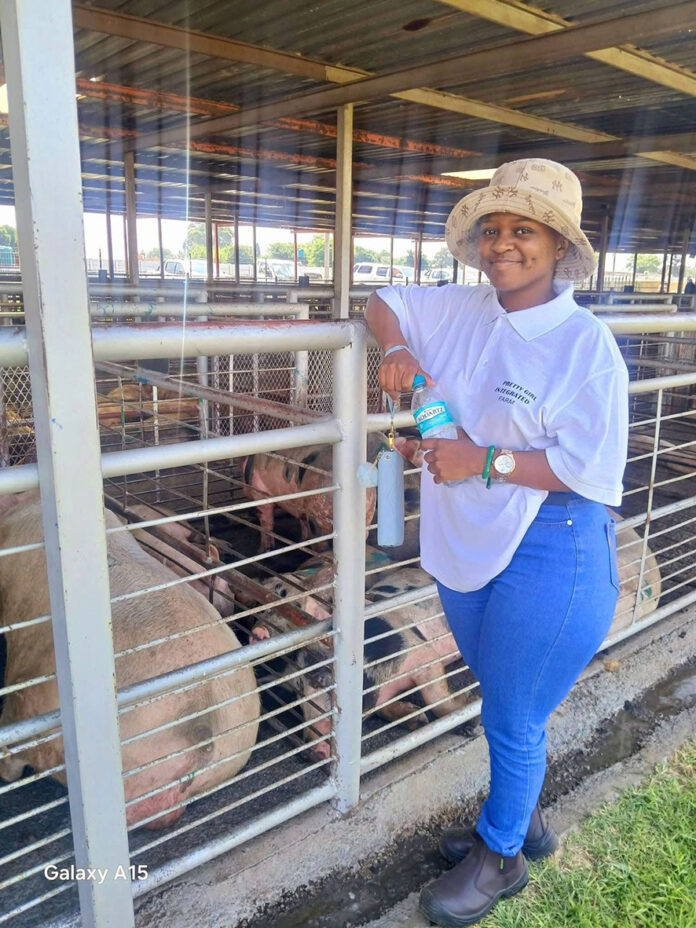
Nokwanda Prettygirl Msomi, founder and managing director of Prettygirl Integrated Farm in Delmas, Mpumalanga, turned her love for agriculture and livestock into a growing business.
“I saw opportunities in farming and wanted to turn what started as small informal trading into a structured business that could grow and sustain itself,” she told Sunday World.
Msomi explained that limited funding and inadequate infrastructure were among the biggest hurdles she faced when starting out.
“Starting small meant I had to rely heavily on reinvesting profits and learning through experience.”
She says entrepreneurialism has taught her patience, consistency, and discipline.
More important for Msomi was the realisation that sustainable growth takes time and that every setback is part of building something stronger and lasting.
Rather than allowing challenges to discourage her, Msomi says she remains focused on her long-term vision.
“I analyse what went wrong, adjust my approach and keep going. Giving up is never an option for me.”
She believes entrepreneurship is a powerful tool for tackling youth unemployment.
“It creates opportunities where jobs are limited. It allows young people to become self-reliant, create employment for others and contribute to the economy.”
Msomi encourages young people to explore sectors such as agriculture, digital businesses and skill-based industries.
Her advice is simple: “Start where you are with what you have. Don’t wait for perfect conditions. Be consistent, stay disciplined and be willing to learn from mistakes.”
She says her proudest achievement has been transforming a small informal livestock trading venture into a registered and growing agricultural business.
“You should never underestimate small beginnings. Seeing how far I’ve come reminds me that every step forward counts.”
For Msomi, Youth Month celebrates the courage of young South Africans while reminding today’s generation to build a better future.
“Believe in yourself and start. With consistency, discipline and determination, you can build something meaningful.”
Becoming job creators
Mhlonishwa Winston Kunene, founder and group CEO of Libertalia Group, was inspired to build a business that creates generational wealth through real estate while opening doors for others.
“I wanted to build a business that not only sold properties but also educated, empowered and created opportunities for young South Africans,” he says.
Kunene says one of the biggest hurdles he faced was accessing capital and earning credibility as a young entrepreneur.
“Many young entrepreneurs have great ideas but struggle to secure funding or convince others to believe in their vision.”
Despite these challenges, entrepreneurship has taught him that consistency matters more than motivation.
“There are no shortcuts. Every setback and every difficult decision prepares you to lead at a higher level.”
He approaches setbacks as opportunities for growth rather than failure.
“Every challenge presents an opportunity to improve a system, refine a strategy or become a better leader.”
Kunene believes entrepreneurship is critical to addressing South Africa’s unemployment crisis.
“South Africa cannot rely on job seekers alone; we also need job creators. Entrepreneurship allows young people to solve problems, create employment and contribute meaningfully to the economy.”
His advice to aspiring entrepreneurs is to take action.
“Start before you feel ready. Don’t wait for perfect conditions because they rarely exist.”
Among his proudest achievements is creating opportunities for others through Libertalia Group and the South African Youth in Property Association.
- Youth unemployment in South Africa is critically high, with a rate of 60.9% for those aged 15 to 24.
- The unemployment rate for young adults aged 25 to 34 stands at 40.6%.
- The Quarterly Labour Force Survey (Q1 2026) highlights that young people are disproportionately unemployed compared to their share of the working-age population.
- Young individuals are less likely to be employed than other age groups in South Africa.
- The article emphasizes the ongoing challenge of youth unemployment without providing solutions in this excerpt.


