


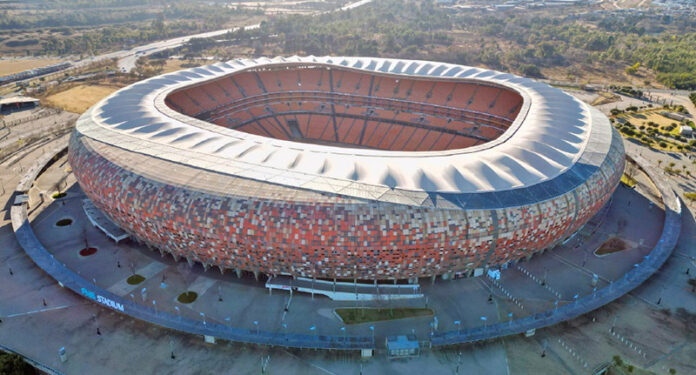
Stadium Management South Africa (SMSA), hospitality group SAIL Consulting, and the South African Rugby Union (Saru) stand accused of forcing suiteholders at FNB Stadium out of the lucrative Springboks versus All Blacks clash scheduled for September 5.
Business owners who lease hospitality suites at the 159-suite venue primarily used for football have been given a stark ultimatum by Saru: pay between R8 000 and R10 000 per person for hospitality packages within two weeks, or forfeit their suites on match day.
The packages include a serviced suite, match ticket, buffet meal and a premium bar service. Sunday World can reveal that Saru has booked the entire stadium from SMSA, securing exclusive rights to branding, advertising, and all hospitality suites. During negotiations, Saru was apparently informed it should give first preference to existing suiteholders who lease from SAIL.
However, the union’s offer came with stringent conditions outlined in its “Rugby’s Greatest Rivalry” tournament document, which has upset the predominantly black group of leaseholders who believe they are being deliberately marginalised.
Saru’s terms state that tickets are only confirmed once payment is received in full within three weeks. Lessees are warned they will forfeit their suites for the Springboks-All Blacks match if they fail to comply. Saru further reserves the right to change the hospitality venue, food and beverages, or any package component at its discretion – and may even reallocate suiteholders to alternative suites without consultation. Those interested must submit compliance documentation within five working days.
Leaseholders told Sunday World they are being bullied into accepting bad-faith terms.
Saru CEO Rian Oberholzer defended the union’s position, stating they had rented FNB Stadium as a “clean stadium” from SMSA, meaning all commercial areas, suites, ticket sales, and advertising fall under their control.
“We are renting space from them, which gives us the right to use it. Whatever relationship they had with others, they should have told us about that. Their suiteholders are not our customers,” Oberholzer said.
He said any agreements between SMSA and suiteholders were unrelated to Saru’s arrangements. He added that SAIL was appointed to sell hospitality suites on Saru’s behalf, and any other relationships SAIL maintained were never disclosed to the union.
One leaseholder accused SMSA and SAIL of acting in bad faith, claiming the terms were deliberately designed to elbow out black leaseholders. The two-week deadline to sell R10 000 packages for between 30 and 60 guests was, he argued, a strategic setup for failure. For a suite accommodating 50 people, a leaseholder must pay R500 000 within a few weeks.
Another suiteholder said the terms made little financial sense. “We are expected to pay R10 000 per hospitality package and then sell the tickets at exactly the same price to guests we host in our suites,” he said.
“The whole arrangement is a farce. These are the same people who kept the lights on at this stadium during and after Covid-19. When the stadium needed support during the crisis, we were important. Now that someone with deeper pockets arrived, we are treated as if we never existed.”
SMSA CEO Bertie Grobbelaar confirmed Saru had concluded a rental agreement based on the “clean stadium principle”, where the client takes control of the venue. He maintained that all suiteholders were to be given first preference for packages.
“We have nothing to do with fixing the pricing. I don’t know how the arrangement was made for the sale and payments, but I know there was an extension,” Grobbelaar said.
“The fairness will be dictated by the terms of the agreement. Saru rented the venue as a clean stadium with all-inclusive amenities, and the suites are part of the arrangements. The suites are excluded except for events that are included in the agreement. Saru wasn’t going to rent the stadium from us if the suites were excluded, and that’s where they make their money,” he said.
He explained that when Patrice Motsepe hired the stadium for rallies, suiteholders could not open their suites, as those events were not included in those agreements.
“I also have an obligation to the City of Johannesburg to attract events to the stadium and cannot refuse a request for a clean stadium because it is part of a commercial transaction.”
He said leaseholders deal directly with SAIL and promised to investigate their concerns. “Now that I am aware of this, I will get involved.”
SAIL CEO Jaco Beukes declined to comment, stating his company acts merely as an agent for the parties involved.
- Stadium Management South Africa (SMSA), hospitality group SAIL Consulting, and the South African Rugby Union (Saru) stand accused of forcing suiteholders at FNB Stadium out of the lucrative Springboks versus All Blacks clash scheduled for September 5.
- Business owners who lease hospitality suites at the 159-suite venue primarily used for football have been given a stark ultimatum by Saru: pay between R8 000 and R10 000 per person for hospitality packages within two weeks, or forfeit their suites on match day.
- The packages include a serviced suite, match ticket, buffet meal and a premium bar service.
- Sunday World can reveal that Saru has booked the entire stadium from SMSA, securing exclusive rights to branding, advertising, and all hospitality suites.
- During negotiations, Saru was apparently informed it should give first preference to existing suiteholders who lease from SAIL.


