


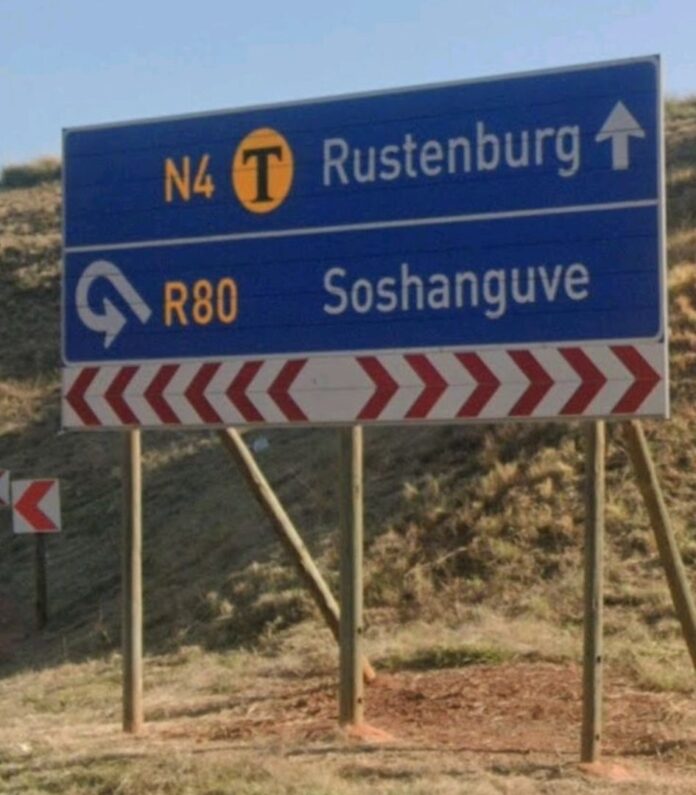
Jukuleni, an informal settlement within the vast Soshanguve landscape of Gauteng, serves as the defining ground-truth coordinate of South Africa’s structural spatial economy. Within the diagnostic architecture of the Lehohla Ledger (Node 2: Human Displacement), Jukuleni is not merely a geographic location; it is an unmapped data-blind spot and a spatial manifestation of the Participatory Deficit.
Historically starved of capital and core infrastructure, Jukuleni is a high-multiplier spatial capital sump. It functions as an energy consumer sink and a vector of data-blind planning, forcing its residents into a brutal daily commute that typically siphons 40% of localised household income back to centralised metropolitan cores, permanently hollowing out the ward economy.
A major developmental asset class
This deficit is what the Out-In methodology, integrated with GGT2030 (Growing Gauteng Together) and ADRS macro-micro modeling, is designed to reverse. Within the Lehohla Ledger Registry (2 752 analytical instruments), Jukuleni represents a major developmental asset class. It is the primary node for establishing decentralized, after-hours School-Foundry meshes.
Here, high-accountability neighborhood Stokvel Cells of 10 to 15 people are engineered into high-income technical roles. This model converts Jukuleni from an informal indigent liability into a self-sustaining Precision Component Export Foundry under the AfCFTA. By localised hand-assembly of high-margin technology cores (precision enthalpy kits, smart micro-sensor telemetry, and off-grid solar canopies) directly within the ward, the spatial drain is sealed.
Jukuleni transitions into a data-sovereign economic zone, transforming millions of “statistical ghosts” into highly skilled operators, permanently dismantling the 1:1 Paradox, and establishing the ultimate unassailable foundation for absolute economic independence in the African century.
A data-blind spot
Standing on the red earth of Jukuleni in Soshanguve, the sterile projections of Pretoria’s bureaucratic heart seem universes away. For decades, Jukuleni, like countless informal settlements anchoring Gauteng’s periphery, has been a data-blind spot. It is a place of invisible citizens and unrecorded transactions, a spatial reflection of a profound structural exclusion.
In these streets, the promises of economic upliftment often remain abstract concepts, lost in the translation between macro-level growth targets and the micro-level reality of a worker who walked five kilometers to the nearest taxi rank. But a profound shift is occurring, not just in policy rhetoric, but in the diagnostic tools used to engineer our spatial economy. If the “Growing Gauteng Together (GGT2030)” mandate is to succeed, it must embrace the hard, numerical truth rising from places like Soshanguve.
The primary obstacle to inclusive growth in South Africa has long been “data-blind planning”. For too long, policymakers have relied on inside-out models, assuming that if national macro-aggregates such as GDP and foreign direct investment tick up, development will inevitably trickle outwards to the periphery. The lived reality of Jukuleni disproves this premise daily. These top-down interventions frequently collapse when they confront the participatory deficit – a deep, unmeasured void where potential labour is starved of capital, energy, and opportunity.
‘Out-In’ economic paradigm
GGT2030, at its core, is a commitment to spatial and economic equity. It demands that we dismantle these invisible walls. But you cannot change what you cannot measure.
To break this gridlock, we must pivot to an “Out-In” economic paradigm. This requires linking the state’s most sophisticated, multi-sector macro-economic modeling with our most granular, spatial evidence bases. The missing link in this transition is the interface between the ADRS (Applied Development Research Solutions) macro-micro dynamic models and the rigid architectural standard of the Lehohla Ledger.
When the complex sectoral interdependencies modeled by ADRS are viewed through the 2,752 analytical instruments of the Lehohla Ledger, the map changes. The Ledger, designed in the spirit of absolute numerical accountability, utilizes continuous spatial census mesh mapping across decades (1996, 2001, 2011, and 2022) to audit the precise spatial footprint of de-industrialization and exclusion.
High-multiplier spatial dependencies
This linkage turns economic modeling into a weapon of precise intervention. In Jukuleni, it reveals the exact nodes where human capital is wasted. It identifies the high-multiplier spatial dependencies that drive the entire system: that the elimination of basic dependency is the prerequisite for local industrialisation; that optimised nutrition and energy, managed by high-accountability Stokvel Cells, are the foundational infrastructure for future labor supply.
Consider the potential. When GGT2030 mandates a localised industrialisation programme, the coupled ADRS-Lehohla models ensure that investment is not siphoned away by centralized corporate leakages. Instead, capital is routed directly into decentralised School-Foundry meshes within Jukuleni.
These school-foundries become the neighborhood cores for hand-assembling modular infrastructure, off-grid energy parameters, and precision electronic soldering. They activate the local forces of production, utilising neighbourhood youth labour and closing the spatial mismatch by eliminating the daily commute that currently devours up to 40% of peripheral wages. The cash velocity inside the Soshanguve ward spikes, as wages are earned, spent, and circulated inside the same streets. This is how you permanently address the underlying participatory deficit.
From ‘statistical ghosts’ to active operators of production
The combined diagnostic power of this framework creates an unassailable financial architecture for potential developmental investors. It transforms an informal settlement from an perceived indigent liability into a high-yielding, self-funding technological asset class. It converts millions of “statistical ghosts” into highly skilled, active operators of production.
Jukuleni is no longer the anomaly. It is the destination where numerical truth meets political mandate. As Gauteng grows together, the Coupled ADRS-Lehohla Ledger model proves that inclusive prosperity is not a trickle-down fantasy, but an engineered certainty when we build our future, one spatial coordinate at a time, from the periphery inward. This is the new architecture of the African century.
- Jukuleni, an informal settlement in Gauteng, symbolizes South Africa’s spatial economic challenges, historically lacking infrastructure and capital, causing residents to lose up to 40% of income on commuting to city centers.
- It is a key focus in the Lehohla Ledger and GGT2030 initiatives, aiming to reverse spatial exclusion through the "Out-In" economic model that integrates macro and micro-level data for precise, participatory development.
- The strategy involves creating decentralized School-Foundry meshes where local residents engage in high-income technical work, transforming Jukuleni into a self-sustaining technology manufacturing hub under AfCFTA.
- This approach converts Jukuleni from a neglected, data-blind "statistical ghost" area into a data-sovereign economic zone, promoting local industrialization and eliminating economic leakages to metropolitan cores.
- The combined ADRS-Lehohla Ledger model offers an innovative, accountable framework for inclusive growth from the periphery inward, aiming to establish economic independence and equity in the African century.


