


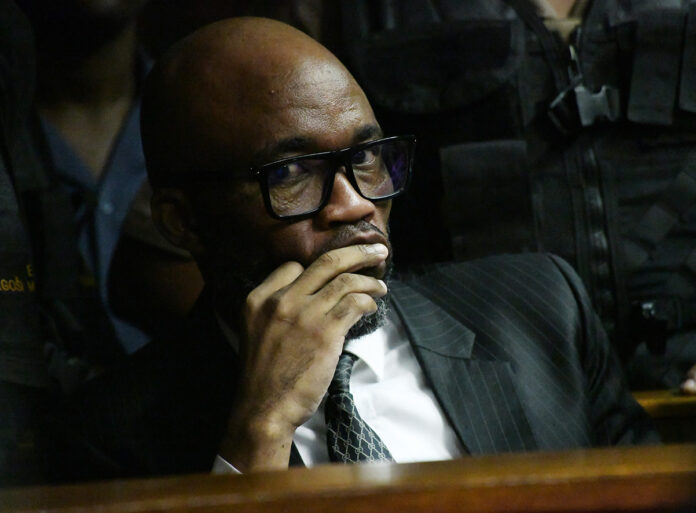
Some people in police boardrooms, tender networks, private security circles and political offices must have heard about Vusimuzi “Cat” Matlala’s 8-year sentence plea deal and realised the case had turned.
Not because he pleaded guilty.
The real danger lies in what has not yet been disclosed.
The state has Matlala’s signed affidavit. The court, expected to rule on Wednesday, was told it contains information backed by documents. Prosecutors said some of it had been checked and could allow them to pursue high-ranking officials.
That is what should worry those who thought the Medicare 24 contract scandal would stop at bid committees, middlemen and companies.
For the innocent, the affidavit is an inconvenience. For the compromised, it is a countdown.
Matlala has admitted that Medicare 24 Tshwane District fraudulently secured a SAPS contract worth more than R228m and that the SAPS paid the company more than R50m.
He admitted that SAPS officials were paid gratifications. Brig Rachel Matjeng was named in court as having allegedly received R300 000 in three tranches. Cpt Brian Cartwright was described as having assisted the bid while sitting inside the procurement process.
But the story has moved beyond those named.
The prosecutor said Matlala’s cooperation would allow the state to pursue people “in charge of protecting this country”.
That is why some people will be replaying old conversations.
Who met Matlala before the tender closed? Who opened doors? Who created comfort inside the SAPS? Who knew Medicare 24 did not have the capacity it claimed to have? Who knew the addresses were false? Who helped dress up the company for due diligence? Who received money through relatives, companies, consultants or service providers? Who thought enough accounts could wash away the smell of a bribe?
These are the questions that turn a plea deal into a weapon.
For any top cop or associate who is complicit in the scandal, Matlala’s affidavit changes everything. A phone call is no longer just a call. A lunch is no longer just a lunch. A bank deposit is no longer just a deposit.
Even silence becomes risky.
The fixer wonders what the officer has told investigators. The officer wonders whether the businessman kept records. The politician wonders whether the driver saw too much. The accountant wonders whether the bank statements tell the story. The retired general wonders whether loyalty matters now that a central figure has pleaded guilty and agreed to testify.
That is the power of a cooperating accused. He does not need to name everyone in open court for panic to begin. The State’s claim that it has an affidavit and supporting documents is enough to unsettle a network.
But the state has also trapped itself. It cannot use Matlala’s revelations to justify a lighter sentence and then fail to act. Prosecutors described the deal as a sacrifice for the bigger picture.
That bigger picture must appear. If new arrests or charges do not follow, the public will ask whether it was sold another promise.
For those allegedly named, the problem is more immediate. They do not know what Matlala gave the State. They do not know which parts have been verified. They do not know whether investigators are matching his affidavit against procurement files, bank accounts, cellphone records and testimony from other accused.
The uncertainty is its own punishment.
A corrupt system survives on confidence: that everyone benefits, everyone is compromised, everyone will keep quiet and the paper trail is too scattered to reconstruct. Matlala’s plea deal punctures the confidence. It tells every participant that the State might have an insider map.
For years, powerful people have watched corruption cases land on lower-ranking officials while those above them escaped.
This case now carries a different threat: the insider has turned, the documents exist and the upper floors of the SAPS might no longer be out of reach.
Matlala will be attacked. His credibility will be tested. Any future accused will argue that he is a self-interested criminal buying a shorter sentence.
But before that happens, before new names are called in court and warrants are executed, the people with something to hide have a problem.
They do not know how much Matlala knows. They do not know how much he kept.
They do not know how much he gave away.
And they do not know whether the knock at the door will come before they find a story that holds.
- Vusimuzi “Cat” Matlala took an 8-year plea deal admitting that Medicare 24 fraudulently secured a R228m SAPS contract and that officials received bribes, involving over R50m paid by SAPS.
- Matlala’s affidavit, supported by documents, implicates high-ranking SAPS officials and others, suggesting a wider corruption network beyond previously named individuals.
- Prosecutors say Matlala’s cooperation could lead to charges against senior officials “in charge of protecting the country,” unsettling those who benefited from or enabled the fraud.
- The State faces pressure to act on the affidavit’s revelations or risk public distrust, as the deal commits them to pursuing the larger corruption picture.
- The uncertainty about what Matlala disclosed is already destabilizing the corrupt network, challenging long-held confidence among those involved and raising the prospect of further arrests.


