


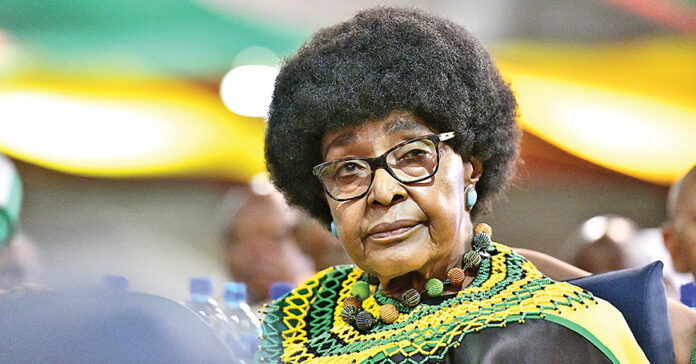
Watching Netflix’s The Trials of Winnie Mandela brought back deeply personal memories. The documentary succeeds because it allows Winnie Mandela to speak in her own voice, revealing not only the icon South Africans know but also the vulnerable, lonely and resilient woman behind the public image.
I first encountered Winnie Mandela through absence rather than presence. I visited the Mandela home in Orlando East as a young man, only to learn she had been banished to Brandfort by the apartheid government. Yet, even in exile, she remained a source of inspiration. When we finally met through underground political work, she treated me warmly and made me feel like family.
Many people struggled to understand how Winnie Mandela could be both nurturing and militant. In private, she was caring, humorous and deeply protective. After I survived a serious car accident, she sat beside my hospital bed worrying about my wellbeing. Yet, publicly, she could be fierce and uncompromising during one of South Africa’s most violent periods. Those contradictions existed because she was profoundly human.
No reflection on Winnie Mandela can avoid the controversy surrounding the death of Stompie Seipei. Did Winnie Mandela kill Stompie Seipei? No. I am confident in saying this. Could she have been involved in his death? The evidence suggests otherwise. What was she guilty of? Being associated with people and events in a chaotic, violent moment.
At the time, South Africa was consumed by violence, repression and fear. Yet many people, including some inside the ANC, were prepared to convict her in the court of public opinion before evidence had been properly tested.
One of the most painful things Winnie experienced was isolation from members of her own movement. Some people within the ANC wanted her removed from public life. Oliver Tambo, however, insisted the movement should never “throw away a comrade”.
I remember buying Winnie a BMW while serving as ANC treasurer because she had been treated so shamefully. When she received it, she cried and said it was one of the few moments she felt acknowledged for her sacrifices.
The relationship between Winnie and Nelson Mandela was more emotionally complex than public narratives suggest.
I stood behind Mandela when he announced their separation publicly. Afterwards, he asked me and Peter Mokaba to ensure Winnie remained inside the ANC.
Despite everything, there remained deep affection between them. Winnie continued relating to Mandela as her husband until his final days.
Beyond South Africa, Winnie Mandela commanded enormous respect across the African continent. I travelled with her to state events where presidents and ordinary people alike gravitated toward her presence.
She carried herself with dignity, resilience and confidence shaped by years of struggle. For many Africans, she represented endurance against oppression.
At Winnie Mandela’s funeral, South Africans from across the political spectrum gathered to honour her. The ANC, EFF, veterans, young people and ordinary citizens recognised that despite controversy, she had played a defining role in the liberation struggle.
Many who had criticised or isolated her during her lifetime still acknowledged her contribution after her death.
Away from politics, Winnie remained deeply caring toward others. Even during her own health struggles, she worried about people around her. I remember her advising me about managing diabetes when I visited her.
Toward the end of her life, she also found peace and reconciliation, including with figures once associated with the apartheid government.
Winnie Mandela believed leadership should remain accountable to ordinary people. She challenged inequality, complacency and political comfort fearlessly.
She often criticised leaders for drifting away from the values of the liberation struggle. That refusal to stay silent made her admired by many and feared by others.
The documentary reminds viewers that Winnie Mandela was not simply a political figure but a woman who sacrificed enormously for freedom. She endured imprisonment, harassment and isolation without surrendering her commitment to justice.
Her life teaches that leadership requires courage, sacrifice and emotional connection to ordinary people.
Winnie Mandela’s life will continue provoking debate, but those of us who knew her personally remember a woman of extraordinary resilience, warmth and courage.
She was flawed, as all human beings are, but she refused to surrender her dignity despite immense pressure. That is the Winnie Mandela I remember.
• Dr Phosa is a businessman and former ANC treasurer-general
- The documentary *The Trials of Winnie Mandela* reveals the complex, vulnerable, and resilient woman behind the iconic image known in South Africa, allowing her to speak in her own voice.
- Winnie Mandela was a deeply caring and protective figure privately, yet publicly fierce and uncompromising during South Africa’s violent apartheid era, embodying profound human contradictions.
- Controversy over the death of Stompie Seipei remains unresolved, but evidence suggests Winnie was not directly involved; she was unfairly condemned in a politically charged and violent context.
- Despite isolation and criticism from some ANC members, including calls for her removal, Winnie received support from figures like Oliver Tambo and was respected both in South Africa and across Africa for her resilience.
- Winnie Mandela’s legacy is marked by sacrifice, courage, and ongoing debate, but she is remembered by those who knew her as a warm, dignified leader committed to justice and accountable leadership.


