


More than 700 engineering hopefuls who took up an opportunity to train under South Africa’s biggest weapons manufacturer have been struggling for months without full stipends, transport and accommodation support.
Some are facing threats of eviction, while several others say they received just R300 on Friday despite the monthly stipends ranging from between R3 000 and R6 000.
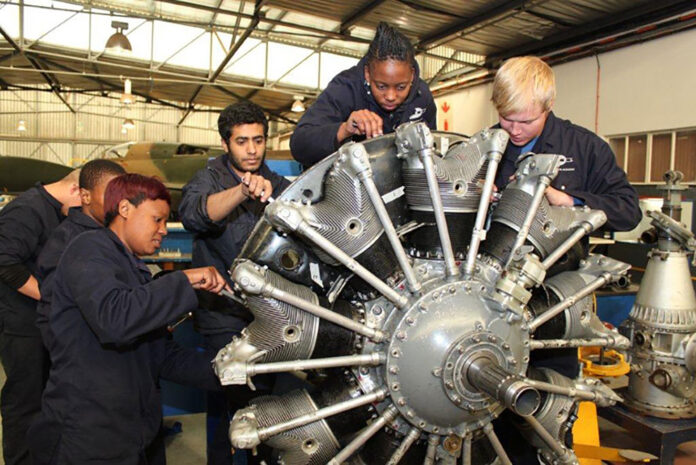
The 761 learners are part of a skills development programme implemented through Denel Technical Academy (DTA) in Kempton Park where they are being trained in aircraft and engineering-related trades.
Although Denel has refused to disclose the total amount owed or how much trainees were receiving, whistleblowers told Sunday World that apprentices were supposed to receive monthly stipends of R3 000 and those undertaking work-integrated learning R6 000.
The programme also provided accommodation and transport, the trainees said.
But they said the benefits had not been properly covered for months, leaving some facing threats of eviction from their accommodation.
The programme extends beyond Kempton Park. Some trainees are undertaking workplace training in Pretoria, while others are based in Braamfontein and use the Kempton Park facility.
The payment delays began in April. However, the ripple effect further complicated matters in May and June.
The National Skills Fund (NSF) acknowledged in correspondence that some learners were unable to attend training because delayed stipends meant they did not have transport.
That created an extraordinary predicament: attendance was relevant to stipend payments, yet some trainees could not attend because the stipends they depended upon for transport had not been paid.
By July, the money troubles remained unresolved. A Sunday World investigation has since uncovered a trail of correspondence showing learners repeatedly being given payment deadlines — only for the problem to persist.
On July 14, DTA general manager Zandile Dotwana informed learners that the NSF had experienced technical problems with the government’s Basic Accounting System (BAS).
Denel said the NSF had advised that payment was processed on July 10 and would reflect in the DTA’s project account by July 15.
“Subject to the funds reflecting as advised, all eligible learners will receive their stipends by Friday, 17 July 2026,” Dotwana said.
However, the deadline passed without payments being made.
NSF director Moloko Masipa subsequently told learners that although payment was initiated on July 10, the transaction failed because of the BAS problem. It was successfully recaptured on July 16, he said.
During a July 17 meeting involving the NSF, Denel management and learner representatives, another date emerged: July 21. Another meeting followed on July 22. This time, the NSF promised April stipends would be processed first and paid according to attendance registers. Payment was promised by the week ending July 31.
Denel issued another communication on July 30, saying April stipends would be processed that day. July stipends were promised for August 14, while May and June remained unresolved.
But behind the shifting deadlines and explanations was another problem.
Denel has admitted that its administrative processes had prevented the NSF from transferring the money.
In response to Sunday World, Denel said the project account had not been registered on the National Treasury’s Central Supplier Database (CSD).
“While the NSF has been ready and has made attempts to transfer the funds to Denel, the transfers could not be processed due to the project account not yet being registered on the National Treasury’s Central Supplier Database,” Denel said.
It acknowledged responsibility for the administrative process.
The admission raises questions about how a programme involving 761 learners had the reached the payment stage without the account required to receive NSF money being properly registered.
Denel said the DTA took an “exceptional step” in July to provide interim funding for April stipends and accommodation. It said some individual payments could not be processed because of incorrect or outstanding banking information and time sheets.
For the trainees, however, the financial difficulties have continued.
Some said they had received payments of R300 on Friday, an amount equivalent to just 10% of the R3 000 apprentice stipend and 5% of the R6 000 work-integrated learning stipend.
Denel said it was engaging the NSF to establish the supporting documents required to facilitate those payments.
The Denel debacle is not the first recent NSF-funded programme where young job seekers have suffered because of payment, administrative or governance problems.
Earlier this year, 430 learners receiving training under the R82.1-million work-integrated learning project run by the Forek Institute of Technology experienced payment delays. Although the money was eventually paid, albeit after some remonstration.
The NSF also terminated an agreement with Phila Jordan Capital over an aviation training programme after there were contractual breaches, governance failures and learner-welfare concerns.
Another NSF-funded aviation training programme, this one involving 390 Flyfofa Aviation Training learners, was disrupted this month amid contractual and compliance problems.
NSF spokesperson Lebohang Somo had not responded to Sunday World’s questions at the time of publication.
- Over 700 engineering trainees at Denel Technical Academy in Kempton Park have faced months of stipend payment delays, with some receiving only R300 despite expected monthly payments between R3 000 and R6 000.
- The delayed payments have caused financial hardships including threats of eviction and lack of transport, impacting trainees' attendance and further stipend eligibility.
- Payment issues began in April due to Denel's failure to register its project account on the National Treasury’s Central Supplier Database, hindering the National Skills Fund from releasing funds.
- Despite multiple promises and revised payment deadlines by Denel and the NSF, stipends for April to June remain largely unpaid as of July and August.
- This Denel stipend crisis follows other NSF-funded program payment and administration problems earlier in the year, involving training projects at Forek Institute of Technology, Phila Jordan Capital, and Flyfofa Aviation Training.



I want my money😡😡😡!!!!!!!
HELP US – NSF INTERNS UNDER EDQOFLEX HAVE NOT BEEN PAID
We are a huge group of unemployed graduates from Limpopo. We were recruited by Edqoflex for an NSF-funded internship and placed under LEDA.
We were placed across different LEDA regions in Limpopo.
We have NOT been paid for 3 MONTHS.
➡️ 2 full months + half of August = ± R14,000 owed per intern.
➡️ Our contracts have now ENDED – we left with no money.
➡️ Communication from Edqoflex is not clear and not promising.
We showed up every day. We paid for transport with borrowed money. We are now in debt and unemployed again.
We are numerous – we can’t even count accurately because we are spread across regions.
NSF funded this programme to help youth, but we have not received our stipends.
We are asking:
1. NSF / DHET to please intervene
2. Edqoflex to pay what is owed
3. Content creators / journalists to help us amplify our voice
We have contracts and proof of placement.
#EdqoflexMustPayUs #NSF #DHET #LEDA #UnpaidInterns #LimpopoYouth
@National Skills Fund @Department of Higher Education and Training @LEDA.