


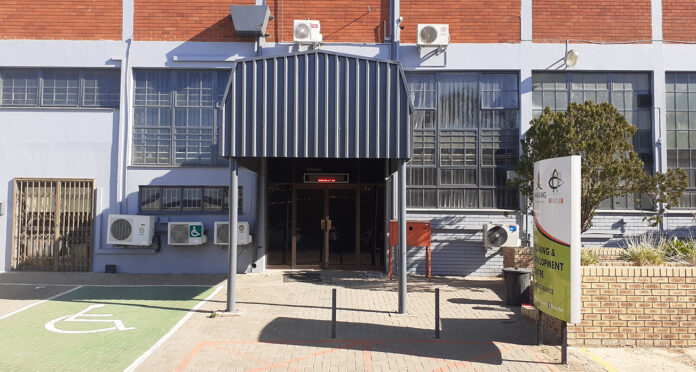
The National Treasury has raised serious concerns with the Mangaung Metro Municipality over the recruitment of the chief executive officer of the city’s power utility, Centlec, warning that if the process goes ahead in its current form, Mangaung stands to lose out on a R1-billion Urban Development Finance Grant (UDFG) for electricity allocation.
The Treasury allocates the grant to enable and incentivise infrastructure development and economic growth in the country’s metros.
Centlec advertised the CEO position last year in anticipation of the expiration of Malefane Sekoboto’s contract, which ended in December but was subsequently extended for another three months in an acting capacity. Sekoboto’s acting role ends on Tuesday.
However, Treasury deputy director-general for intergovernmental relations, Ogalaletseng Gaarekwe, flagged serious discrepancies in the advert that closed on November 17 last year.
In a letter dated March 12, Gaarekwe informed Mangaung city manager Sello More that Treasury had noted concerns with Centlec proceeding with the interviews despite being advised to comply with the requirements of the indicator description.
She warned that if the power utility appointed a new CEO who failed to meet the minimum commitments of the reform, it would risk losing approximately R1-billion in the next five years.
“It has come to our attention that Centlec is currently in the process of conducting interviews to fill the position of the CEO. The position is the equivalent of the single point of management accountability in terms of the minimum commitment,” she said.
Gaarekwe also cautioned More that, on March 5, Centlec had requested advice from the Treasury on how to proceed with the advertised job description. In the email addressed to the Treasury’s lead city advisor, Sydney Maesela, the office general manager in the office of Centlec’s CEO, Teboho Nkala, attached the job advert in question and requested advice from Treasury to verify if the power utility was in line with the stipulated requirements for the job description of the CEO position.
On the very same day that Nkala sent the query, Maesela emailed a response raising concerns about the minimum requirements stated in the advert.
In the confidential letter Gaarekwe sent to More, she warned that Treasury analysis had flagged gaps in the advertisement, which would prejudice the city and Centlec if the recruitment and appointment processes continued without the necessary changes.
“We have done an assessment and noticed variations on the job description, which will lead to disqualification if you proceed with the current form. If you elect to proceed with your attached job description, you run a risk of losing the Urban Development Finance Grant [for] electricity allocation.
“There are eight minimum commitments which are mandatory for all participants in the Metro Trading Reforms.
“Failure to achieve any one of these minimum commitments by the start of 2027/28 and maintain them thereafter, as determined by the Independent Verification Process, means Centlec will be excluded from the reform and unable to benefit from incentive grants until compliance with the minimum commitments is independently verified as achieved,” said Gaarekwe.
Sunday World has established that Sekoboto was shortlisted alongside Centlec’s general manager of engineering wires, Xolile Faku, and an outsider, George Neervoort.
Based on challenges raised by Treasury, Mangaung hurried to hold a special council meeting tomorrow to address the issues surrounding the recruitment of the CEO, who was meant to start on Wednesday.
Insiders at Centlec and Mangaung told Sunday World that the advertisement was allegedly crafted by Sekoboto and his people so that it could give him an advantage in being appointed again as CEO.
“Sekoboto and his people at Centlec are the ones who designed and crafted that advert that Treasury is raising red flags about.
“Even after Treasury told them about discrepancies, they continued to shortlist Sekoboto, Faku and Neervoort while knowing that their minimum commitments were never met when the ad was designed.”
The worst part is that Sello, who is the city manager for Mangaung and whom Centlec bosses report to, was told that he should just shut up when it comes to Centlec’s affairs.
“Sello has no say in the affairs of Centlec, and he is being bullied and told that he is a small boy who can’t do anything to the politically connected Centlec bosses,” a source told Sunday World.
More confirmed receipt of the letter from Treasury, noting that all operational matters at Centlec were the domain of the Executive Mayor Gregory Nthatisi.
He also told Sunday World that the metro was in “no position to cover or make provision in the budget for the grants that are at risk through any means”.
Sekoboto did not respond to questions sent to him while Faku declined to comment.
- The National Treasury has raised serious concerns with the Mangaung Metro Municipality over the recruitment of the chief executive officer of the city’s power utility, Centlec, warning that if the process goes ahead in its current form, Mangaung stands to lose out on a R1-billion Urban Development Finance Grant (UDFG) for electricity allocation.
- The Treasury allocates the grant to enable and incentivise infrastructure development and economic growth in the country’s metros.
- Centlec advertised the CEO position last year in anticipation of the expiration of Malefane Sekoboto’s contract, which ended in December but was subsequently extended for another three months in an acting capacity.
- Sekoboto’s acting role ends on Tuesday.
- However, Treasury deputy director-general for intergovernmental relations, Ogalaletseng Gaarekwe, flagged serious discrepancies in the advert that closed on November 17 last year.


