


What if one of the most influential players in South Africa’s November 4 municipal elections is not actually contesting them?
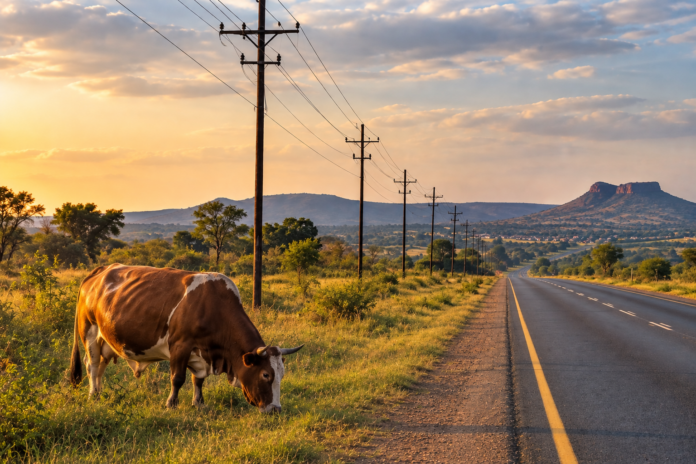
Imagine a Bushbuckridge cattle herder standing beside a regional road as another ordinary morning unfolds in Mpumalanga.
His cattle know the route almost better than he does. Some wander from the grazing fields towards semi-suburban settlements. Others cross busy regional roads with the confidence of animals that have made the journey countless times, searching for greener fodder.
Then there is Kgomo ya Moshate (the royal ox). An old Sepedi expression captures its predicament perfectly: wa e gapa o molato, wa e tlogela o molato. Herd it home, anger the traditional council. Leave it in the bush, suffer the same fate. Damned if you do. Damned if you don’t.
South Africa’s electricity politics has become Kgomo ya Moshate. Who gets blamed when electricity bites? Our imaginary herdsman returns home and discovers electricity costs more. Whom does he blame?
His councillor? Bushbuckridge Local Municipality? Eskom? Nersa? Electricity and Energy Minister Kgosientsho Ramokgopa? The ANC? Or the Government of National Unity?
That deceptively simple question exposes an extraordinary electoral problem. The National Energy Regulator of South Africa does not contest elections. It has no councillors, manifesto or T-shirts. Yet Nersa determines electricity tariffs that can reach directly into household pockets.
And anger travels remarkably well from the meter to the ballot box. Ekurhuleni has already demonstrated the danger.
In 2025, protests erupted in Tembisa over electricity costs and a R126 fixed monthly charge. Mayor Nkosindiphile Xhakaza subsequently suspended the charge, with the city acknowledging the destructive unrest surrounding electricity tariffs.
The metro said the tariff structure arose from Nersa regulatory requirements and its cost-of-supply process. This financial year, Ekurhuleni says its average electricity tariff increased by 8.76%.
Tshwane says electricity increased 8.8%. Nersa approved an average 9.01% increase in Eskom’s municipal tariffs from July. According to Tshwane’s own calculations, 500kWh consumption translates into an illustrative monthly electricity charge of about R1,875. That is not regulatory theory. That is grocery money.
The Bushbuckridge paradox
Now let’s swiftly return to our herdsman. His anger may land at the municipal offices. But there is a problem. Bushbuckridge municipality is not necessarily selling him that electricity.
Eskom is the principal distributor across significant parts of Bushbuckridge, and municipal oversight documents record Eskom interventions involving smart meters and Free Basic Electricity beneficiaries. The councillor can therefore get politically klapped for a meter the municipality does not control.
Even more fascinatingly, Ramokgopa told Parliament in March that targeted interventions had improved electricity reliability in Bushbuckridge, Giyani, Malamulele, Siyabuswa and KwaMhlanga. At that stage, he said 199,000 customers nationally had already been removed from load-reduction schedules.
By July, Eskom reported that more than 1.09-million customers nationally had been removed from load reduction. Credit where it is due: that is tangible progress. But here comes Kgomo ya Moshate again.
Eskom says Nersa approved an average 8.76% increase for its directly supplied customers from April, while municipal bulk tariffs increased by an average 9.01% from July.
Ramokgopa can therefore help keep the lights on while regulatory decisions make keeping those lights on more expensive. Government wins on reliability and potentially loses on affordability. Wa e gapa o molato, wa e tlogela o molato.
Different colours, same cow
This is not merely an ANC headache. Put a DA, ActionSA, EFF or newly registered party in charge tomorrow and Kgomo ya Moshate remains outside the municipal gate. Every governing party confronts essentially the same contradiction.
Raise electricity sufficiently to sustain infrastructure and voters complain about affordability. Keep increases artificially low while costs rise and the electricity network can deteriorate.
NERSA says it received 176 distributor tariff applications for 2026/27. By May 11, it had approved 159. Three were governed by separate court orders while another 14 remained outstanding, forcing Nersa itself to obtain more time from the High Court.
Eventually all 176 were processed. Ekurhuleni, Mogale City and Naledi were among municipalities that had to navigate separate judicial relief around tariff deadlines.
The politics of electricity had literally travelled from council chambers to courtrooms. Can a new party make electricity cheaper? That is where our herdsman confronts November 4.
A new political party arrives promising change. Can it actually make his electricity cheaper? Perhaps in areas it controls through efficiencies, procurement decisions, tariff structures and better management.
But it cannot simply command Nersa to approve whatever tariff voters desire. Nor can a municipality wish away Eskom’s bulk costs, infrastructure maintenance or the economics of electricity distribution.
That makes the more meaningful electoral question different. If I am paying more, am I receiving more? Call it South Africa’s Energy Gap: the distance between what residents pay for electricity and the improvement they experience in reliability, maintenance and service.
Opposition parties have an obvious opening there. They need not promise fantasy electricity prices. They merely need to ask whether today’s governing party delivered value for yesterday’s increases.
Incumbents have an answer too: functioning infrastructure costs money. And somewhere in Bushbuckridge, cattle continue wandering towards greener fodder, blissfully unconcerned about who governs the municipality. Our herdsman does not enjoy that luxury.
On November 4, he must choose. NERSA will not appear on his ballot paper. Neither will Eskom. But the electricity bill will be standing quietly inside the voting booth with him.
Kgomo ya Moshate. Herd it home, anger the traditional council. Leave it in the bush, suffer the same fate.
ALSO READ:
- South Africa’s National Energy Regulator (NERSA) sets electricity tariffs but does not contest elections or have political representation, complicating accountability for rising electricity costs.
- Protests over electricity tariffs have occurred, such as in Tembisa in 2025, where a R126 fixed monthly charge was suspended due to unrest, highlighting the politicization of electricity pricing.
- In Bushbuckridge, Eskom is the main electricity distributor rather than the local municipality, meaning voters may blame local councillors for issues beyond their control.
- Eskom and municipalities have received tariff increases approved by NERSA, with increases around 8.7% to 9% leading to higher monthly electricity costs for consumers, such as an estimated R1,875 for 500kWh in Tshwane.
- Political parties cannot unilaterally reduce tariffs as NERSA controls approvals and Eskom manages bulk supply costs, making voter decisions on election day a reflection of perceived value for money rather than tariff control.


