


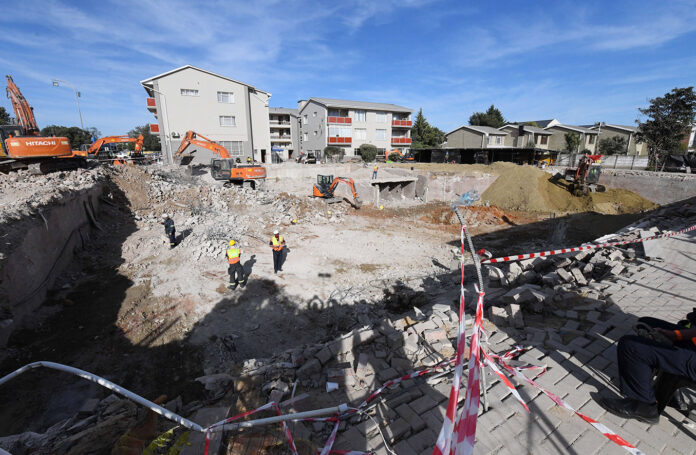
It has been two years since the devastating building collapse in George, in the Western Cape, which claimed 34 lives. But no one has been arrested or charged criminally, despite the deaths. Investigations have implicated the developer Neo Victoria Developments, suspended officials of the National Home Builders Registration Council, and an unnamed structural engineer.
The tragedy, alongside more recent building collapses in Verulam in KwaZulu-Natal and Ormonde, south of Johannesburg, has renewed scrutiny on how South Africa investigates structural failures and holds those responsible accountable.
According to construction and infrastructure law specialists at Cox Yeats, the aftermath of a building collapse triggers a complex network of criminal, regulatory and civil investigations involving multiple authorities and professional bodies.
David Vlcek, a partner at the firm who specialises in insurance litigation and construction and infrastructure law, said investigations into construction collapses are often technically demanding and emotionally charged.
“The priority is always the health and safety of those on site, but it’s equally vital to preserve evidence and protect legal rights from the outset.”
Vlcek said owners, developers and contractors face immediate legal obligations once a collapse occurs.
“Owners, developers, and contractors must be prepared to navigate overlapping investigations, media scrutiny, and possible litigation all while supporting emergency responders,” he stated.
Under South African law, the police initially take control of a collapse site while emergency rescue and recovery operations are under way. Thereafter, the Department of Employment and Labour launches a formal Section 31 investigation in terms of the Occupational Health and Safety Act.
The investigation, said Vlcek, seeks to determine the cause of the collapse and whether those involved complied with regulatory requirements.
Property owners, developers and contractors carry primary legal responsibility from the moment of collapse and are expected to respond according to site-specific health and safety plans. In terms of regulations under the Occupational Health and Safety Act, incidents must be reported to the provincial director of labour within seven days.
Investigators may then demand documents, witness statements and physical evidence linked to the project. Professional bodies, including the Engineering Council of South Africa and the Council for the Built Environment, may also launch parallel investigations into the conduct of engineers, architects, quantity surveyors, and project managers involved in a project. Vlcek emphasised the importance of preserving evidence immediately after a collapse.
“Experts should attend the site as soon as possible to photograph, video and record what is taking place,” he said.
Legal experts also warned that those involved in projects where deaths or injuries occur may later face Section 32 public enquiries, civil claims for damages and loss of support claims from affected families.
“It is therefore advisable to brief legal representatives at an early stage to address potential third-party claims and to maintain a proper register of those claims as they arise,” Vlcek said.
He added that insurers and brokers should be notified immediately after a collapse.
An independent forensic investigation into the George building collapse, undertaken in April 2025, uncovered systematic failures at multiple levels, pointing to widespread non-compliance with regulatory standards and serious mismanagement by both the NHBRC and project personnel, which contributed to the disaster.
Police finalised their investigation and handed the docket to the NPA in February, however, the prosecuting authority has yet to indicate when charges will be brought. “We are busy considering the evidence. We are being thorough due to the nature of the evidence we are dealing with,” said NPA Western Cape spokesperson Eric Ntabazalila.
- It has been two years since the devastating building collapse in George, in the Western Cape, which claimed 34 lives.
- But no one has been arrested or charged criminally, despite the deaths.
- Investigations have implicated the developer Neo Victoria Developments, suspended officials of the National Home Builders Registration Council, and an unnamed structural engineer.
- The tragedy, alongside more recent building collapses in Verulam in KwaZulu-Natal and Ormonde, south of Johannesburg, has renewed scrutiny on how South Africa investigates structural failures and holds those responsible accountable.
- According to construction and infrastructure law specialists at Cox Yeats, the aftermath of a building collapse triggers a complex network of criminal, regulatory and civil investigations involving multiple authorities and professional bodies.


