


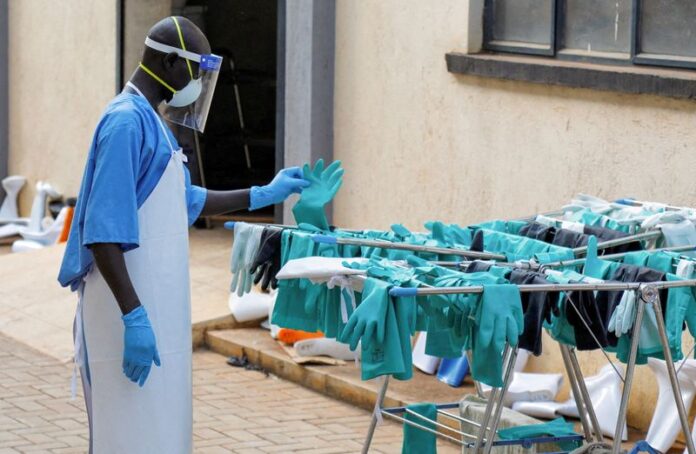
Uganda’s health minister declared the country Ebola-free on Tuesday following the East African nation’s latest outbreak of the viral haemorrhagic disease that infected 20 people and killed two of them.
Uganda has suffered multiple outbreaks of Ebola since 2000, when it recorded its first epidemic, and officials say over the years the country gained expertise it has used to bring recent infections under control quickly with limited community spread.
Details of the latest outbreak
Fifteen people in the latest outbreak, declared in mid-May, were infected in neighbouring Democratic Republic of Congo – the epicentre of the epidemic, where the number of confirmed cases now stands at more than 3,000.
The last Ebola patient in Uganda, a Congolese national, was discharged on June 22. That is short of the 42-day waiting period required by the World Health Organization to declare the end of an outbreak.
But Health Minister Chris Baryomunsi said the announcement follows the “successful completion of the mandatory 42-day monitoring period which begun after the discharge of the last Ugandan national, a locally transmitted patient, on the 16 of June, 2026.”
Of the 20 confirmed cases during the outbreak, 18 were discharged while two died from the virus, both of whom were from the Democratic Republic of Congo.
Factors contributing to outbreaks
“Throughout this period the ministry of health maintained intensive surveillance nationwide and no new Ebola cases have been detected,” Baryomunsi said.
Officials say Uganda’s many tropical forests that teem with fruit bats, which are natural reservoirs for the virus, make it vulnerable to frequent outbreaks.
The virus is transmitted through contact with infected bodily fluids and tissue and symptoms include headache, vomiting of blood, muscle pains and bleeding.
- Uganda declared itself Ebola-free following an outbreak that infected 20 people and caused two deaths.
- The latest outbreak, declared in mid-May, involved 15 infections from the neighbouring Democratic Republic of Congo.
- The last Ebola patient in Uganda was discharged on June 22, with the 42-day monitoring period starting after a locally transmitted patient's discharge on June 16, 2026.
- Of the 20 confirmed cases, 18 were discharged and two fatalities were from the Democratic Republic of Congo.
- Uganda's tropical forests, which house fruit bats acting as virus reservoirs, contribute to the country's vulnerability to Ebola outbreaks.
Uganda's health minister declared the country Ebola-free on Tuesday following the East African nation's latest outbreak of the viral haemorrhagic disease that infected 20 people and killed two of them.
Uganda has suffered multiple outbreaks of Ebola since 2000, when it recorded its first epidemic, and officials say over the years the country gained expertise it has used to bring recent infections under control quickly with limited community spread.
Fifteen people in the latest outbreak, declared in mid-May, were infected in neighbouring Democratic Republic of Congo - the epicentre of the epidemic, where the number of confirmed cases now stands at more than 3,000.
The last Ebola patient in Uganda, a Congolese national, was discharged on June 22. That is short of the 42-day waiting period required by the World Health Organization to declare the end of an outbreak.
But Health Minister Chris Baryomunsi said the announcement follows the "successful completion of the mandatory 42-day monitoring period which begun after the discharge of the last Ugandan national, a locally transmitted patient, on the 16 of June, 2026."
Of the 20 confirmed cases during the outbreak, 18 were discharged while two died from the virus, both of whom were from the Democratic Republic of Congo.
"Throughout this period the ministry of health maintained intensive surveillance nationwide and no new Ebola cases have been detected," Baryomunsi said.
Officials say Uganda's many tropical forests that teem with fruit bats, which are natural reservoirs for the virus, make it vulnerable to frequent outbreaks.
The virus is transmitted through contact with infected bodily fluids and tissue and symptoms include headache, vomiting of blood, muscle pains and bleeding.


