


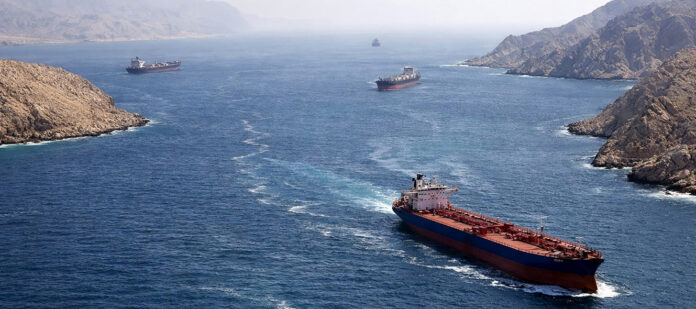
US Vice President JD Vance said on Monday that the Strait of Hormuz is open and crude oil and natural gas are flowing through.
“We wanted to build a mechanism for keeping the Strait of Hormuz open. It is open,” said Vance as he delivered remarks after the first session of US-Iran talks concluded at central Switzerland’s Buergenstock resort.
Gas prices and oil prices have come down; millions and millions of barrels of crude and natural gas are flowing through the Strait of Hormuz that weren’t flowing before, he added.
The Strait of Hormuz handles roughly 20% of the world’s seaborne oil flows.
Iran tightened its grip on the Strait of Hormuz after Israel and the US launched their joint strikes on Iran on February 28. The US imposed a naval blockade targeting ships going to and from Iran.
Agreement to invite back IAEA inspectors
Vance also said that the Iranians have agreed to invite the International Atomic Energy Agency (IAEA) inspectors back into their country.
Calling this “a major milestone,” Vance said it is the first step in permanently denuclearizing or permanently ending a nuclear weapons program in Iran.
US and Iranian negotiators, under Qatari and Pakistani mediation, began their talks on Sunday at the Buergenstock mountain resort in central Switzerland, marking the first direct talks between the two sides since the signing of the Islamabad Memorandum of Understanding (MoU) last week.
Final peace agreement within 60 days
According to the MoU, the United States and Iran declare the immediate and permanent termination of military operations on all fronts, including in Lebanon, and commit to negotiating and achieving the final peace agreement in maximum 60 days.
Vance said the US negotiating team working with the Iranians, the Qataris and the Pakistanis made great progress on Sunday.
The teams will continue to work at the technical level at Buergenstock and technical negotiations will continue over the weeks and days to come, he said.
“We laid a very good foundation for a successful final deal,” said Vance, adding that there is still a lot to do regarding the nuclear and economic talks as well as demining the Strait of Hormuz to ensure that the flow of traffic continues to pick back up.
- US Vice President JD Vance confirmed the Strait of Hormuz is open, with crude oil and natural gas flowing freely, reversing previous disruptions after US-Iran tensions.
- Iran agreed to invite International Atomic Energy Agency (IAEA) inspectors back, marking a significant step toward permanently ending its nuclear weapons program.
- Direct US-Iran talks, mediated by Qatar and Pakistan, commenced at Switzerland's Buergenstock resort, the first since the Islamabad MoU signed last week.
- The Islamabad MoU commits both nations to immediately cease military operations on all fronts, including Lebanon, and to negotiate a final peace agreement within 60 days.
- Negotiations made strong progress, but ongoing work remains on nuclear, economic issues, and demining the Strait of Hormuz to restore stable maritime traffic.


