


A recent International Monetary Fund report says that artificial intelligence can boost productivity, create better jobs and improve public services in sub-Saharan Africa, with a potential to leapfrog the continent. To stay ahead, African governments are stepping up investment in AI, rolling out national strategies, funding research and partnering with the private sector to build AI capacity.
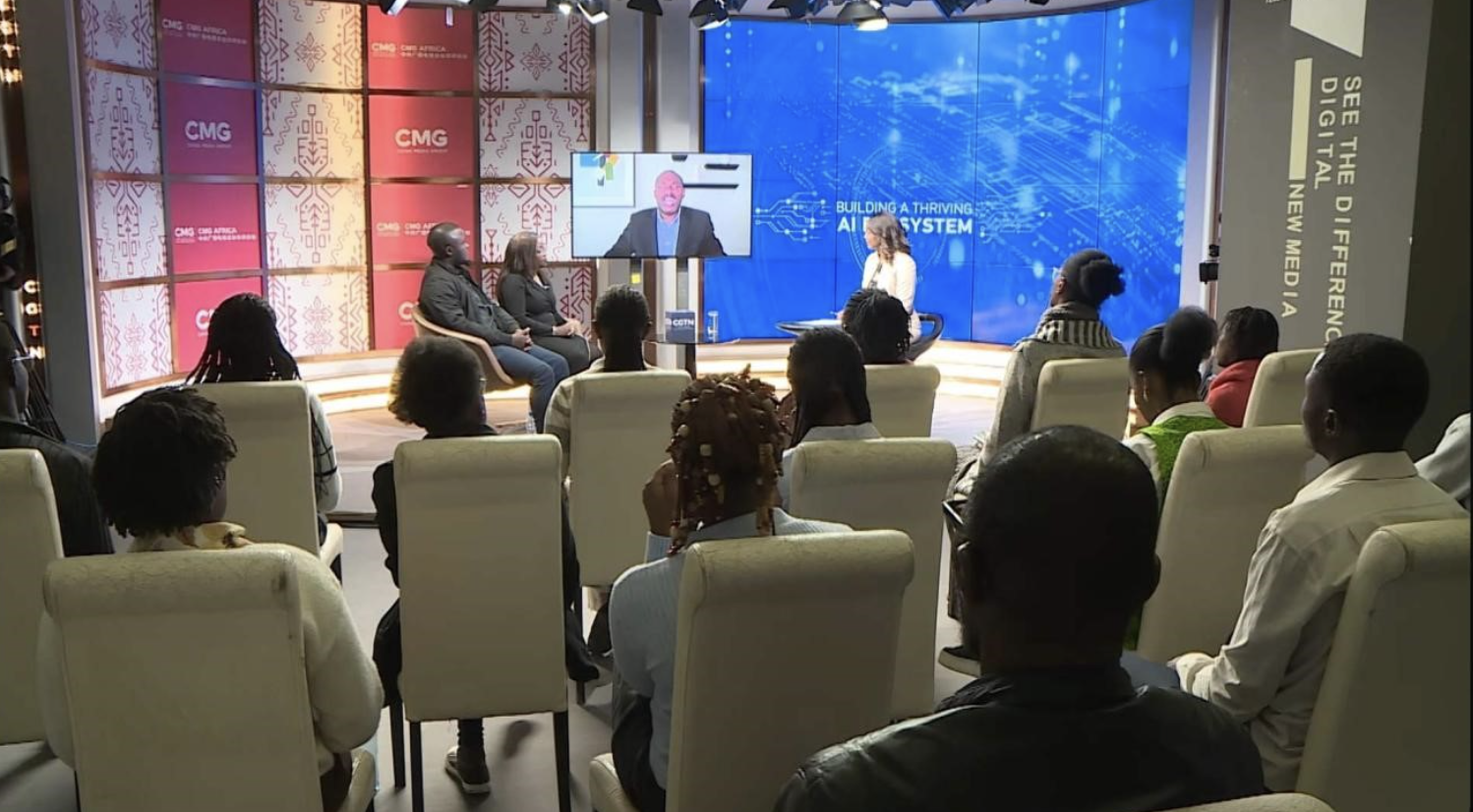
Where should Africa position itself in the global AI race? What should be the continent’s priorities to deliver AI’s promise? Tech experts and university students were brought together in a townhall discussion to chart Africa’s algorithmic sovereignty.
Racing to adopt AI
Africa may be behind in investment when major economies are pumping hundreds of billions of dollars into AI development but the continent retains significant agency and opportunity.
According to Olubayo Adekanmbi, the CEO of Data Science Nigeria, there’re three AI races happening: first is the race for frontier model, second is AI infrastructure that includes compute, cloud, energy, data centre and so on and third is about AI application.
“Africa should not try to win the AI race by spending like others, we should win by solving African problems better than anyone else,” he said, noting the extraordinary opportunity in AI adoption. Some reports estimate that AI could contribute as much as $1.5 trillion to Africa’s economy by 2030.
Across the continent, AI is increasingly being deployed in sectors such as agriculture, health and education. But the adoption rate remains low compared with other regions.
To address this, Adekanmbi advocated for a bottom-up approach centered on mitigating scarcity through hyperlocal, vernacular language models. He also cautioned against technological hype, prioritising instead the localisation of tools to meet community needs.
Echoing Adekanmbi, technology policy strategist Zanyiwe Asare argued that Africa’s AI deployment must drive macroeconomic productivity and avoid superficial adoption.
“We shouldn’t be using AI for the sake of AI,” she said, adding that AI must be applied to create solutions and values.

Where priorities lie?
Africa’s AI landscape remains highly uneven, with investment concentrated in a handful of countries and the foundational infrastructure needed to support AI still lagging.
The United Nations Development Programme says Africa has less than 2% of global data-centre capacity and only 5% of African AI innovators have access to the computing power they need.
Another challenge is internet access as the International Telecommunication Union estimates that only 36% of Africa’s population is using the internet.
With so many challenges at hand, where should priorities lie?
For legal scholar Consolata Maitha, governments must prioritise physical infrastructure and fundamental human needs, such as electricity, food security, and poverty eradication, before high-level technological integration can occur.
Asare argued that AI implementation should not wait but rather be directly mapped onto national development plans to optimise public resource management. However, she also warned that without prerequisite institutional capacity and data structures, states risk deploying sophisticated tools that yield negligible economic productivity.
In Adekanmbi’s view, African countries’ strategies must aggressively prioritise data digitisation, noting that 93% of African languages remain offline and rural populations lack smartphones.
“Localisation, contextualisation and making AI to be culturally grounded starts by connecting our own local data set,” Adekanmbi added.
Africa’s young asset
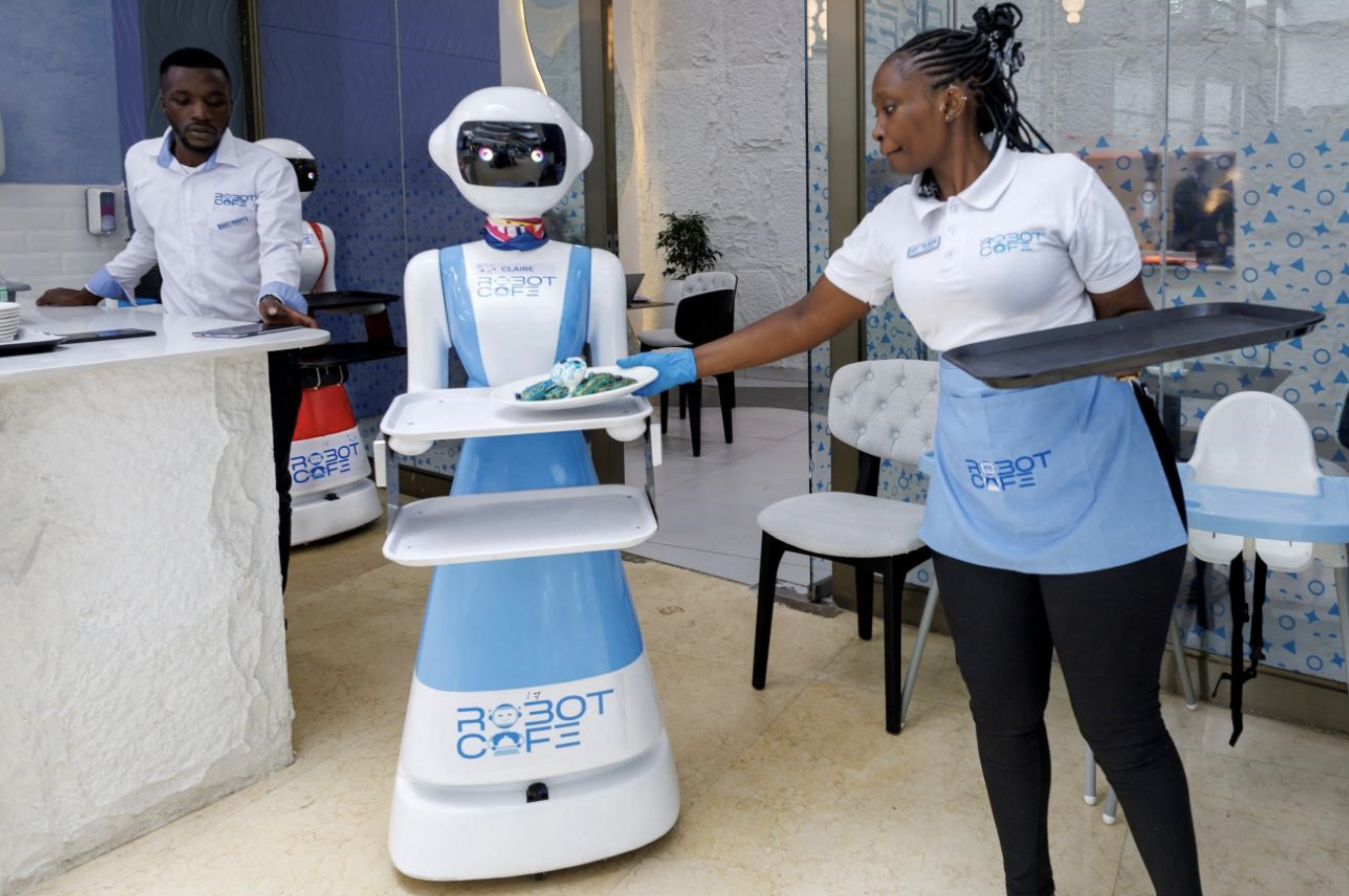
Africa is home to the world’s youngest population, with more than 70% of its people under the age of 30. This demographic dividend could become one of the continent’s greatest advantages in the AI era.
Robotics entrepreneur Jasin Owili emphasszed that Africa’s primary opportunity lies in deploying a tech-savvy youth demographic to build practical, vernacular solutions.
While there is reason for optimism, the reality remains sobering. According to African Union statistics, Africa accounts for just around 3% of the world’s AI talent pool.
“As much as we want to create solutions in AI, there’s a huge gap in the skill sets available,” Owili said.
Adekanmbi pointed out that Africa’s AI potential remains bottlenecked by an overly theoretical educational system. To move from basic certificates to validated applied skills, he advocated for early-childhood curriculum overhauls, asserting that AI literacy must begin at age three rather than in universities.
International partnerships could also help narrow the talent gap. China has announced plans to establish AI cooperation centers with partners including the African Union and provide 5 000 AI training opportunities for developing countries. Owili said his company is working with Chinese partners to train local AI talent.
To make partnerships effective, Adekanmbi emphasized the importance of customisation so that the skills acquired remain relevant to African context.
On the table or on the menu?
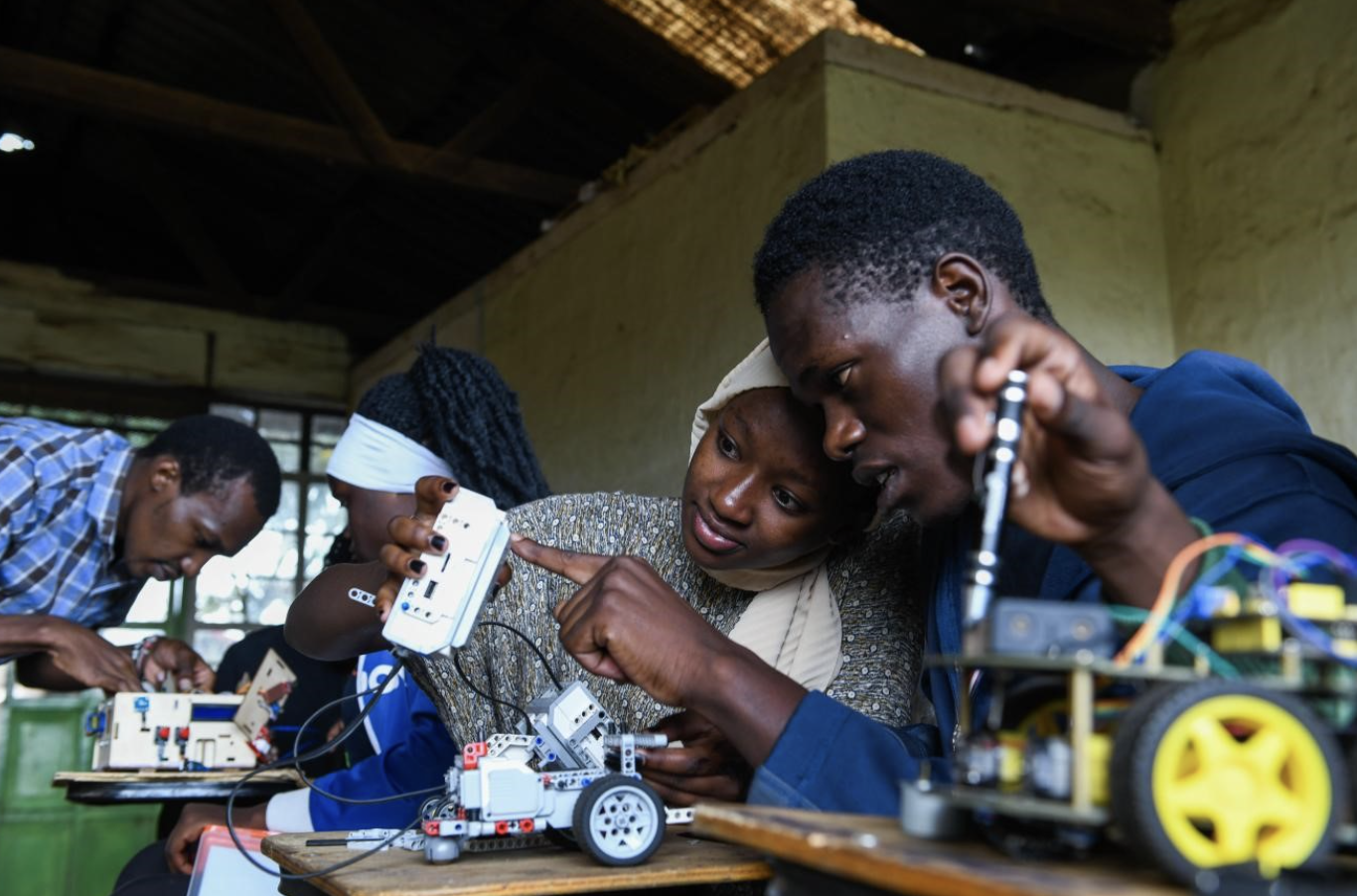
Africa possesses the ultimate raw materials of the digital age, unrivaled demographic vitality and unique contextual data. To translate the advantages into significant economic growth, the African Union Executive Council endorsed the Continental AI Strategy in 2024, which positions the continent as a key player in the global AI landscape.
This vision is echoed by Adekanmbi, who warned that Africa must proactively negotiate its demographic and cultural leverage to secure a seat at the global tech table rather than becoming passive consumer of imported AI solutions.
Asare took the argument a step further, saying true technological sovereignty depends on retaining internal value, creating seamless cross-border digital markets and mandate-buying African-owned technology instead of outsourcing government contracts to Western corporations.
Owili argued that fragmented national initiatives alone will not be enough. He called for a continent-wide technology framework — similar in spirit to Africa’s free trade agenda — that would enable engineers, innovators and AI solutions to scale across borders with fewer regulatory barriers.
“We don’t want to be on the menu; we must be on the table negotiating, demonstrating our advantage, and showing the world that Africa has got something to offer,” Adekanmbi said.
Africa’s AI future will not be determined by a lack of vision but by how rapidly the continent can turn ambition into action. By strengthening regulatory coordination, deepening regional integration and retaining more of the value created by its digital economy, Africa has the opportunity to shape —not merely participate in — the next wave of the global AI revolution.
- The International Monetary Fund report highlights AI's potential to boost productivity, create jobs, and improve public services in sub-Saharan Africa, estimating AI could add up to $1.5 trillion to the continent's economy by 2030.
- Africa faces low AI adoption rates due to limited infrastructure, with less than 2% of global data-centre capacity and only 36% internet penetration among its population.
- Experts advocate for a localized, culturally grounded approach to AI development, emphasizing vernacular language models and early AI literacy starting from age three.
- Africa's young population, with over 70% under age 30, is seen as a key advantage, but currently only accounts for about 3% of the world’s AI talent pool, highlighting a substantial skills gap.
- The African Union's 2024 Continental AI Strategy aims to secure Africa's role in the global AI landscape through regional integration, regulatory coordination, and prioritizing African-owned technology over imports.


