


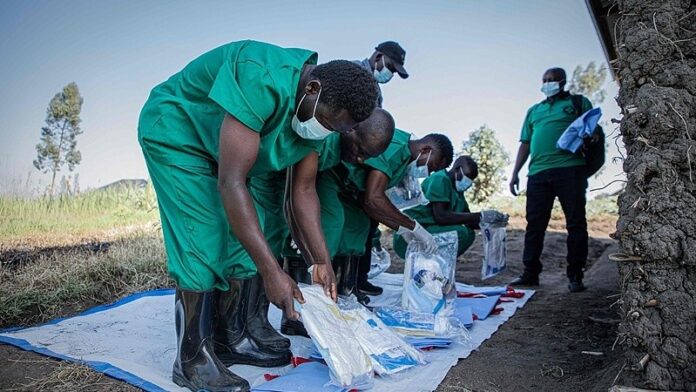
The true scale of the Ebola outbreak in the Democratic Republic of the Congo (DRC) may be significantly higher than official figures suggest, aid agency Oxfam has warned, citing severe shortages of clean water, sanitation facilities, and disease surveillance in affected communities.
The outbreak, caused by the Bundibugyo strain of the Ebola virus, has become the largest on record for the strain, according to the US Centers for Disease Control and Prevention. The DRC Ministry of Health has reported 808 confirmed cases and 192 deaths on Monday, but humanitarian workers on the ground fear many infections are going undetected.
New field data collected by Oxfam in Ituri province, found that only one in five health facilities has access to sufficient clean water. At the same time, many communities continue to rely on contaminated water sources.
In Mongbwalo, a town of nearly 140 000 people at the center of the outbreak, only 20% of residents have access to clean water, and just 25% have access to functional sanitation and hygiene facilities. Many families are forced to use water contaminated by runoff from nearby mining activities.
“Water, the absolute first line of defense in any public health emergency, is simply not available,” said Manel Rebordosa, Oxfam’s Field Response Coordinator in Ituri Province.
According to Rebordosa, miners working in surrounding areas often lack access to toilets and handwashing facilities before returning to communities already struggling to contain the virus. The cost of clean water, approximately $2 for 20 liters, remains beyond the reach of many families.
Contact tracing and healthcare systems are under strain
Public health experts warn that declining disease surveillance efforts are compounding the lack of clean water.
Contact tracing, one of the most effective tools for containing Ebola outbreaks, is currently reaching only 43% of identified contacts, compared with nearly 79% during the 2018-2020 Ebola outbreak in the same region.
Health workers say funding cuts and the withdrawal of international support have weakened surveillance systems, creating gaps that allow infections to spread undetected.
“That gap is not just a statistic, it is a painful reality that allows the virus to spread undetected through communities,” Rebordosa said.
The DRC’s already fragile healthcare system faces additional challenges. The country has just 0.2 doctors per 1 000 people, while more than 70 health facilities have been damaged or destroyed by years of conflict.
In some areas of neighboring North Kivu province, deaths are being reported before patients are even identified as Ebola cases. Health officials say increasing numbers of families are caring for sick relatives at home, inadvertently exposing themselves and others to infection.
Funding crisis threatens response efforts
Humanitarian agencies warn that deep funding cuts are undermining efforts to control the outbreak.
Global humanitarian funding for the DRC has fallen by 46%, from $2.58-billion in 2024 to $1.4-billion in 2026, representing the lowest funding coverage rate in a decade. Local organizations, often the first responders during disease outbreaks, have received less than 6% of recent humanitarian funding, according to the DRC NGO Forum.
The funding shortfall has forced aid groups to scale back community outreach programs, which are critical for public awareness and disease prevention.
“When trusted community outreach teams disappear, rumors spread faster than the virus,” Rebordosa said. “People now fear healthcare facilities, which they see as deathtraps. Families are turning to traditional remedies, which risks delaying treatment and allowing the virus to spread further.”
Shortages of personal protective equipment, sanitation infrastructure, and clean water continue to hamper response operations, aid workers say.
Communities living in fear
For residents in affected communities, the outbreak has brought growing anxiety and uncertainty.
“I brought my child to the hospital when I noticed she had a fever, and she is now being tested. We are very worried,” said Tibakanya Mireille, a mother of five from Ituri Province.
She said several people in her community had already died from the disease. At the same time, some households had been placed under quarantine after family members were infected while caring for sick relatives.
The Bundibugyo strain currently has no licensed vaccine or approved treatment, making prevention measures such as handwashing, clean water access, and sanitation especially critical.
Aid organizations have launched an initial six-month, $11.6-million response program to supply clean water, hygiene kits, and community awareness support to over 200 000 people in Ituri Province. However, these organizations warn that much greater international support will be needed to prevent the outbreak from escalating further.
- The Ebola outbreak in the DRC’s Ituri province is likely underreported, with official figures showing 808 cases and 192 deaths, but many infections may be undetected due to poor disease surveillance and limited healthcare access.
- Only 20% of health facilities have adequate clean water, and many communities rely on contaminated sources, exacerbating the spread of the virus in heavily affected areas like Mongbwalo.
- Contact tracing is reaching just 43% of identified contacts, significantly lower than past outbreaks, due to funding cuts and withdrawal of international support weakening surveillance efforts.
- Humanitarian funding for the DRC has declined 46% from 2024 to 2026, forcing aid groups to reduce outreach and essential services, increasing community mistrust and reliance on ineffective traditional remedies.
- With no licensed vaccine or approved treatment for the Bundibugyo strain, aid organizations have launched a $11.6-million response plan, but warn that larger international support is urgently needed to control the outbreak.


