


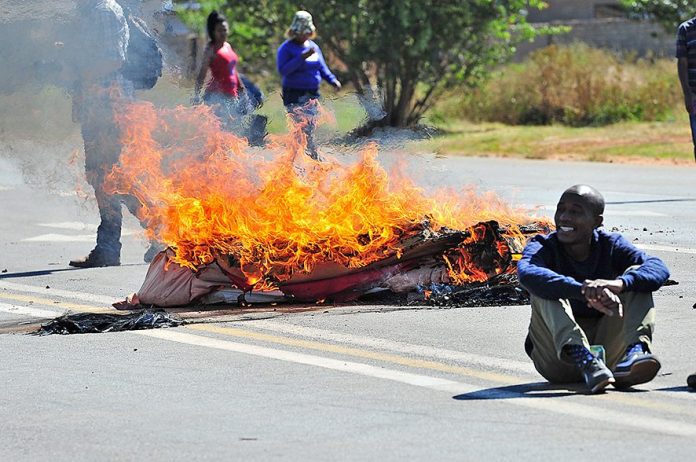
There is a moment in every democracy before frustration becomes visible. It arrives quietly, long before crowds gather in the streets or headlines begin speaking of unrest. It starts in ordinary moments.
A resident reports a broken water pipe that remains unattended for months. A young graduate sends out hundreds of job applications without receiving a response. Communities repeatedly raise concerns about safety, service delivery or deteriorating living conditions, only to feel that they are heard but not truly listened to.
Repeated disappointments
People do not wake up one morning angry enough to protest. Public frustration accumulates slowly. It grows through repeated disappointments, delayed action and the gradual feeling that speaking up changes very little.
South Africa today finds itself confronting that reality. Recent tensions around unemployment, immigration, crime and service delivery have reopened difficult
conversations across the country.
Violent conduct and xenophobia must be condemned without qualification. No democracy can justify intimidation, destruction or hatred in the name of public expression. But if the conversation ends there, we risk ignoring something deeper and potentially more
dangerous.
Societies rarely reach breaking point because of a single event. They reach it when people begin to believe that their concerns are repeatedly acknowledged politically but insufficiently addressed in practice.
The challenge is therefore not simply about protest. It is about responsiveness.
South Africa’s experience is not unique. Across many democracies, citizens are increasingly questioning whether institutions are keeping pace with the realities people face every day. From rising economic pressures and social divisions to declining trust in public institutions, governments around the world are confronting similar frustrations.
Erosion of public trust
Public trust does not disappear overnight. It erodes gradually. People can tolerate hardship when they believe things are moving in the right direction. They can accept
difficulty when leadership demonstrates honesty and a sense of purpose.
What becomes difficult to sustain is the perception that problems remain permanently acknowledged but endlessly unresolved.
That distinction matters.
There is a difference between hardship and hopelessness. Hardship can mobilise resilience. Communities often unite during difficult periods when they believe progress remains possible. Hopelessness creates something entirely different. It produces withdrawal, frustration and eventually disruption.
Right to protest
South Africa’s Constitution protects the right to protest because public participation and dissent are essential features of democracy. Yet democratic systems also rely on something less formal but equally important: trust.
Citizens participate because they believe institutions will ultimately respond. Once that belief begins to weaken, pressure starts building beneath the surface. This raises an uncomfortable but necessary question
around accountability.
When protests become violent, there are visible mechanisms of accountability. Law
enforcement intervenes. Courts act. Public scrutiny follows. The challenge becomes more complex when service delivery failures persist over extended periods, public confidence declines, and citizens perceive limited progress on issues that affect their daily lives.
These are uncomfortable questions because they move beyond individual political moments and begin examining systems themselves.
Accountability must be consistent
Accountability cannot become visible only during elections or periods of public outrage. It cannot appear only when crises become impossible to ignore. Without visible consequences for persistent underperformance, failure risks becoming normalised. Over time, societies become reactive rather than responsive.
A common public perception is that interventions often gain momentum only once situations have approached crisis point. Communities protest before engagement intensifies. Infrastructure deteriorates before urgent responses emerge. Public frustration escalates before meaningful attention follows.
Crisis management increasingly risks replacing prevention. The danger in this pattern is not simply inefficiency. It is the gradual erosion of public confidence and trust in institutions.
Democratic legitimacy is not sustained only through laws, institutions or elections. It is earned repeatedly through responsiveness, accountability and trust. Periods of social tension also reveal something often overlooked in leadership: empathy.
Empathy is key
Empathy is often mistaken for softness. In reality, particularly during periods of strain, it becomes a strategic necessity. Citizens need to believe that leaders understand the realities shaping their daily lives, even while enforcing laws and maintaining order.
Compassion without accountability weakens authority. Accountability without compassion deepens division. Leadership requires both.
South Africa’s experience also reflects a broader global reality. Domestic frustrations no longer remain domestic concerns. A country’s reputation is increasingly shaped not only by economic indicators and policy decisions, but by perceptions of institutional responsiveness and public confidence.
Investors pay attention to trust. Citizens do too. Ultimately, the challenge confronting South Africa extends beyond immigration, protests or service delivery failures. It raises a broader question facing democracies everywhere: how do societies preserve
legitimacy when citizens increasingly feel unheard?
Constructive engagement
Democracies function best when disagreement remains channelled through lawful and constructive mechanisms. Public participation, civic engagement, dialogue and institutional responsiveness provide pathways through which tensions can be addressed before they escalate into confrontation.
The challenge for both citizens and institutions is to keep those channels credible, visible and effective.
Because protest itself is not the greatest threat to democracy. The greater danger emerges when citizens quietly conclude that nobody is listening anymore.
- Muzi Dladla is Executive Manager: Stakeholder Relations at Sasria (South African Special Risks Insurance Association).
- Tshepo Matseba is Managing Director of Reputation 1st Group, Strategic Partner at Ebony + Ivory Integrated Communication Agency, and former President of the Public Relations Institute of Southern Africa.
- Public frustration in South Africa is growing gradually due to repeated unmet needs in service delivery, employment, and safety, leading to social tensions around unemployment, immigration, and crime.
- Violence and xenophobia in protests must be condemned, but deeper issues of political acknowledgment without effective action risk long-term societal damage and erosion of public trust.
- Trust in democratic institutions erodes slowly when citizens feel their concerns are continually acknowledged but not resolved, causing withdrawal, frustration, and potential disruption.
- Accountability in governance must be consistent and proactive, not only reactive during crises or elections; failure to address persistent issues normalizes underperformance and damages democratic legitimacy.
- Effective leadership requires both empathy and accountability to maintain public confidence, ensure constructive engagement, and prevent citizens from feeling unheard, a challenge relevant globally beyond South Africa.


