


Crude oil fell to a two-month low this week. For South Africa, that is potentially the best economic news we have received in months.
After weeks of conflict in the Middle East, fears around the Strait of Hormuz and concerns about global energy supply disruptions, markets are beginning to price in the possibility of greater stability.
The result has been a sharp decline in oil prices. For South Africans, that matters.
Lower oil prices reduce fuel costs, reduce transport costs and ease inflationary pressure throughout the economy.
Businesses benefit. Consumers benefit. Pressure on interest rates eases. Disposable income improves. In short, lower oil prices provide welcome relief.
The world economy, which seemed to be standing on the edge of another large energy shock only weeks ago, appears to be stepping back from the brink. That is undoubtedly good news.
But cheaper oil will not fix Johannesburg. And therein lies South Africa’s real challenge.
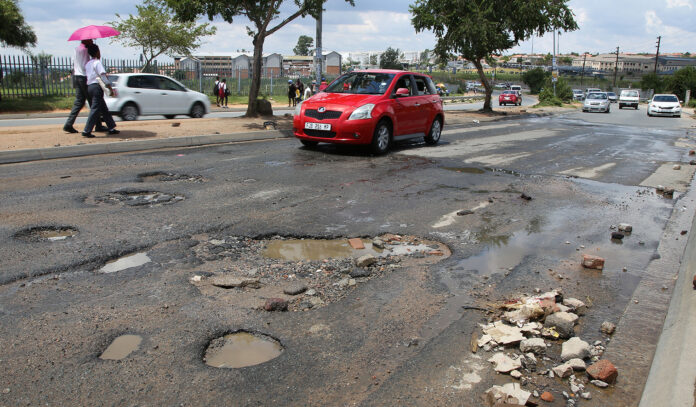
While global markets were celebrating lower energy costs this week, South Africans were once again confronted by the unfolding financial crisis in Joburg. Johannesburg is not just another municipality; it is South Africa’s economic engine. It is Africa’s financial capital.
Which raises an uncomfortable question: How did we allow Africa’s economic powerhouse to descend into allegations of financial mismanagement, deteriorating service delivery and growing fiscal instability? More importantly, how much economic growth has South Africa sacrificed as a result?
Municipal governance is economic policy. Every burst water pipe, every delayed development approval, every electricity interruption and every infrastructure failure adds costs to the economy.
Higher costs mean lower investment and lower investment means lower growth. Lower growth means fewer jobs. The consequences ultimately reach every South African household.
Many of the foundations of economic growth begin with something far simpler: Basic governance. Basic accountability. Basic service delivery.
Without the foundations, sustainable economic growth becomes increasingly difficult.
And growth is what South Africa needs. The country cannot tax its way to prosperity. It cannot borrow its way to prosperity. It cannot regulate its way to prosperity. It must grow its way to prosperity. Growth creates jobs, increases tax revenue, improves living standards and restores confidence. South Africa faces an uncertain international environment. The recent tariff threats emerging from the US should serve as a warning.
Trade relationships and market access can no longer be taken for granted. Countries are increasingly prioritising their own economic interests.
South Africa therefore needs bold leadership and careful economic diplomacy. This is not about choosing sides. It is about recognising economic reality.
The US remains an important export market and source of investment for South Africa. Any threat to the relationship should concern policymakers, businesses and workers alike.
At the same time, South Africa must continue expanding trade opportunities. In a rapidly changing global economy, successful countries will be those that maintain market access, attract investment and remain internationally competitive.
Ultimately, South Africa’s success will depend on what happens in its own borders.
The encouraging news is that the global environment might finally be offering some relief.
Lower oil prices reduce inflationary pressure and reduced Middle East tension improves confidence. More stable energy markets support global growth. These are positive developments.
But relief is not growth. Growth requires leadership, execution, functioning municipalities, investment and confidence.
The lesson from this week is therefore not simply that oil prices have fallen. The lesson is that opportunities exist for South Africa. The world might be stepping back from the brink. The question is whether South Africa is prepared to step forward. Because while we cannot control the Strait of Hormuz, we can control how our municipalities are governed. While we cannot control events in Washington, we can strengthen our competitiveness. While we cannot control global markets, we can create an environment that attracts investment and encourages growth.
South Africa possesses enormous potential. The challenge has never been a lack of opportunity. The challenge has always been turning opportunity into growth.
Perhaps this week’s good news from global energy markets should serve as a reminder that while the world might occasionally give us a helping hand, our economic future will ultimately be determined by the quality of our own leadership, governance and decision-making.
- Doesburgh is an economist, head of economics at CPUT and a regular commentator on the economic landscape, focusing on financial markets, policy, and business strategy. vandoesburghm@cput.ac.za
- Crude oil prices fell to a two-month low, easing inflation and reducing costs for South Africa’s economy, offering some much-needed relief amid global energy uncertainties.
- Despite global energy market improvements, Johannesburg faces a deepening financial crisis marked by mismanagement, service delivery failures, and fiscal instability, threatening national economic growth.
- Effective municipal governance is crucial for economic growth in South Africa, as infrastructure failures and service disruptions increase costs, reduce investment, and hinder job creation.
- South Africa cannot rely on taxation, borrowing or regulation for prosperity; sustainable growth driven by leadership, investment, and improved governance is essential amid an uncertain international trade environment.
- The drop in oil prices presents an opportunity, but South Africa’s economic future depends on internal leadership, governance quality, and the ability to convert opportunities into real growth and competitiveness.


