


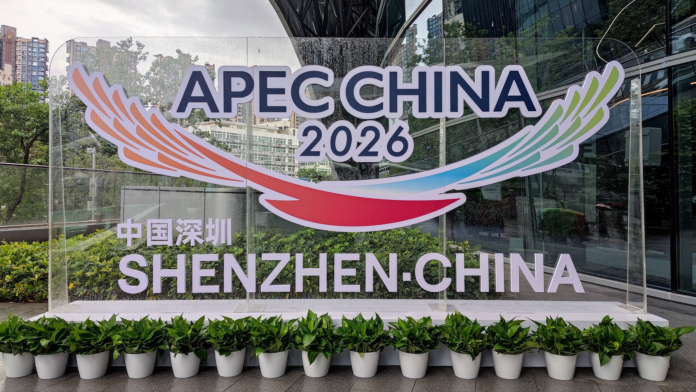
As the southern Chinese metropolis of Shenzhen prepares to host the 33rd Asia-Pacific Economic Cooperation (Apec) Economic Leaders’ Meeting in November, China is once again opening its doors to leaders from around the world.
Over the years, China has hosted a series of high-profile international gatherings that have brought together heads of state, government officials and global decision-makers. Far beyond serving as platforms for dialogue, these events have highlighted China’s vision for international cooperation and reflected President Xi Jinping’s distinctive approach to diplomacy.
Diplomacy begins with hospitality
For President Xi, welcoming foreign leaders starts with personal warmth and attention to detail.
A memorable example came in May 2023, when Kazakh President Kassym-Jomart Tokayev arrived in the historic Silk Road city of Xi’an for a state visit and the inaugural China-Central Asia Summit. Marking Tokayev’s 70th birthday, Xi took the opportunity during their talks to extend his personal congratulations.
The exchange, which included Tokayev responding in fluent Mandarin, underscored the close ties between the two countries and reflected a broader diplomatic philosophy rooted in friendship and mutual respect.
Drawing inspiration from the ancient Chinese saying, “Is it not a real delight to have friends coming to visit you from afar?”, Xi has consistently emphasized hospitality as an important element of China’s engagement with the world.
A platform for global cooperation
China’s major diplomatic events have also become important platforms for addressing pressing global challenges and promoting international cooperation.
In 2016, China hosted the Group of 20 (G20) Summit for the first time. Under Xi’s leadership, the Hangzhou Summit became a landmark moment in global economic governance. It placed development at the center of the global macroeconomic agenda and brought together a record number of developing countries.
The summit also adopted an action plan to advance implementation of the United Nations 2030 Agenda for Sustainable Development and secured the first collective commitment to support industrialization in Africa and the world’s least developed nations.
These outcomes reflected China’s longstanding commitment to common development and shared prosperity.
China’s vision in a changing world
As the world grapples with conflicts, geopolitical tensions, protectionism and other global challenges, China has increasingly used major diplomatic forums to present proposals aimed at strengthening international cooperation.
In recent years, Xi has introduced a series of initiatives through China’s diplomatic platforms. These include the Global Security Initiative unveiled at the Boao Forum for Asia in 2022, the Global Civilization Initiative announced in 2023, and the Global Governance Initiative presented at the Shanghai Cooperation Organization (SCO) Tianjin Summit.
China has also renewed calls for advancing the Global Development Initiative, emphasizing peace, development and multilateral cooperation as key pillars of global governance.
Intense diplomacy behind every summit
The success of these gatherings is supported by an intensive diplomatic effort personally led by Xi.
Before the opening of the 2018 Beijing Summit of the Forum on China-Africa Cooperation (FOCAC), Xi conducted 11 bilateral meetings with African leaders in a single day. During the 2016 G20 Hangzhou Summit, he attended 13 meetings and events over just more than 80 hours, delivering 11 speeches and meeting 27 foreign leaders.
Similarly, at the SCO Qingdao Summit in 2018, Xi participated in more than 20 official activities over two days.
These tightly packed schedules demonstrate both the scale of China’s diplomatic engagement and Xi’s personal commitment to promoting international dialogue.
Turning ideas into action
China has sought not only to propose ideas but also to translate them into tangible results.
Since its launch in 2013, the Belt and Road Initiative has generated nearly US$1 trillion in global investment and created at least 500,000 jobs across participating countries. In Africa and elsewhere, infrastructure and development projects associated with the initiative have been widely viewed as contributing to economic growth and connectivity.
China’s cooperation with Africa has also continued to evolve. Following the implementation of the Ten Cooperation Plans, Eight Major Initiatives and Nine Programs, Xi announced a new positioning of China-Africa relations and ten partnership actions at the 2024 FOCAC Beijing Summit, expanding cooperation in the pursuit of modernization.
A shared future from Shenzhen
As Shenzhen prepares to welcome world leaders for the upcoming APEC Economic Leaders’ Meeting, China is reaffirming its commitment to building international consensus on peace, development and cooperation.
The gathering will represent another chapter in China’s long journey of hosting global dialogue and advancing collaborative solutions to shared challenges. By bringing nations together, China hopes to strengthen openness, deepen partnerships and contribute to the building of a community with a shared future for humanity.
- Shenzhen will host the 33rd Asia-Pacific Economic Cooperation (APEC) Economic Leaders' Meeting in November 2024.
- China has hosted major international events, including the 2016 G20 Summit in Hangzhou and the 2018 Forum on China-Africa Cooperation (FOCAC) Beijing Summit.
- President Xi Jinping emphasizes hospitality and personal diplomacy, exemplified by his birthday wishes to Kazakh President Tokayev in 2023.
- Xi has introduced initiatives such as the Global Security Initiative, Global Civilization Initiative, and Global Governance Initiative to strengthen international cooperation.
- Since 2013, the Belt and Road Initiative has attracted nearly US$1 trillion in investment and created at least 500,000 jobs in participating countries.


