


South Africa is bleeding and we are in danger of becoming numb to it.
Another mass shooting.
Another group of bodies.
Another family shattered.
Another statement of condemnation.
Another promise that the perpetrators will be brought to justice.
Then the news cycle moves on.
It cannot continue like this.
A deeper crisis exposed
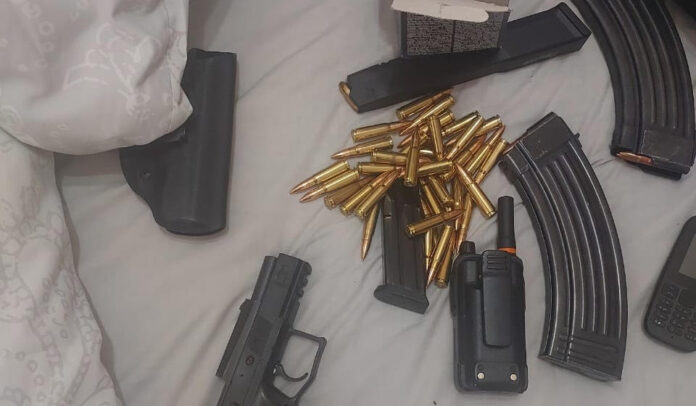
The recent wave of mass shootings, including the killing of 18 people in Wedela on the West Rand, has once again exposed the terrifying firepower in the hands of criminals.
These are not isolated acts of violence. They are symptoms of a deeper crisis: organised crime, illegal firearms, weak intelligence, criminal syndicates and communities increasingly held hostage by violence.
And alongside the mass killings is another national emergency: femicide.
Women are being murdered in their homes, on the streets and in circumstances that leave families devastated and communities traumatised.
The discovery of multiple women’s bodies in Ekurhuleni has rightly triggered public outrage and calls for answers.
We must be careful not to speculate about links between cases before investigators establish the facts.
But we must also refuse to treat each killing as an isolated tragedy.
There is a pattern of violence that demands a national response.
South Africa cannot police this crisis through press conferences alone.
We need action.
Dismantling the syndicate pipelines
The illegal firearms pipeline must be smashed.
Criminal syndicates cannot continue acquiring high-powered weapons and using them with apparent impunity.
Every firearm recovered from a crime scene should be traced.
Every diversion from legal stockpiles should be investigated.
Every trafficking network must be pursued.
And the investigation cannot stop with the person pulling the trigger.
Who supplied the weapon?
Who financed the operation?
Who provided the vehicles?
Who supplied information?
Who laundered the money?
Who protected the criminals?
Those are the questions that dismantle organised crime.
Restoring confidence in policing
We also need intelligence-led policing that actually prevents attacks rather than arriving after the blood has been spilt.
South Africa has some highly capable police officers and investigators.
But they cannot succeed if intelligence is poor, forensic backlogs persist, specialised units are overstretched and communities lose confidence in the criminal justice system.
The state must restore that confidence.
That means professional policing, properly resourced detectives, functioning forensic laboratories, effective crime intelligence and prosecutors capable of converting investigations into convictions.
There must also be consequences for police corruption.
Every corrupt officer who protects a criminal syndicate helps create the conditions for the next murder.
Shifting the burden on femicide
Femicide demands the same urgency.
For too long, women have been told to change their behaviour to stay safe.
Don’t walk alone. Don’t accept a lift. Share your location. Watch your drink. Check the back seat. Lock the door.
Women have done everything society has asked of them.
The question is: what are we doing to stop the predators?
When a woman goes missing, the response must be immediate.
Families should report missing persons without delay.
Police resources must be mobilised quickly. CCTV, cellphone data, vehicle tracking, banking information and forensic evidence must be used aggressively and lawfully.
And communities must help.
Information can save lives.
But there is another responsibility -we must stop turning social media into a parallel crime laboratory.
Unverified names, accusations, photographs and rumours can destroy lives and compromise investigations.
Facts matter.
Evidence matters.
Justice matters.
Above all, victims matter.
Shock is not a strategy
We cannot allow South Africans to become accustomed to seeing bodies covered with blankets on our television screens.
We cannot allow the murder of women to become another statistic.
We cannot allow taverns, homes, taxi ranks, funerals, weddings or public spaces to become potential killing grounds.
And we cannot keep expressing shock every time the body count rises.
Shock is not a strategy.
Condemnation is not a strategy.
Action is.
Government must treat the escalation of mass shootings, organised crime and femicide as a national security and public-safety emergency. President Cyril Ramaphosa must act now!
The response must be coordinated, intelligence-driven and sustained -not a temporary operation launched after the cameras arrive.
Facing the uncomfortable truth
South Africa has confronted enormous challenges before.
We can confront this one too.
But first we must acknowledge the uncomfortable truth:
We are losing too many people to violence.
Almost 200 people have been killed in some 44 mass shootings since January. We have an average murder rate of almost 60 people each and every day. Eleven bodies of women have been found in Ekurhuleni over recent months.
And every day we fail to act decisively is another day in which another family waits for a loved one who may never come home.
South Africa cannot simply mourn its dead.
We must stop the killing.
We need the political will. We need action. We need effective policing. And we need it now!

- Yusuf Abramjee is a crime expert and activist.
- South Africa has experienced nearly 200 deaths in 44 mass shootings since January, with an average daily murder rate of almost 60 people.
- The killing of 18 people in Wedela on the West Rand is part of a wider crisis involving organised crime, illegal firearms, and weak intelligence.
- Eleven women's bodies have been found recently in Ekurhuleni, highlighting a separate but urgent national emergency of femicide.
- Effective responses require dismantling illegal firearms pipelines, intelligence-led policing, and restoring public confidence in the justice system.
- Immediate action, coordinated and sustained by government and President Cyril Ramaphosa, is called for to treat organized crime and femicide as a national security crisis.


