


African countries have secured an additional $900-million in commitments to expand access to clean cooking, the International Energy Agency (IEA) said after a high-level virtual meeting this week.
The new pledges bring total commitments to more than $3.1-billion since the inaugural summit in Paris in 2024, where governments, development banks and private sector partners pledged $2.2-billion to help reduce reliance on polluting cooking fuels.
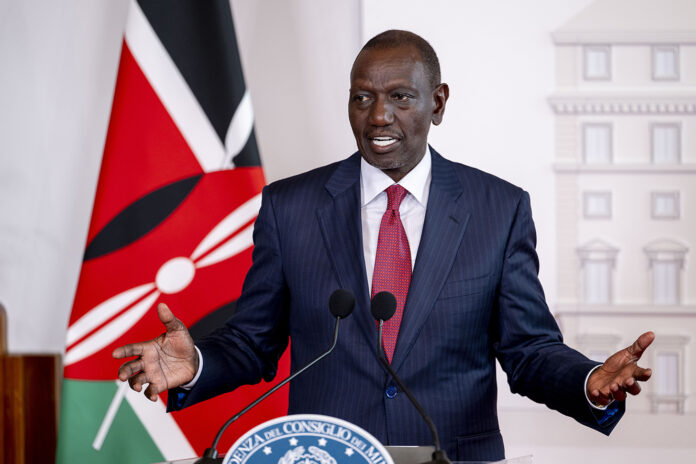
The virtual session brought together Kenyan President William Ruto, Norwegian Prime Minister Jonas Gahr Støre, US Energy Secretary Chris Wright, African Union Commissioner for Infrastructure and Energy Lerato Mataboge and IEA executive director Fatih Birol to review progress and announce new financial and policy commitments.
Nearly 1-billion people across Africa still lack access to clean cooking, relying on fuels such as firewood and charcoal that contribute to about 850 000 premature deaths each year, according to the IEA.
“Closing Africa’s clean cooking access gap will require investment at scale, yet annual financing remains far below what is needed.
“That is why the announcements we have heard today are significant.
The IEA said that $740-million of the funds pledged at the 2024 summit has already been deployed across 22 African countries, while 121 new clean cooking policies have been introduced in more than 30 countries that account for 80% of Africans without access to clean cooking.
“At our 2024 Summit, we mobilised $2.2-billion in public and private sector commitments for clean cooking in Africa, to be disbursed in full by 2030. I
“ said we would track every dollar committed and every stove delivered to households,” the Kenyan president said.
“Today, I am pleased to report that more than one-third of those funds have already been disbursed in just two years.
“Since then, new partners have stepped forward with a further $900-million in commitments, with more expected before the summit reconvenes,” Birol said.
The agency also launched a Clean Cooking Security Programme to strengthen global supply chains for cooking fuels, particularly liquefied petroleum gas, after disruptions to shipping through the Strait of Hormuzaffected global supplies earlier this year.
Clean cooking refers to the use of low-emission fuels and technologies, such as ethanol, biogas and electricityinstead of traditional fuels like charcoal and firewood. – CGTN
- African countries have secured an additional $900 million to expand access to clean cooking, raising total commitments to over $3.1 billion since the 2024 Paris summit.
- The pledges aim to reduce reliance on polluting fuels like firewood and charcoal, which cause around 850,000 premature deaths annually across Africa.
- Since the 2024 summit, $740 million has been deployed in 22 African countries, with 121 new clean cooking policies introduced in over 30 countries covering 80% of those without access.
- A Clean Cooking Security Programme was launched to strengthen global cooking fuel supply chains, focusing on liquefied petroleum gas after recent disruptions.
- Key leaders, including Kenyan President William Ruto and IEA Executive Director Fatih Birol, emphasized ongoing investment and tracking of funds to close Africa’s clean cooking gap by 2030.


