


More than 1 200 workers at De Beers’ Venetia Mine and De Beers Sightholder Sales South Africa are now staring at a future of uncertainty after the company announced plans that could wipe away their livelihoods.
The National Union of Mineworkers (NUM) has warned that the proposed cuts will not only affect employees, but families, communities and an entire economic ecosystem built around one of South Africa’s biggest diamond operations.
De Beers has issued a Section 189A notice, threatening 1 214 jobs — 1 134 permanent employees at Venetia Mine and another 80 workers at DBSSSA. The company has also announced plans to pause production at Venetia Mine for two years.
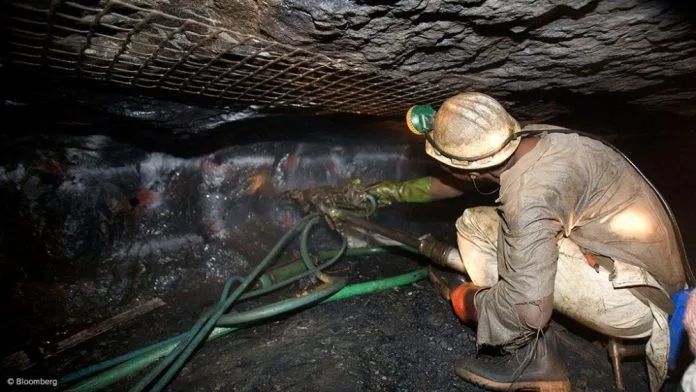
For the workers who spent years underground extracting the wealth that built one of the world’s most recognisable diamond brands, the announcement represents more than a business decision.
It is a threat to homes, school fees, medical bills and the dignity that comes with earning a living.
The NUM says workers are being asked to carry the burden of problems they did not create.
“Workers cannot be treated as disposable tools that are discarded whenever companies face economic pressures,” said NUM diamond sector chief negotiator Masibulele Naki.
‘De Beers has long been aware of challenges’
The union argues that De Beers had long been aware of the challenges facing the diamond market and should have engaged workers earlier instead of presenting the retrenchments as an unavoidable emergency.
The anger among workers comes from a familiar question: when companies prosper, who shares in the success — and when companies struggle, who pays the price?
Mineworkers have long been the hands that turn natural resources into billions in value. They work in dangerous environments, away from their families, to keep production moving. Yet when markets weaken, their jobs often become the first line of sacrifice.
The NUM has rejected the idea that reducing workers’ wages or cutting jobs should be the easiest solution to protect a company’s bottom line.
“The salaries of workers are not the cause of the current difficulties facing the company,” Naki said. “Workers’ wages, jobs, and livelihoods cannot become the first target whenever management seeks to reduce costs.”
‘Alternatives must be properly explored’
The union has also questioned whether alternatives have been properly explored, arguing that retrenchment consultations should not simply become a process to confirm decisions already made.
Among the alternatives proposed are retraining and upskilling workers, temporary job preservation measures, reducing non-essential expenditure and reviewing executive and management costs.
For communities surrounding Venetia Mine, the impact could extend far beyond the mine gates.
A retrenched worker does not lose only a salary. A household loses stability. A child’s education is placed under pressure. Local businesses lose customers. Entire communities feel the shock when hundreds of families suddenly have less money circulating.
‘Devastating consequences’
The NUM has warned that the possible loss of these jobs could have “devastating consequences” for workers, their families and surrounding communities.
The union has called on government departments, organised labour and other stakeholders to intervene to protect the jobs.
It has also raised concerns that retrenchments could be used as a pathway towards replacing permanent employees with contractors — a practice the union says has become common across mining industries.
At the centre of the dispute are not just numbers on a spreadsheet, but people whose lives are tied to the mine.
The workers now enter consultations knowing that the outcome could determine whether they continue earning a livelihood or join thousands of others pushed out of an industry that once promised security.
The NUM says it will use every organisational, legal and bargaining tool available to defend the jobs.
For the workers of Venetia, the fight is not simply about keeping a position on a payroll.
It is about whether the people who helped create the wealth of an industry will be remembered when that industry faces difficult times.
- De Beers plans to cut 1,214 jobs and pause production at Venetia Mine for two years, threatening livelihoods of workers and their communities.
- The National Union of Mineworkers (NUM) criticizes De Beers for not engaging workers earlier and argues that workers should not bear the burden of economic challenges.
- NUM demands exploration of alternatives to job cuts, such as retraining, temporary job preservation, and reducing executive costs.
- The union warns that retrenchments could severely impact workers, families, local businesses, and communities relying on the mine's economy.
- NUM calls for government and stakeholder intervention and vows to use all means to defend jobs, emphasizing the human impact beyond financial decisions.


