


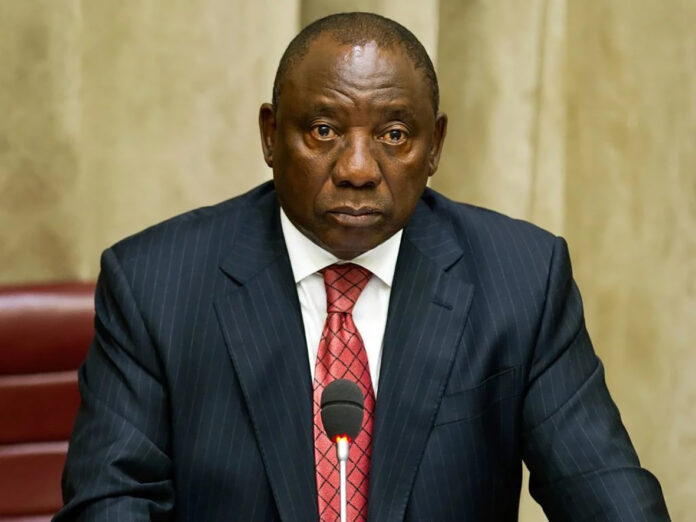
President Cyril Ramaphosa has placed one piece on the board: a court application. His opponents have placed another: an impeachment committee.
Tomorrow, a judge decides which move comes first.
Ramaphosa’s fight to stop an impeachment inquiry has become a battle over time, power and constitutional control.
The President wants the clock stopped.
His opponents want it to keep running.
At stake is not only whether Parliament proceeds with an inquiry that could threaten Ramaphosa’s presidency. It is also a deeper constitutional question: can a president pause an accountability process by challenging the legality of the process itself?
Ramaphosa’s delay crutch
Ramaphosa’s legal strategy is built around one move — delay.
He is not asking the Western Cape High Court to decide whether he should be removed from office. He wants the court to suspend the impeachment process until it determines whether the Independent Panel report that triggered the process should stand.
His lawyers argue that allowing Parliament to proceed before the review is heard could result in the President being subjected to an impeachment process based on a report that may later be declared unlawful.
“The President merely asks for a stay of a few months,” his legal team argues, pointing to the fact that his review application is set down for September.
But the opposing side sees a different strategy.
Their argument is that Ramaphosa is trying to move the battle from Parliament to the courts because Parliament’s process is gaining momentum.
The question they will put before the judge is blunt:
Should a president be able to stop Parliament from holding him accountable simply because he has gone to court?
The dispute follows the Constitutional Court’s judgment that revived the impeachment process.
The apex court found that Parliament’s previous rule, which allowed MPs to vote against referring the Independent Panel report to an impeachment committee despite the panel finding that the information before it disclosed a prima facie case of serious misconduct or violations, was unconstitutional.
The process that appeared politically dead after Parliament rejected impeachment in 2022 was brought back to life.
Fight over the next move
Now the two sides are fighting over the next move.
Ramaphosa argues the foundation of the process is defective.
His lawyers say the Independent Panel misunderstood its mandate and applied the wrong legal test when assessing whether his conduct amounted to impeachable behaviour. They argue the panel failed to properly consider whether the President acted in bad faith.
That argument will face a critical test in court:
Is this a genuine legal flaw that must be resolved before Parliament proceeds, or is it an argument that should be tested inside the impeachment process itself?
The answer could determine whether the impeachment committee starts its work now or waits for the courts.
The second battlefield is the meaning of impeachment itself.
Ramaphosa’s legal team argues impeachment is not simply another parliamentary investigation. It carries consequences for a sitting president and is therefore a serious constitutional sanction.
They rely on the Constitutional Court’s description of impeachment as “punitive”, arguing that removal from office is reserved for serious violations of the Constitution or law, or serious misconduct.
But his opponents are expected to counter that an inquiry is not a punishment.
It is a process to establish facts.
Their argument: Stopping Parliament now would allow litigation to become a shield against accountability.
That is the constitutional tension the judge must resolve.
If Ramaphosa wins, the impeachment process freezes. His legal challenge gets the first move, and Parliament must wait.
If his opponents win, the committee proceeds and Ramaphosa faces the possibility of fighting on two fronts — in court and before Parliament.
Tussle over control of sequence of events
The irony is that neither side is asking the court to decide the ultimate political question tomorrow.
The judge is not being asked whether Ramaphosa should remain president.
The judge is being asked who controls the sequence of events.
Does Parliament get to complete the process first and allow the courts to review it later?
Or must the courts first determine whether the process itself is built on lawful ground?
The answer will decide who controls the board.
For Ramaphosa, the danger is being forced into an inquiry that may later collapse.
For his opponents, the danger is allowing a legal challenge to slow down a constitutional accountability process until political momentum disappears.
Tomorrow’s hearing is therefore not the final battle over Ramaphosa’s presidency.
It is the battle over who gets the next move.
- President Cyril Ramaphosa has filed a court application to delay the impeachment inquiry against him, seeking to pause the process until the legality of the Independent Panel report is reviewed.
- His opponents want the parliamentary impeachment committee to proceed immediately, arguing that the inquiry is a fact-finding process, not punitive, and should not be stalled by legal challenges.
- The Constitutional Court previously ruled that Parliament’s prior rule allowing rejection of the impeachment report was unconstitutional, reviving the impeachment process.
- The key legal question is whether courts must first decide on the validity of the impeachment process before Parliament proceeds, or if Parliament can continue while legal challenges are heard.
- The upcoming court decision will determine who controls the sequence of events: whether the parliamentary inquiry advances first or the judicial review takes precedence, affecting the pace of Ramaphosa’s accountability.


