


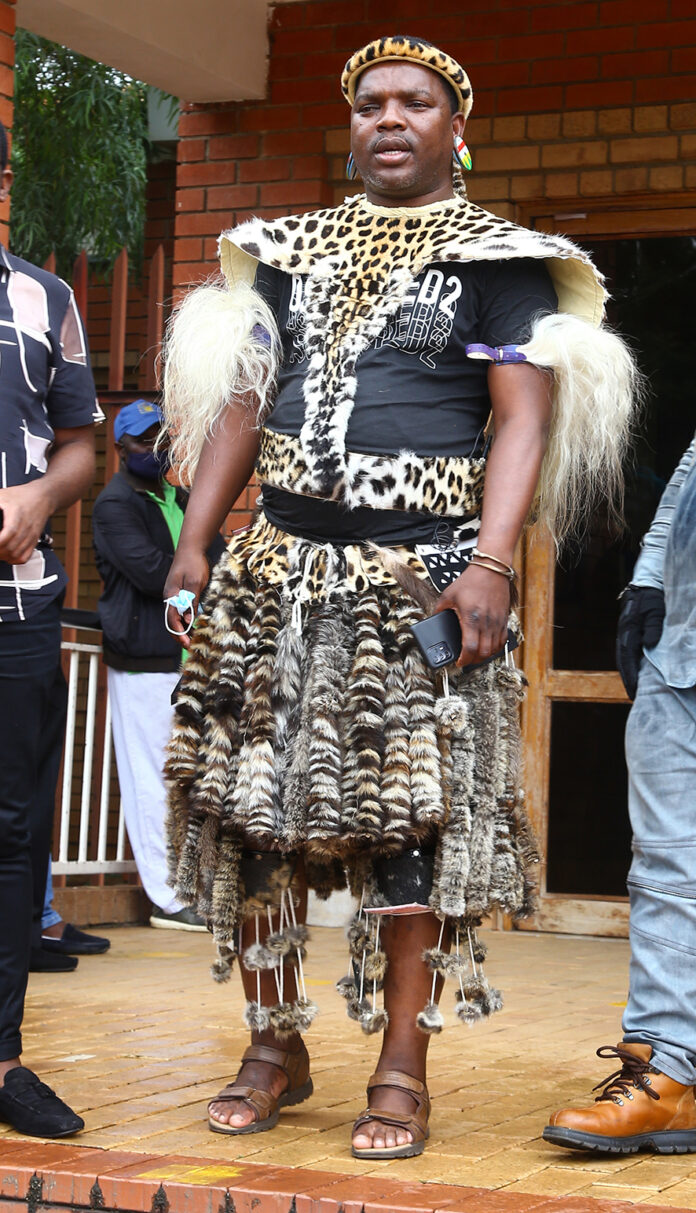
Presidents do not normally meet protest organisers on the eve of demonstrations. They certainly do not do so late at night unless they believe the stakes have become exceptionally high.
Cyril Ramaphosa’s meeting with Insizwa Nobunsiza leaders Ngizwe Mchunu and Nkosikhona Ndabandaba was therefore far more than a courtesy call. It was a recognition that the debate over illegal immigration has moved beyond ordinary politics and into a national security issue. The presidency confirmed that Ramaphosa personally urged the organisers to ensure the protests remained peaceful and reminded them that immigration enforcement belongs to the state alone.
For weeks the government has spoken through ministers, police commanders and official statements. On Monday the president himself entered the conversation.
The decision reflected an acknowledgement that public frustration over illegal immigration has reached a level where it cannot simply be managed through police deployments or departmental announcements.
Ramaphosa’s approach has followed a careful sequence.
First, the government publicly accepted that South Africans have genuine concerns about illegal immigration, porous borders, organised crime and pressure on public services.
Second, it promised reforms, including stronger border management, tougher enforcement against undocumented immigration, improvements to asylum and visa systems and action against corruption inside the immigration system.
Third, it repeatedly warned that while grievances might be legitimate, enforcement of immigration law cannot be outsourced to citizens.
The meeting completed the sequence.
Rather than confronting organisers publicly, Ramaphosa appears to have sought an understanding directly with those capable of influencing events on the ground.
It is a strategy that carries political and practical advantages.
If demonstrations remain peaceful, the government can argue that it respected constitutional rights while maintaining public order.
If organisers publicly commit themselves to non-violence, responsibility for any subsequent misconduct becomes harder to shift onto the state.
The logic is visible throughout Ramaphosa’s newsletter.
He repeatedly distinguishes between peaceful protest and vigilantism. He argues that rights come with responsibilities, insists that foreign nationals lawfully in South Africa remain protected by the Constitution and rejects attempts by private citizens to demand identification documents or enforce immigration laws.
Importantly, the president does not dismiss the grievances.
Instead, he acknowledges public concerns before establishing legal boundaries for their expression.
That is a notable shift from previous government messaging, which often concentrated on condemning xenophobic violence without equally acknowledging the failures in border management and immigration enforcement that have fuelled public anger.
The broader political calculation is equally significant.
Attempting to ban the marches outright would almost certainly have intensified tension and reinforced claims that the government was unwilling to listen.
Engaging organisers directly allows Ramaphosa to present himself as responsive and firm: responsive because he recognises concerns about illegal immigration and firm because he insists only the state may enforce the law.
The success of the balance will ultimately depend more on the events unfolding on the streets than on the discussions held during the meeting.
If the protests remain orderly, Ramaphosa will argue that dialogue, constitutional rights and visible policing achieved what confrontation could not.
If they descend into violence, the focus will shift from the president’s appeal to whether the government can match its promises on immigration reform with visible enforcement.
That explains why Monday night’s meeting matters.
It was about drawing a political line before the country woke up to one of the most sensitive and potentially volatile days South Africa has faced on migration in years.
- President Cyril Ramaphosa met late at night with protest organisers over illegal immigration, signaling the issue as a critical national security concern.
- The government acknowledged public frustrations and promised stricter border control, improved immigration processes, and crackdown on corruption within the system.
- Ramaphosa urged organisers to keep protests peaceful and emphasized that only the state has the authority to enforce immigration laws.
- His approach balances recognizing citizens' concerns with maintaining constitutional protections and legal boundaries, marking a shift from prior government messaging.
- The meeting aims to prevent violence during protests by fostering dialogue and responsibility, with the success depending on peaceful demonstrations and government follow-through on reforms.


