


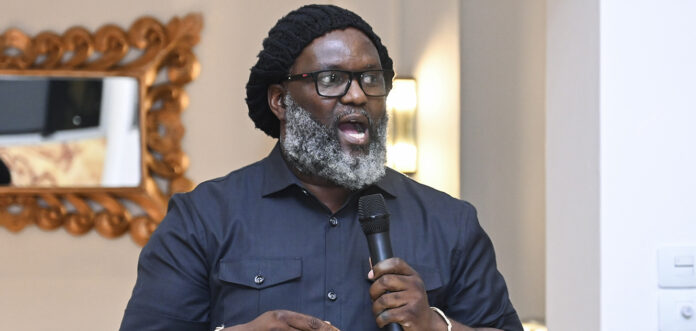
Public pervice and administration Minister Mzamo Buthelezi has extricated his office from the controversy in the Department of Planning, Monitoring and Evaluation’s (DPME) move to create an additional salary level 15 post and handpick Jacqueline Molisane to fill it, saying he only approves the process, not candidates.
His clarification has sharpened concern over how Molisane secured the post without open recruitment, which Buthelezi was not requested to waive, and was almost immediately moved to become acting director general of employment and labour.
Aggrieved government insiders told Sunday World that Buthelezi’s concurrence was later presented as authority for DPME to appoint Molisane directly, blurring whether a post outside the department’s structure was used to place a chosen official without competition.
Leaked government records on the matter do not prove nepotism or implicate Buthelezi in her selection. They reveal a compressed process in which a defined senior post was created, awarded to Molisane and used within days for her secondment elsewhere.
DPME Minister Maropene Ramokgopa asked Buthelezi for concurrence to create a post additional to the department’s approved establishment.
Her request said the post was needed to establish an SOE reform unit, advance the National State Enterprises Bill, benchmark reforms internationally and support SOE restructuring. It did not name Molisane.
Buthelezi granted concurrence on March 28, 2025, after his department assessed whether the proposed post met public service requirements.
His letter approved the post for 12 months at salary level 15 and required the incumbent to be designated a specialist, not a deputy director-general. It also directed DPME to review its structure and warned against extensions creating an expectation of permanence.
The Department of Public Service and Administration rejected any suggestion that Buthelezi’s concurrence amounted to approval of a candidate.
“The appointment of a person additional to the approved establishment is the responsibility of the relevant executive authority,” the department said.
That places responsibility for the appointment with Ramokgopa. Officials say the post was expected to undergo a competitive process because it carried senior responsibilities and an annual package of R1.74-million. Instead, Ramokgopa issued Molisane with a 12-month contract as Specialist: State-Owned Enterprises.
Officials also question whether the post was primarily intended to strengthen DPME’s SOE reform capacity.
Employment and Labour Minister Nomakhosazana Meth requested Molisane’s secondment as acting director-general shortly after concurrence for the DPME post was granted.
Molisane said she was appointed on March 28, became aware of the intended secondment on April 1, and received formal confirmation from Meth on April 3. She denied knowing beforehand that labour intended requesting her services or holding prior discussions with Meth or departmental officials.
“No work was conducted relating to Specialist: State-Owned Enterprise Reforms,” Molisane said.
Her response sharpens the tension in the official record. DPME motivated for a senior specialist because it lacked the capacity to execute a major reform programme, yet the appointee performed none of that work before being released to fill a leadership vacancy elsewhere.
The sequence has fuelled suspicion inside government that the post may have provided an administrative route to bring Molisane back into the public service. The documents do not prove that intention or explain why DPME selected Molisane without evident competition or surrendered her after arguing her expertise was urgently required.
Labour rejected claims that it requested Molisane’s secondment before she formally joined DPME, insisting the approach came only after she became an employee.
Spokesperson Teboho Thejane said: “The sequence of events shows that Ms Molisane was already an employee of the DPME when the request for secondment was made.”
Ramokgopa’s spokesperson, Phetole Rampedi, said: “The department cannot disclose confidential personnel information.”
- Public Service Minister Mzamo Buthelezi approved the creation of a salary level 15 post in the DPME but denied involvement in selecting Jacqueline Molisane for the role.
- Concerns arose as Molisane was appointed without open recruitment and shortly after was seconded as acting director general in the Department of Employment and Labour.
- Leaked records reveal a rushed process: the senior post was created, awarded to Molisane, and then quickly used to facilitate her secondment.
- DPME’s rationale for the new post was to strengthen SOE reform capacity, but Molisane did no related work before her transfer, fueling suspicion about the post’s true purpose.
- Responsibility for appointment lies with DPME Minister Maropene Ramokgopa, who issued Molisane’s contract; both DPME and Labour departments deny improper conduct or prior arrangements.


