


The Western Cape High Court has pressed the Phala Phala impeachment committee to explain how it can protect President Cyril Ramaphosa if it questions him using a report that is later declared unlawful.
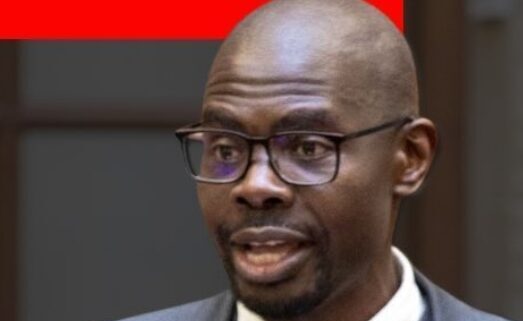
Adv William Mokhare SC, representing committee chairperson Makashule Gana, told the full bench that the committee would conduct a fair and transparent inquiry and protect Ramaphosa and other witnesses against abuse.
Is procedural fairness enough?
Judge André le Grange asked whether procedural fairness was enough.
“How is the chairperson going to protect the president against an unlawful report?” Le Grange asked.
“Say, for instance, the review court found that the report is unlawful, should never have been compiled in the fashion it was compiled, and the conclusion was wrong for whatever reason. How is the chairperson currently going to protect the president from that if the president walks in tomorrow to testify?”
Mokhare said the protection offered by Gana was “process protection”.
“It is not substantive protection in terms of the evidentiary material,” he said.
The committee would ensure that allegations were supported, witnesses were treated fairly and material placed before it was properly evaluated.
Le Grange pressed further.
“The committee will use that information to question the president. What other information will they have in front of them?”
Mokhare said the report remained legally valid while Ramaphosa’s review was pending.
“At this stage, we are not talking about an unlawful report,” he said. “We are talking about a pending review.”
He argued that the Constitutional Court had already directed that the report be referred to the impeachment committee and that Gana’s committee was obliged to process it.
Risk facing Ramaphosa
Le Grange returned to the risk facing Ramaphosa.
“The chairperson has said under oath how he will protect the President and all the other witnesses that will testify in front of the committee,” he said.
“But my question is a little bit different. The committee will sit with a report to question the President. How will he protect the President if the report is ultimately found to be unlawful?”
Concourt on the status of the report
The judges also challenged Mokhare’s argument that the Constitutional Court had effectively settled the status of the report when it ordered its referral to the committee.
Judge Diane Davis asked whether the order should not be interpreted in the light of the issues that were actually before the Constitutional Court.
“Your argument is predicated on the idea that the Constitutional Court has closed the door on challenging this report,” Davis said.
“But are we not to interpret the orders of the court in the light of the judgment as a whole and in the light of the questions which served before the court?”
She said the Constitutional Court had been dealing with Parliament’s decision to stop the impeachment process, not the merits of Ramaphosa’s challenge to the panel report.
“It didn’t ask the question that the review court is going to have to ask,” Davis said.
“If that was not what it was grappling with, surely it can’t have definitively pronounced on it.”
Mokhare accepted that the validity of the report had not been directly before the Constitutional Court but argued that its order still required the impeachment committee to continue.
He said Ramaphosa could pursue his review while the committee performed its constitutional duty.
The bench also relied on the Constitutional Court’s statement that a positive panel report must be referred to an impeachment committee “unless and until the report is set aside on review”.
Le Grange asked, “Why would the Chief Justice mention that if the process cannot be stopped?”
Mokhare maintained that the report remained binding until the review court set it aside and that the committee could not suspend its work merely because a challenge had been launched.
- The Western Cape High Court questioned how the Phala Phala impeachment committee can protect President Cyril Ramaphosa if it uses a report later declared unlawful to question him.
- Committee chair Makashule Gana's representative, William Mokhare SC, stated the committee will ensure fairness and protect witnesses through procedural safeguards, but not substantive protection of evidence.
- Judges raised concerns about the risk to Ramaphosa if the report used in questioning is ultimately found unlawful, emphasizing that procedural fairness might be insufficient.
- The Constitutional Court had ordered the report's referral to the impeachment committee, but judges noted this did not settle the report's legality or the merits of Ramaphosa's challenge.
- Mokhare argued the committee must proceed with the report unless it is legally set aside, allowing Ramaphosa to pursue his review while the committee fulfills its constitutional role.


