


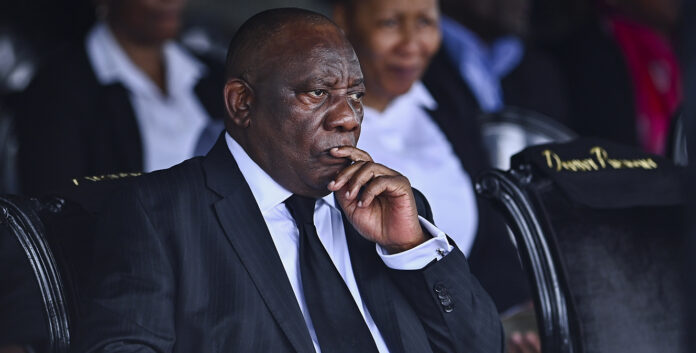
President Cyril Ramaphosa’s urgent attempt to stop Parliament’s Phala Phala impeachment inquiry ran into a direct question from the Western Cape High Court on Wednesday: Does the president believe his word should outweigh the evidence against him?
“I am getting the impression,” Judge André le Grange told Ramaphosa’s counsel, “that the president thinks … my evidence must weigh heavier” than what he calls hearsay from his accusers.
Bid to freeze impeachment committee’s work
The question arose during argument by Adv Wim Trengove SC, who asked the court to freeze the impeachment committee’s work until Ramaphosa’s separate review of the 2022 independent panel report is decided.
The panel did not find Ramaphosa guilty. It found that there was a prima facie case for him to answer over the theft of US$580,000 kept at his Phala Phala farm and the handling of the crime afterwards.
A prima facie case means there is enough evidence, if left unanswered, to justify further investigation.
Ramaphosa admits that the theft occurred but denies wrongdoing. He says the money came from the sale of buffalo.
‘Panel failed to give proper weight to Ramaphosa’s answers’
Trengove argued that the panel failed to give proper weight to Ramaphosa’s answers before taking what he described as the “momentous step” of exposing a sitting president to a public impeachment inquiry.
Le Grange asked whether the panel had not considered those answers.
Another judge asked, “Doesn’t that determination lie with the impeachment committee and not the panel?”
The panel serves as a preliminary screening body. The impeachment committee is empowered to investigate the evidence, hear witnesses and decide whether impeachable conduct has been established.
The bench questioned whether requiring the panel to reach a stronger conclusion would leave the impeachment committee with any meaningful work to perform.
“If the panel comes up and says there is sufficient evidence against you,” a judge asked, “what would remain for the committee?” The president would already be “sort of guilty” before the inquiry began.
Debate over ‘passing remark’
The judges also challenged Trengove’s description of part of a constitutional court judgment as a “passing remark”.
The passage states that the panel must decide whether sufficient evidence exists to establish a prima facie case for the president to answer.
“Is it a passing remark?” the judge asked. “If you read it in context, it can hardly be a passing remark.”
Judge Matthew Francis questioned Ramaphosa’s claim that being subjected to the inquiry would cause humiliation.
Why, Francis asked, should the inquiry be treated only as harmful? Could it not clear Ramaphosa and leave him “in a better position”?
The Constitutional Court previously ruled that Parliament acted irrationally and unconstitutionally when it voted in 2022 not to proceed with the panel report. It ordered that the report be referred to an impeachment committee.
The committee, chaired by Makashule Gana, is opposing Ramaphosa’s application. It argues that it is required to proceed with its work unless the panel report is set aside.
The court must now decide whether the committee should be stopped before it begins hearing and testing the evidence against the president.
The hearing continued later on Wednesday and is scheduled to conclude on Thursday.
- President Cyril Ramaphosa’s attempt to halt Parliament’s Phala Phala impeachment inquiry was challenged by the Western Cape High Court, questioning if his word should outweigh evidence against him.
- The court considered Adv Wim Trengove’s request to freeze the impeachment committee until a review of the 2022 panel report, which found a prima facie case against Ramaphosa for theft of $580,000 from his farm.
- Ramaphosa admits the theft but denies wrongdoing, claiming the money was from buffalo sales; the impeachment panel serves as a preliminary screening, with the committee empowered to investigate further.
- Judges questioned whether requiring a stronger panel conclusion would undermine the committee's role and challenged claims that the inquiry would cause Ramaphosa harm, suggesting it could also vindicate him.
- The court is deciding whether to temporarily stop the impeachment committee from proceeding; the hearing will conclude on Thursday.


