


The question of succession in the EFF is no longer distant or theoretical. While party leader Julius Malema remains firmly in control, recent developments have sparked a quiet but growing debate about the organisation’s future beyond him.
Malema, who was sentenced to five years’ direct imprisonment this week, has avoided jail for now after lodging an appeal. Although the legal process is still unfolding, it has inevitably raised questions about continuity and leadership stability within the party.
Since its formation in 2013, the EFF has been shaped largely around Malema’s leadership style and political authority. His tight grip has ensured unity and discipline, but it has also limited the emergence of alternative centres of power. While this has helped maintain cohesion, it creates uncertainty about what happens in his absence.
That uncertainty becomes more pressing in light of his ongoing legal challenges. Even the possibility of him stepping aside temporarily has prompted observers to consider who might take over.
At the same time, the party has undergone internal shifts.
The departure of prominent figures such as Mbuyiseni Ndlozi, once regarded as a rising star and a strong public communicator, has left a noticeable gap in leadership and public appeal.
While a former ally who used to be a trusted face in the EFF, Floyd Shivambu has also left the party and started his own organisation.
Those who remain in leadership have demonstrated consistency and loyalty.
Leigh-Ann Mathys continues to be a steady presence, often defending the party line in challenging moments. Deputy chairperson Godrich Gardee remains a close ally of Malema, while Marshall Dlamini has shown staying power within party structures.
However, none of these figures has emerged as a natural successor with comparable influence or national recognition. This makes the question of succession potentially destabilising if not addressed proactively.
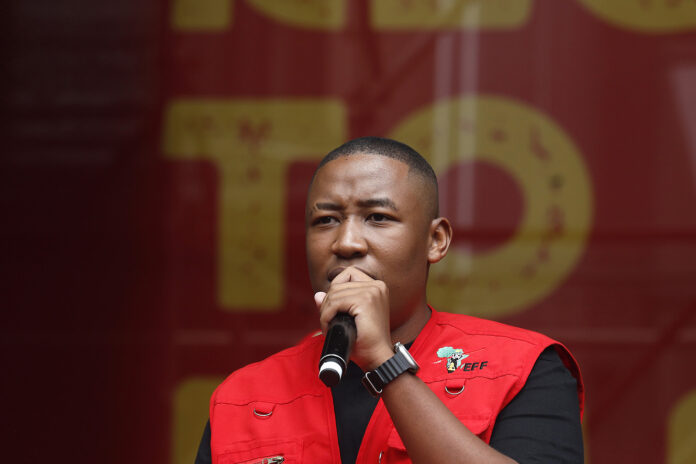
A recent moment that drew attention occurred during court proceedings involving Malema, where his decision to place his family in the spotlight, particularly his son, Ratanang, was widely noted.
Ratanang addressed supporters confidently, chanting EFF slogans and echoing the party’s messaging.
He has also previously spoken at voter registration events, encouraging youth participation.
While it is too early to draw firm conclusions, these appearances have fuelled speculation that Malema may be gradually introducing his son to the party’s base. Whether symbolic or strategic, the move has not gone unnoticed.
The importance of a clear succession plan for the EFF cannot be overstated. The party has become a significant force in South African politics, capable of shaping national discourse and influencing policy debates.
It has consistently demonstrated that it can punch above its weight, leveraging its parliamentary experience and strong organisational identity.
Moreover, the EFF has played a meaningful role in mobilising young South Africans, bringing energy and visibility to political engagement among the youth.
Without a well-defined leadership transition strategy, the party risks internal uncertainty that could undermine these achievements and weaken its position in an already competitive political landscape.
Visit SW YouTube Channel for our video content
- Julius Malema, the EFF leader, faces ongoing legal challenges after a five-year prison sentence was appealed, raising questions about the party's leadership continuity.
- The EFF has been heavily centered on Malema’s leadership, with limited alternative leadership emerging, creating uncertainty about succession.
- Key figures like Mbuyiseni Ndlozi and Floyd Shivambu have left the party, leaving a leadership gap, while remaining leaders have not yet emerged as strong successors.
- Malema’s son, Ratanang, has recently appeared publicly supporting the party, sparking speculation about a possible succession plan involving him.
- The EFF’s lack of a clear succession strategy risks internal instability just as the party plays a significant role in South African politics and youth mobilization.


