


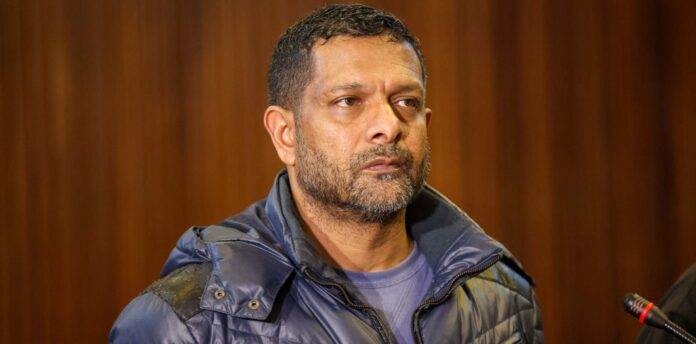
Major General Feroz Khan arrived at Netcare Milpark Hospital after a gunshot on 28 June tore into his abdomen and lodged close to his lumbar spine. The trauma report records a man in shock: blood pressure at 80 mmHg systolic, a temperature of 33.5°C and evidence of internal bleeding.
Surgeons opened his abdomen, found about 1.8 litres of blood inside, repaired four small-bowel injuries, ligated bleeding from the left lumbar artery and packed the wound. A second operation followed the next day. A CT scan later recorded a bullet fragment near the L3/L4 exit foramina.
A 7 July sick note said Khan was still in intensive care and that it was unclear when he would be discharged. “Mr Khan is unlikely to be able to return to work before the 3 August 2026,” trauma surgeon Dr Shumani Makhadi wrote, adding that the date would have to be reassessed.
By late July, the physical wounds had acquired a psychiatric shadow. A report by Dr M.Y.H. Moosa described Khan reliving the attack in flashbacks, waking from nightmares in shock and becoming hypervigilant at ordinary sounds. He withdrew to his room and isolated himself from family and friends.
READ: SAPS dismisses Feroz Khan while he recovers from his gunshot wounds
The report records hopelessness and thoughts of self-harm, though no attempts were made. During examination he was “extremely agitated, anxious and tearful” and unable to sit for sustained periods. The diagnosis was post-traumatic stress disorder and severe major depressive disorder, with “severe social and occupational” impairment.
Against that medical backdrop came the notice.
Extra time needed to prepare his defence
On 3 August, Khan’s attorneys wrote urgently to Crime Intelligence. They said the Notice of Expeditious Process had been delivered on 29 July, while Khan was still undergoing “intensive medical treatment and rehabilitation”. A fresh certificate, they said, declared him unfit for duty until 1 September.
They asked for the 12 to 14 August hearing to be postponed, for procedural clocks to stop and for the case to resume only once Khan could “consult meaningfully” and prepare his defence.
The letter raised another issue. It said Major General J.B. Khumalo, appointed to convene the hearing, had previously acted for the employer in another disciplinary matter against Khan. It also recorded allegations concerning Khumalo that had been placed before the Madlanga Commission.
Khan’s lawyers said this created “a reasonable apprehension” that Khumalo had already formed adverse views and reserved the right to seek his recusal.
Khumalo replied the following day. He acknowledged the correspondence but focused on the disciplinary rules: Khan could be represented by a union representative or fellow employee, and any attorney would first have to apply for permission.
Hearing proceeds without Khan
Then came 12 August.
The transcript opens with Khumalo identifying himself as the chair. Khan was absent. His lawyers and POPCRU representatives were there.
Attorney Muhammed Vally explained that Khan had been “shot and seriously injured not so long ago” and that the legal team struggled to prepare because Khan could not give comprehensive instructions. His attention span, Vally said, did not allow him to read lengthy documents or sustain consultations.
“If I were to hazard a guess on his ability to be here,” Vally said, “chances are he would probably have to be wheeled in with a wheelchair.”
The conversation then turned from Khan’s wounds to the paperwork proving them.
Khumalo scrutinised medical certificates and became suspicious about dates and signatures. “There is a huge discrepancy,” he said. He asked why signatures from the same doctor did not look the same.
Vally proposed phoning the doctor or obtaining an affidavit confirming the documents.
Khumalo was unconvinced.
“This is farfetched for these procedures,” he said. “Remember, we’re not at court.”
He said the documents could be compared with the “naked eye”.
Then he went further.
“These are fraudulent documents,” Khumalo said. “Specifically, this one is fraudulent.”
The hearing resumed the next day.
Khan’s representatives returned with an affidavit from Makhadi. The surgeon confirmed he had treated Khan, completed the J88, written the medical report and issued the sick notes. He explained that he used both electronic and handwritten signatures. He also confirmed Khan had not recovered sufficiently to resume ordinary duties.
The transcript shows Khumalo reading the affidavit into the record. But the disagreement survived.
Khumalo said Khan still had to answer the allegations. When told consultations could last about 30 minutes before a break was needed, the debate shifted to whether those short periods could be used to run the case.
Then the language changed. “I’m going to invoke Regulation 9(7),” Khumalo said.
The consequences were immediately discussed. “After how many days?” Khan’s representative asked.
READ: Madlanga scolds lawyer over comments on Feroz Khan shooting
“He is having ten days,” came the answer. “It’s on him now. He must approach me now.”
“And if ten days pass without him contacting me?”
“That will mean he will be automatically discharged from this.”
Four days later, the written ruling made the countdown official. Khan was deemed suspended without remuneration from 13 August. He was given ten working days, expiring on 26 August, to take steps to reconvene the disciplinary process. If he failed, the ruling said, he would be deemed discharged from SAPS.
The matter has now moved to the Labour Court, where Khan is challenging the disciplinary steps taken against him while he remained medically incapacitated.
Judgement is pending.
- Major General Feroz Khan was shot on 28 June, sustaining abdominal injuries and internal bleeding, and was admitted to Netcare Milpark Hospital where he underwent two surgeries and remained in intensive care as of 7 July.
- Khan was diagnosed with post-traumatic stress disorder and severe major depressive disorder, showing symptoms such as flashbacks, nightmares, withdrawal, agitation, and social impairment by late July.
- Khan's lawyers requested a postponement of his disciplinary hearing scheduled for 12 to 14 August due to his medical condition and challenged the impartiality of the hearing chair, Major General J.B. Khumalo.
- The disciplinary hearing proceeded without Khan, during which Khumalo questioned the authenticity of Khan’s medical certificates and declared some documents fraudulent despite affidavits from Khan’s surgeon.
- On 13 August, Khan was suspended without pay and given ten working days to respond to the hearing, after which he would be deemed discharged from SAPS if he did not act; Khan has since taken the matter to the Labour Court.


