


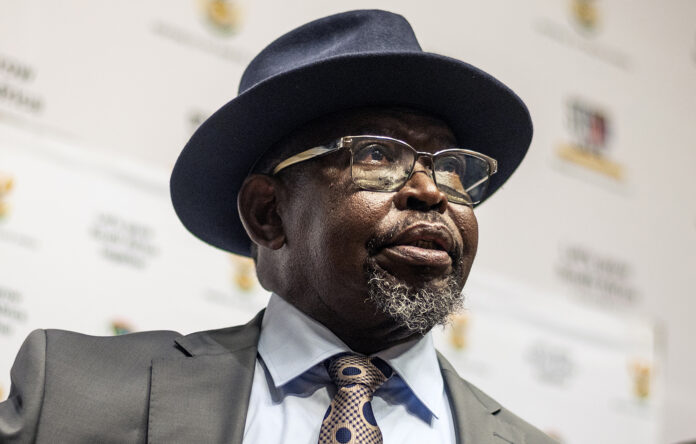
Finance Minister Enoch Godongwana has been pulled into a fresh funding dispute over Cape Town’s townships after Public Protector Kholeka Gcaleka found that service-delivery failures in Langa Flats and Khayelitsha raised broader questions about how national revenue is allocated to municipalities with sprawling informal settlements.
Gcaleka’s report, released on Tuesday but signed on June 30, does not merely fault the City of Cape Town for failures in water, sanitation, housing administration and public infrastructure. It also directs Godongwana to assess whether the current intergovernmental fiscal framework gives enough support to municipalities carrying heavy infrastructure backlogs, ageing sewer systems and fast-growing informal settlements.
Settlement growth and infrastructure decay
The finding raises a new question: Are Cape Town’s failures solely municipal, or is the national funding model also preventing large metros from keeping up with settlement growth and infrastructure decay?
Gcaleka said the City had repeatedly pointed to limited resources as a reason several critical interventions could not be completed. These included rehabilitation of ageing sewerage infrastructure, installation of CCTV systems at clinics, backup power, maintenance of public infrastructure and security upgrades.
The report also records that portions of the municipal budget had been diverted or reprioritised because of land invasions, vandalism, criminality and escalating maintenance demands linked to rapidly growing informal settlements.
But Gcaleka was careful not to turn budget pressure into a defence for non-performance.
“While these financial constraints do not absolve municipalities from their constitutional obligations to progressively realise socio-economic rights within available resources,” the report states, the persistent failures raise questions about whether national revenue-sharing arrangements adequately support municipalities with extensive informal settlements and significant infrastructure backlogs.
Godongwana to report back to Public Protector
Godongwana has six months to talk with Human Settlements Minister Thembi Simelane, Cooperative Governance Minister Velenkosini Hlabisa, the Western Cape government, and the City of Cape Town about whether the way money is shared and other funding options are enough for municipalities that have big infrastructure needs, many informal settlements, and rising demands for services.
The finance minister must then, within 60 days of completing the assessment, report back to the Public Protector on whether the fiscal framework is adequate and what measures, if any, have been considered to strengthen municipal funding.
The report places the dispute within the constitutional duties of different spheres of government. Gcaleka said the human settlements minister should take note of planning and coordination problems affecting delivery, while Hlabisa should strengthen intergovernmental mechanisms to improve alignment between national, provincial and local government.
City cites funding constraints
The city, in its response to the public protector, disputed several findings and argued that the report did not adequately reflect recent developments, ongoing interventions and operational realities. It cited funding constraints, unlawful occupation, vandalism, illegal utility connections, criminality and Eskom’s statutory responsibilities as factors affecting delivery.
Gcaleka rejected the argument that cooperation and corrective work were enough to avoid an adverse finding. She said the evidence showed several systemic deficiencies remained unresolved at the end of the investigation and continued to prejudice affected residents.
In one of the report’s sharpest findings, she said the city’s submissions on funding constraints reinforced rather than weakened the need for remedial action directed at intergovernmental cooperation, including engagement with national departments responsible for human settlements, cooperative governance and fiscal allocation.
- Public Protector Kholeka Gcaleka's report highlights service delivery failures in Cape Town’s townships, raising concerns about national revenue allocation to municipalities with informal settlements.
- The report questions whether Cape Town’s infrastructure and service delivery failures stem solely from municipal management or also from inadequate national funding models.
- Gcaleka directs Finance Minister Enoch Godongwana to assess within six months whether the current intergovernmental fiscal framework supports municipalities with large infrastructure backlogs and growing informal settlements.
- Godongwana must consult with relevant ministers and governments and report back within 60 days on the adequacy of the fiscal framework and possible funding improvements.
- Cape Town cites funding constraints, crime, and illegal activities as challenges impacting service delivery, but Gcaleka insists these do not excuse persistent failures and emphasizes the need for stronger intergovernmental cooperation.


