


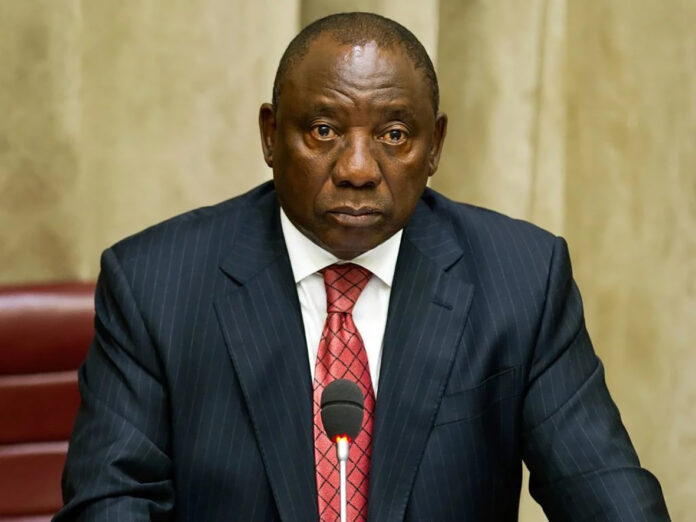
Parliament’s impeachment committee has been advised to defend its right to oppose President Cyril Ramaphosa’s urgent interdict by arguing that the president himself brought the committee into the litigation when he cited its chairperson as a respondent.
The advice given to the committee by Adv William Mokhare SC during an urgent meeting on Thursday will likely be important if the Western Cape High Court asks whether the committee can legally participate separately from the Speaker of the National Assembly.
Mokhare told the committee that, although Ramaphosa cited the chairperson, Makashule Gana, and not every member of the committee, the legal effect was that the committee itself had been cited.
“It was not necessary for the president to cite all members of the committee or the committee. The chairperson is a nominee of the committee and acts in his official and representative capacity on behalf of the committee,” Mokhare told MPs
Ramaphosa’s urgent application seeks to stop the Speaker and the chairperson of the impeachment committee from commencing an impeachment inquiry pending the outcome of his review application against the independent panel report.
The court has set tight deadlines, with respondents required to file a notice to abide or oppose by June 19 and answer papers by June 22. The interdict application is expected to be heard on July 15 and 16.
The committee was advised that it has two options: oppose the interdict or file an explanatory affidavit to assist the court.
Mokhare said the stronger option was to oppose, but only on legal grounds. The proposed defence is that the committee is not opposing Ramaphosa on the merits of the Phala Phala allegations but is asserting its understanding of the duties imposed on it by the Constitutional Court.
The committee, he said, had to preserve its independence and impartiality. But he said that did not prevent it from telling the court that it had a constitutional duty to proceed.
The advice was that the committee could argue that the Constitutional Court had already directed that the independent panel report be given effect and that this could only happen through the impeachment process.
“Our view is that the High Court is in no position to do that because the order is already that of the apex court and only the apex court can stay its own order,” Mokhare told MPs.
The locus standi issue triggered concern among members, with some arguing that the Speaker should be the one to oppose the application on behalf of Parliament. One member warned that the committee was not a stand-alone body and had no inherent powers of its own, while another said opposition to the interdict should be done through the Speaker’s office.
Mokhare rejected the view that the committee was merely an appendage of Parliament.
He said that once the committee was established, it was created to perform a particular constitutional function and could only do so properly if it was independent and impartial.
Mokhare said members were MPs, but for purposes of the inquiry they served as members of an independent committee that could take decisions with legal effect and legal consequences.
During the debate, some members argued that the committee should oppose it in its own name and also request the Speaker to oppose it on behalf of Parliament. One member said the section 194 impeachment committee, which dealt with suspended Public Protector Busisiwe Mkhwebane, had previously opposed cases and interdicts through its chairperson.
The emerging position was that the committee would defend its standing by relying on three points: Ramaphosa cited the chairperson in a representative capacity; the committee has an independent constitutional function; and the litigation seeks to stop the very work the committee was established to perform.
- Parliament’s impeachment committee has been advised to defend its right to oppose President Cyril Ramaphosa’s urgent interdict by arguing that the president himself brought the committee into the litigation when he cited its chairperson as a respondent.
- The advice given to the committee by Adv William Mokhare SC during an urgent meeting on Thursday will likely be important if the Western Cape High Court asks whether the committee can legally participate separately from the Speaker of the National Assembly.
- Mokhare told the committee that, although Ramaphosa cited the chairperson, Makashule Gana, and not every member of the committee, the legal effect was that the committee itself had been cited.
- The chairperson is a nominee of the committee and acts in his official and representative capacity on behalf of the committee,” Mokhare told MPs Ramaphosa’s urgent application seeks to stop the Speaker and the chairperson of the impeachment committee from commencing an impeachment inquiry pending the outcome of his review application against the independent panel report.


