


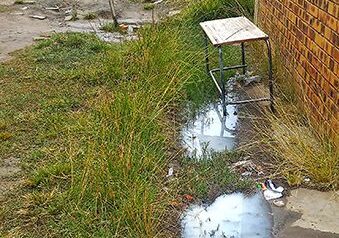
The City of Cape Town recorded 26 582 sewer-related notifications in Langa and Khayelitsha between November 2021 and the end of February 2025, exposing the scale of the sanitation pressure behind the Public Protector’s investigation into township service delivery.
The figure, buried in the city’s submissions to Public Protector Kholeka Gcaleka, shows that the sewer crisis was not driven only by collapsed infrastructure but by a combination of ageing systems, informal settlement growth, illegal structures, vandalism, safety threats and misuse of sewer networks.
According to the City’s C3 complaint data, only 4% of logged sewer incidents in Langa were caused by collapses, while the figure in Khayelitsha was 1%. In Khayelitsha, sand accounted for 24% of C3 notifications from 2021 to date.
Sewer blockages caused by foreign objects
The city said the main causes of sewer blockages were foreign objects at 57%, fats at 5% and rags at 7%, together accounting for 69% of reported blockages. The figures were drawn from C3 data and included in educational material distributed through the city’s awareness campaigns.
The data gives a more detailed picture of the service-delivery dispute than the headline finding of maladministration. It shows a network under pressure from population growth and informal densification but also a municipality struggling to maintain infrastructure where contractors and staff cannot always safely enter.
The city told the public protector that illegal structures were increasingly being built over infrastructure servitudes, making sewer maintenance and repairs more difficult. It warned that structures built close to or directly over sewer infrastructure created “a very real risk” of damage or injury when collapses and overflows occur.
In Langa, the report records that the area is predominantly serviced by midblock sewers. The city said additional small-scale rental units were likely to place further pressure on the system by increasing volumes of sewage and foreign objects entering the network.
Operational safety concerns
Operational safety emerged as a second major fault line. The city said teams working in the area faced safety concerns, especially because of a spike in car hijackings, and that operations required extensive planning and security escorts.
The problem later deepened after private security escorts were withdrawn following a fatal shooting in March 2025. The city told the public protector that its infrastructure branch then had to rely on a reduced number of escorts supplied by law enforcement. A city-wide directive was issued that no teams could operate in the area without law-enforcement escorts.
That had direct consequences for sanitation work. Because escorts were limited, the city said it had to prioritise teams repairing reported defects instead of supervisors overseeing EPWP janitors. As a result, toilet cleaning and defect reporting were affected.
Poor reporting by residents
The city also blamed poor reporting by residents, saying only two defects had been reported by community members since July 9, 2025, while other defects were picked up through internal inspections and janitors reporting by radio.
It said another obstacle was that law-enforcement escorts did not always honour daily commitments. In some cases, escorts failed to arrive on time or were called away to other areas while accompanying depot teams.
The city said it had implemented the Reactive Incident Management System, known as RIMA, to digitise sewer-spill tracking and improve coordination. It said all notifications were being tracked and catalogued, with complaints capable of being submitted through the city’s website.
By the City’s version, the sewer crisis is a daily operational battle. By the Public Protector’s assessment, those realities do not erase the obligation to deliver safe and reliable sanitation.
- Cape Town recorded 26,582 sewer-related notifications in Langa and Khayelitsha from Nov 2021 to Feb 2025, revealing extensive sanitation challenges beyond just collapsed infrastructure.
- Sewer issues stem from ageing infrastructure, informal settlements, illegal structures, vandalism, safety threats, and misuse of sewer networks, with only 1-4% of incidents caused by infrastructure collapses.
- Main causes of sewer blockages include foreign objects (57%), fats (5%), and rags (7%), with illegal structures complicating maintenance and increasing risks of damage and injury.
- Safety concerns for sanitation workers escalated after private security escorts were withdrawn in March 2025, leading to reliance on limited law enforcement escorts that constrained cleaning and repair operations.
- Poor defect reporting by residents and inconsistent law enforcement support further hinder sewer maintenance, though the city implemented a digitized tracking system (RIMA) to improve incident management.


