


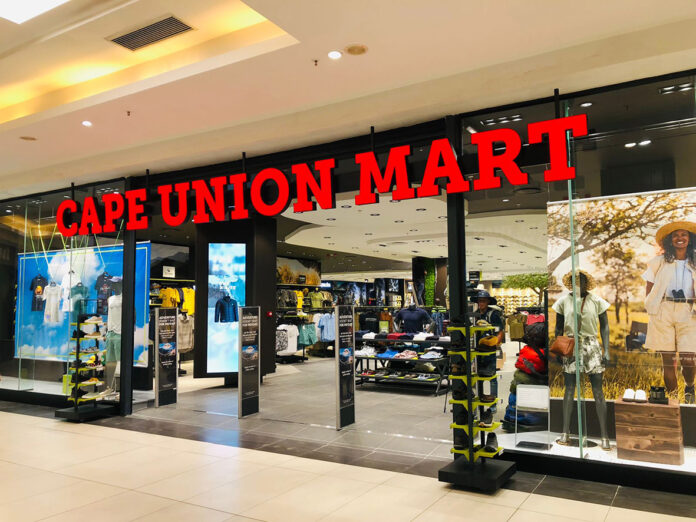
Cape Union Mart chairperson Philip Krawitz allegedly chose whom to sue in the Gaza boycott protest case based on “optics” and identity, including concerns about how it would look if a “big Jewish company” sued a Muslim family, the Western Cape High Court has been told.
The allegation is contained in the respondents’ heads of argument in Cape Union Mart’s urgent interdict application against Palestine solidarity protesters and the Palestinian Solidarity Campaign (PSC) Cape Town.
The urgent interdict was heard on Monday. Following the conclusion of final arguments on Thursday, the full bench of the Western Cape High Court reserved judgment. The judges will review the extensive affidavits, international law case studies and constitutional arguments before delivering a final ruling.
Cape Union Mart and Krawitz brought the application against Maghmuda Ockards, Muhammad Shafiq Gamiet, Mohamed Zain Jeenah, Sherazaad Rahima Sylvester, Sayed Ridhwaan Mohamed, unidentified protesters on Cape Union Mart premises, and the PSC. The company says it seeks a “narrowly defined interdict against continuing defamation and other unlawful conduct”. It says the relief is aimed at stopping the “false claim” that Cape Union Mart, its brands or Krawitz are “funding genocide or military conflict in Gaza in any way” or that they are “killing children or are complicit in the killing of children”.
It argues that, “No relief is sought to limit the respondents’ criticism of the State of Israel and the events that unfolded in Gaza in any way whatsoever.”
But the respondents say the case is about more than defamation. They describe the application as one for “far-ranging relief” in the form of “permanent interdicts” that would prevent “certain utterances” in the context of ongoing protests and boycott calls outside Cape Union Mart stores.
Their most dramatic attack is raised under the heading, “applicants’ unclean hands”. The respondents argue that a litigant who asks a court to suppress political expression must place “a fair and candid version of the material facts” before the court. They say where an applicant presents “a partial, misleading account” or uses litigation “selectively to silence opponents”, the court may refuse to assist.
They then claim: “Mr Krawitz publicly admits that he chose whom to sue based on ‘optics’ and identity.” According to the respondents, Krawitz “initially” declined to sue a “young Jewish boy” because he did not want “Jew versus Jew” and later decided to “go for one of them” because a “big Jewish company suing this poor little Muslim family” would not “work”.
They also say the protests were not “the PSC acting in isolation” but involved “multiple civic organisations”, including CAYCO, BDS, Cape Town Intifada, Mothers for Gaza and South African Jews for a Free Palestine.
Cape Union Mart’s answer is that the respondents are trying to drag the court into Gaza politics.
The disputed slogans include “Boycott Cape Union Mart – They Fund Genocide”, “K-WAY Killer Way”, “Philip Krawitz, Genocide Funder”, “Philip Krawitz award-winning baby killer”, “Murderers of kids”, and “Cape Union Mart supports killing children in Palestine”.
Cape Union Mart also complains about chants including “Philip, Philip, you can’t hide; we charge you with genocide!” and “Philip, Philip, what do you say? How many kids have you killed today?”
The company says the allegations are defamatory because they present as fact that Cape Union Mart and Krawitz fund genocide and kill children.
The respondents say the slogans are political protest language.
Gulf airlines get back to business as flights near pre-war levels
The Middle East is home to some of the world’s biggest carriers, whose networks have been upended by the Iran conflict, with Iranian missile and drone attacks at times shutting airports in recent months and redrawing traffic routes across
the Gulf.
Flightradar24.com data shows that the overall number of flights by major Gulf airlines has now returned to about 82% of the level on February 27, the day before the war started. Gulf Air and Kuwait Airways have topped 100% of that level in recent days.
Emirates, Qatar Airways and Etihad – the biggest three – are above or near 90% of their pre-war level. Etihad and Qatar Airways were as low as 40%-50% just a month ago. Emirates, which has spent big to keep flights going, has been higher for longer.
After the US and Iran signed an interim agreement on Wednesday to end the near four-month conflict, the outlook for Gulf airlines is potentially looking much brighter.
The end of hostilities would lead to a reopening of the region’s airspace, allowing regional carriers to completely resume their operations, said James Halstead, managing partner at Aviation Strategy.
“If it gets back to normal, I just see them acting as normal, coming back in full force,” Halstead said.
Drone attacks during the Iran conflict have repeatedly forced Gulf-bound flights to divert, raising safety concerns for passengers and crew and limiting routes to a handful of safe aviation corridors. European and Asian carriers have largely halted flights to the region, with many warnings still in place. Australia this week though relaxed its travel advice for several Middle Eastern countries, a boost for the transit hub.
The European Union Aviation Safety Agency (Easa) has kept its warning in place against flying to the region due to risks associated with the conflict.
Easa told Reuters it will take into consideration the latest developments when reassessing its conflict-zone warning for the region, valid until June 24. However, it said it was still “too early to determine whether the observed de-escalation will result in a sustained reduction of risks to civil aviation”. – Reuters
- Cape Union Mart chairperson Philip Krawitz allegedly chose whom to sue in the Gaza boycott protest case based on “optics” and identity, including concerns about how it would look if a “big Jewish company” sued a Muslim family, the Western Cape High Court has been told.
- The allegation is contained in the respondents’ heads of argument in Cape Union Mart’s urgent interdict application against Palestine solidarity protesters and the Palestinian Solidarity Campaign (PSC) Cape Town.
- The urgent interdict was heard on Monday.
- Following the conclusion of final arguments on Thursday, the full bench of the Western Cape High Court reserved judgment.
- The judges will review the extensive affidavits, international law case studies and constitutional arguments before delivering a final ruling.


