


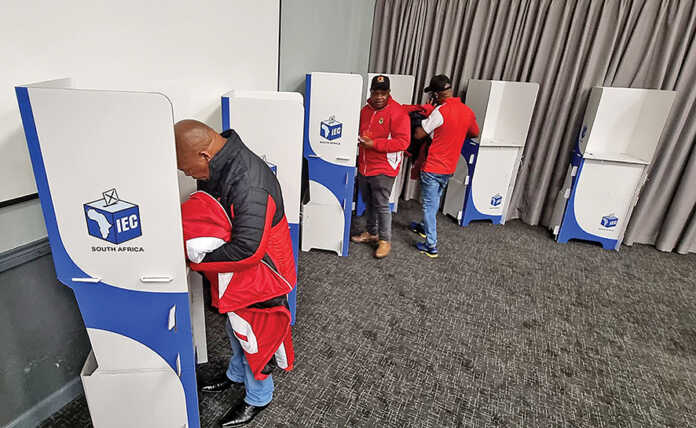
Errors in vote counting, alleged electoral misconduct and disputes over election results can be challenged through procedures set out in South African law. The Electoral Commission of South Africa (IEC) outlines these processes under the Local Government: Municipal Electoral Act 27 of 2000, which governs objections and recounts during municipal elections.
With the 2026 Local Government Elections approaching, understanding who can lodge an objection, the grounds for doing so and the deadlines involved is essential for candidates, political parties and other interested parties seeking to challenge alleged irregularities.
But how exactly do recounts and objections work? Where must concerns be submitted, and who decides whether an election result should be changed?
READ: We are voting for a change in our lives
What is an objection, and how does it work?
An objection is a formal complaint about an alleged irregularity during an election. It may concern errors in counting ballot papers, unlawful interference with election activities or the intimidation or obstruction of voters.
Section 62 of the Local Government: Municipal Electoral Act 27 of 2000 deals specifically with objections during the sorting and counting of ballot papers.
The IEC’s 2021 Municipal Elections Observer Handbook explains that a party agent or ward candidate may submit a written objection concerning an alleged irregularity in sorting ballot papers or an inaccuracy in counting votes.
The objection must be raised before the counting officer completes the prescribed results form.
READ MORE: IEC Records surge in special vote applications as older women lead demand
The counting officer investigates the matter, makes a decision and records the objection and the ruling.
This procedure allows concerns to be addressed while counting is taking place, rather than waiting until the final results have been declared.
Who can lodge an objection, and where?
The IEC’s Section 65 Objections Information Summary explains the procedure for lodging a formal objection concerning a municipal election.
An interested party may submit an objection to the Commission if they believe that an alleged irregularity affected an aspect of the election that is material to the result. The submission must identify the problem, explain the grounds for the objection and provide supporting information.
Depending on the circumstances, the complaint may concern voting or counting procedures, interference with election activities, or the intimidation or obstruction of voters.
The distinction between an objection raised during counting and a formal objection under section 65 is important. Section 62 provides a channel for challenging sorting and counting irregularities at the counting stage, while section 65 provides a formal process for challenging relevant election irregularities.
What are the deadlines for raising concerns?
The law sets strict time limits for election objections because disputes must be resolved within the electoral timetable.
According to the IEC’s section 65 guidance, a formal objection must ordinarily be submitted by 17:00 on the second day after voting day.
If the announced voting date of 4 November 2026 remains in force, this would make the ordinary deadline 17:00 on 6 November 2026.
The final deadline and submission arrangements should be confirmed with the IEC in case of any applicable changes or election-specific directions.
The IEC’s guidance also provides for late objections to be considered where good cause is shown through the relevant condonation procedure.
ALSO READ: 4IR and digitisation expert lists pros and cons of e-voting in SA
For objections raised during the counting process under section 62, the timing is different: the objection must be made before the counting officer completes the prescribed results form.
These different deadlines mean that anyone intending to challenge an alleged irregularity must identify the applicable procedure and act promptly.
When is a recount ordered?
A recount involves counting the relevant ballot papers again to establish whether the original figures are accurate. It is a possible remedy where the circumstances and applicable legal requirements justify further scrutiny; it is not automatically granted whenever a candidate or party disputes the result.
A recount may confirm the original totals or reveal a discrepancy that requires further action.
The IEC’s 2024 National and Provincial Elections Report provides an example of objections leading to further electoral checks.
The Commission reported that 110 objections had been decided by June 2 2024, with 17 upheld and 35 recounts ordered at affected voting stations.
Although these figures relate to national and provincial elections governed by different statutory provisions, they illustrate how objections can lead to recounts where the relevant requirements are met.
- An objection is a formal complaint about alleged irregularities during an election, such as errors in counting or voter intimidation, governed by Section 62 and Section 65 of the Local Government: Municipal Electoral Act 27 of 2000.
- During the counting process, a party agent or ward candidate may submit a written objection before the counting officer completes the results form under Section 62.
- Formal objections concerning municipal elections must be submitted by 17:00 on the second day after voting day, typically two days post-election, with provisions for late objections under certain conditions.
- An interested party can lodge an objection to the Electoral Commission of South Africa (IEC) if they believe an irregularity materially affected the election result, providing identification of the problem and supporting evidence.
- A recount, which re-tallies ballot papers to verify accuracy, is not automatic but may be ordered if objections meet legal requirements, as shown by 35 recounts ordered during the 2024 national and provincial elections.


