


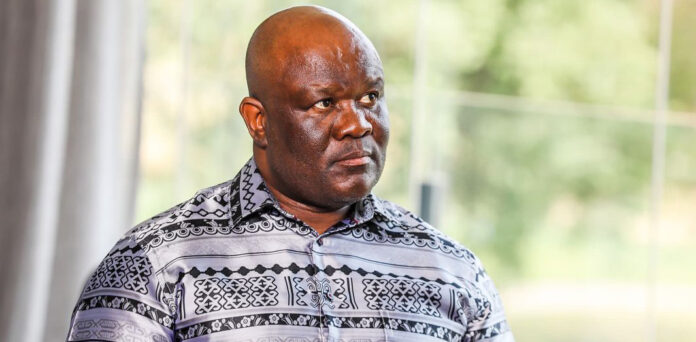
An anonymous whistleblower who complained to the public protector about a North West kgosi’s alleged role in blocking a mining investor from accessing communal land may have been exposed to the same traditional leader they had accused.
A referral letter from the public protector to North West Cooperative Governance, Human Settlements and Traditional Affairs MEC Saliva Molapisi, which was read in a community meeting last Wednesday, appears to have been shared with Kgosi Charles Moshoette or structures linked to him, despite the complainant having asked to remain anonymous because they feared reprisals within his jurisdiction.
Whistleblower’s name and contact info read out
Reading the referral to the meeting, Moshoette also read out the whistleblower’s name and contact information, according to a record of exchanges during discussions.
This is despite the referral noting that the public protector received a complaint from “an anonymous source” and that the complainant requested the matter “be treated” anonymously due to “fear of reprisal”.
The complainant, according to the referral, feared reprisal because they “reside within the jurisdiction of the tribal authority” implicated in the complaint.
The area, the referral states, is “under the stewardship of Kgosi Charles Moshoette”, in the Khunwana village of Delarayville in the North West.
Sefala denied access to land
The complaint related to allegations that Sefala Investment Limited was denied access to land to conduct prospecting activities after the Department of Mineral Resources and Energy had approved its prospecting right.
But the more serious issue now confronting the public protector, the provincial department and the traditional authority is how a complaint lodged anonymously because of fear of reprisal was handled after it left the public protector’s office.
The complaint alleged “lack of accountability”, “manipulation of traditional council processes for personal gain” and “denial of investor Sefala Investment to access land for prospecting”.
It also accused the Department of Mineral and Petroleum Resources of failing to assist Sefala to start prospecting activities.
The referral says the complainant felt prejudiced by the conduct of the Kgosi and the traditional council, “primarily” because they were allegedly “going against the wishes of the community”.
Public protector referred matter to provincial department
The public protector’s office referred the matter to the provincial department for “further attention and assistance”, with a view to facilitating discussion between the mining company, Sefala Investment, and the community.
The referral decision, according to the letter, was made in terms of section 6 of the Public Protector Act, which allows the office to refer matters to an appropriate public body or authority before, during or after an investigation.
The letter says the public protector may refer a matter which has “a bearing on investigation” to an “appropriate public body or authority” and may make recommendations regarding the redress of prejudice.
However, the apparent circulation of the referral to the implicated Kgosi has raised questions about whether the whistleblower’s identity, contact details or other identifying information were protected before the document was passed on.
Public protector ‘safeguards confidentiality’
The public protector’s rules state that the office “shall treat the information received as a result of a complaint lodged or an investigation conducted as confidential” and “shall take reasonable steps to safeguard confidentiality”.
The rules further state that the public protector shall not disclose information about “the identity or personal circumstances of the complainant” or information that could lead to the identification of the complainant without written permission where the complainant requested that their personal particulars be kept confidential.
It is not yet clear whether the referral sent to the MEC was redacted before it left the public protector’s office, whether the complainant was informed that the matter would be referred, or whether the provincial department later forwarded the letter or complaint to the Kgosi or traditional council.
It is also not clear whether the complainant gave written consent for any identifying information to be circulated.
Whistleblower-protection framework
The matter lands as the government is trying to overhaul South Africa’s whistleblower-protection framework through the draft Protected Disclosures Bill, released by Justice Minister Mmamoloko Kubayi in April.
The draft bill says an authorised person “must not disclose information regarding the identity of the discloser or information likely to lead to the identification of the discloser” unless the whistleblower has given written consent and the disclosure is limited to that consent.
The draft bill also provides that a person who unlawfully discloses identifying information commits an offence and may face a fine or imprisonment “for a period not exceeding 10 years”.
Although the bill is not yet law, the North West matter has become an immediate test of the state’s existing safeguards when anonymous complainants approach oversight bodies with allegations against powerful local figures.
This is a developing story, and comments from all parties will be added to follow-up reports.
- An anonymous whistleblower who accused North West Kgosi Charles Moshoette of blocking a mining investor's land access may have been exposed when their name and contact details were read out in a community meeting.
- The complaint alleged the denial of Sefala Investment Limited's prospecting right on communal land, manipulation of traditional council processes, and lack of accountability, prompting a public protector referral to the provincial department.
- The public protector’s office emphasized confidentiality rules protecting whistleblowers' identities, but it remains unclear whether the referral letter sent to the MEC was redacted or if consent was given for disclosure.
- This incident raises concerns about the effectiveness of current whistleblower protections in South Africa, particularly as the government debates the draft Protected Disclosures Bill to strengthen safeguards.
- The case serves as a critical test of the state's ability to protect anonymous complainants against reprisals when reporting allegations involving powerful traditional leaders.


