


Mining has emerged as a new flashpoint in the increasingly strained relationship between South Africa and the US, with Pretoria resisting pressure for US companies to be exempted from broad-based BEE (B-BBEE) requirements.
International Relations and Cooperation Minister Ronald Lamola said the dispute over B-BBEE had become pronounced in the mining sector, as the Trump administration continued to question South Africa’s transformation policies.
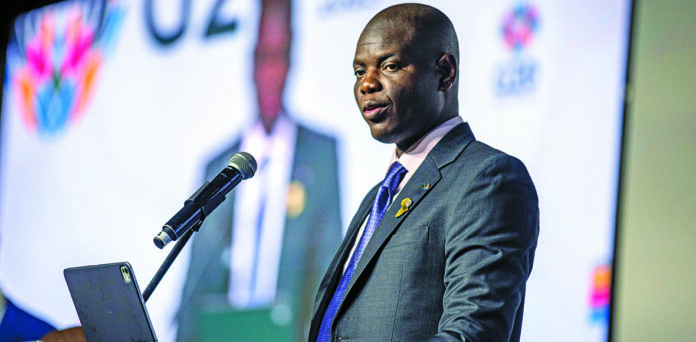
Speaking during an on-the-record discussion hosted by the Council on Foreign Relations in New York this week, Lamola explained that US companies operating in other sectors had continued to do business in South Africa despite the country’s transformation laws.
READ: Lamola slams ‘race-based’ #8217; US Afrikaner resettlement project
“The sticking point is on mining,” Lamola said.
He said the US administration wants its mining companies to be exempted from B-BBEE. Pretoria was not convinced.
“We’ve said, even in mining, the number of US companies doing mining in South Africa complying with the BEE laws have no issue,” he said, pointing to companies such as Microsoft, Amazon and Coca-Cola.
“They are making money. They’ve never complained about BEE,” Lamola said.
South Africa’s mineral wealth has become important as major economies seek secure supplies of critical minerals.
Lamola said that gave Pretoria an economic asset it could use to build a stronger commercial relationship with Washington.
“Most of these critical minerals are only found in South Africa. So that’s the leverage.”
South Africa has significant reserves and production capabilities in platinum-group metals, manganese, chromium and vanadium, among other resources.
The government has been seeking to attract investment into refining, processing and manufacturing rather than relying on exporting unprocessed minerals.
The US remains reliant on imported platinum group metals, with South Africa accounting for about 49% of US platinum imports between 2021 and 2024, according to the US Geological Survey. PGMs are used in automotive catalytic converters, while platinum also has applications in chemical processing, petroleum refining, electronics and other industrial sectors.
READ: Platinum sector under pressure as global supply tightens
Trade, Industry and Competition Minister Parks Tau reinforced that position in New York, telling investors that South Africa wanted partnerships covering mining, refining, processing, advanced materials and manufacturing. He proposed a South Africa-US Critical Minerals Working Group and an investment platform to help match South African projects with US capital, technology and long-term demand.
Lamola said South Africa was prepared to negotiate trade agreements with Washington as long as they were “fair and transparent”. Agreements would also have to comply with South Africa’s constitutional framework and be subject to public scrutiny.
The minister said African countries should be more coordinated in their approach to the global competition for critical minerals.
“There are many African countries that are offering their critical minerals to the United States, supposedly on an exclusive basis,” he said. “[But] if we engage at the multilateral collective level, our strength will be more enhanced.”
Pretoria and Washington disagree over B-BBEE, land reform and other South African policies. Lamola has described the broader bilateral relationship as being at a critically low point.
READ: Pretoria firm on diplomacy as US moves to sanction ANC politicians, impose tariffs
He said the Trump administration’s emphasis on commercial diplomacy could create an opportunity for the two countries to find areas of agreement.
The tension between the US and South Africa has intensified in the past year. The latest escalation came last week when Washington imposed new visa restrictions. It says the restrictions are targeting those responsible for or complicit in policies involving discrimination, uncompensated land seizures and incitement of imminent violence against minority groups in South Africa.
The US did not identify the individuals affected.
US ambassador Brent Bozell III warned that the visa restrictions were the first step in further measures.
- South Africa's government is resisting US pressure to exempt American mining companies from broad-based Black Economic Empowerment (B-BBEE) requirements.
- International Relations Minister Ronald Lamola highlighted that US companies in sectors other than mining, such as Microsoft, Amazon, and Coca-Cola, comply with B-BBEE without issue.
- South Africa possesses critical minerals like platinum-group metals, manganese, chromium, and vanadium, which are vital to global supply chains and offer leverage in US relations.
- Trade, Industry and Competition Minister Parks Tau proposed a South Africa-US Critical Minerals Working Group and an investment platform to link South African projects with US capital and technology.
- The US recently imposed visa restrictions on individuals related to South African policies on land reform and discrimination, signaling possible further measures in the strained bilateral relationship.
Mining has emerged as a new flashpoint in the increasingly strained relationship between South Africa and the US, with Pretoria resisting pressure for US companies to be exempted from broad-based BEE (B-BBEE) requirements.
International Relations and Cooperation Minister Ronald Lamola said the dispute over B-BBEE had become pronounced in the mining sector, as the Trump administration continued to question South Africa’s transformation policies.
Speaking during an on-the-record discussion hosted by the Council on Foreign Relations in New York this week, Lamola explained that US companies operating in other sectors had continued to do business in South Africa despite the country’s transformation laws.
READ: Lamola slams 'race-based' #8217; US Afrikaner resettlement project
“The sticking point is on mining,” Lamola said.
He said the US administration wants its mining companies to be exempted from B-BBEE. Pretoria was not convinced.
“We’ve said, even in mining, the number of US companies doing mining in South Africa complying with the BEE laws have no issue,” he said, pointing to companies such as Microsoft, Amazon and Coca-Cola.
“They are making money. They’ve never complained about BEE,” Lamola said.
South Africa’s mineral wealth has become important as major economies seek secure supplies of critical minerals.
Lamola said that gave Pretoria an economic asset it could use to build a stronger commercial relationship with Washington.
“Most of these critical minerals are only found in South Africa. So that’s the leverage.”
South Africa has significant reserves and production capabilities in platinum-group metals, manganese, chromium and vanadium, among other resources.
The government has been seeking to attract investment into refining, processing and manufacturing rather than relying on exporting unprocessed minerals.
The US remains reliant on imported platinum group metals, with South Africa accounting for about 49% of US platinum imports between 2021 and 2024, according to the US Geological Survey. PGMs are used in automotive catalytic converters, while platinum also has applications in chemical processing, petroleum refining, electronics and other industrial sectors.
READ: Platinum sector under pressure as global supply tightens
Trade, Industry and Competition Minister Parks Tau reinforced that position in New York, telling investors that South Africa wanted partnerships covering mining, refining, processing, advanced materials and manufacturing. He proposed a South Africa-US Critical Minerals Working Group and an investment platform to help match South African projects with US capital, technology and long-term demand.
Lamola said South Africa was prepared to negotiate trade agreements with Washington as long as they were “fair and transparent”. Agreements would also have to comply with South Africa’s constitutional framework and be subject to public scrutiny.
The minister said African countries should be more coordinated in their approach to the global competition for critical minerals.
“There are many African countries that are offering their critical minerals to the United States, supposedly on an exclusive basis,” he said. “[But] if we engage at the multilateral collective level, our strength will be more enhanced.”
Pretoria and Washington disagree over B-BBEE, land reform and other South African policies. Lamola has described the broader bilateral relationship as being at a critically low point.
READ: Pretoria firm on diplomacy as US moves to sanction ANC politicians, impose tariffs
He said the Trump administration’s emphasis on commercial diplomacy could create an opportunity for the two countries to find areas of agreement.
The tension between the US and South Africa has intensified in the past year. The latest escalation came last week when Washington imposed new visa restrictions. It says the restrictions are targeting those responsible for or complicit in policies involving discrimination, uncompensated land seizures and incitement of imminent violence against minority groups in South Africa.
The US did not identify the individuals affected.
US ambassador Brent Bozell III warned that the visa restrictions were the first step in further measures.


