


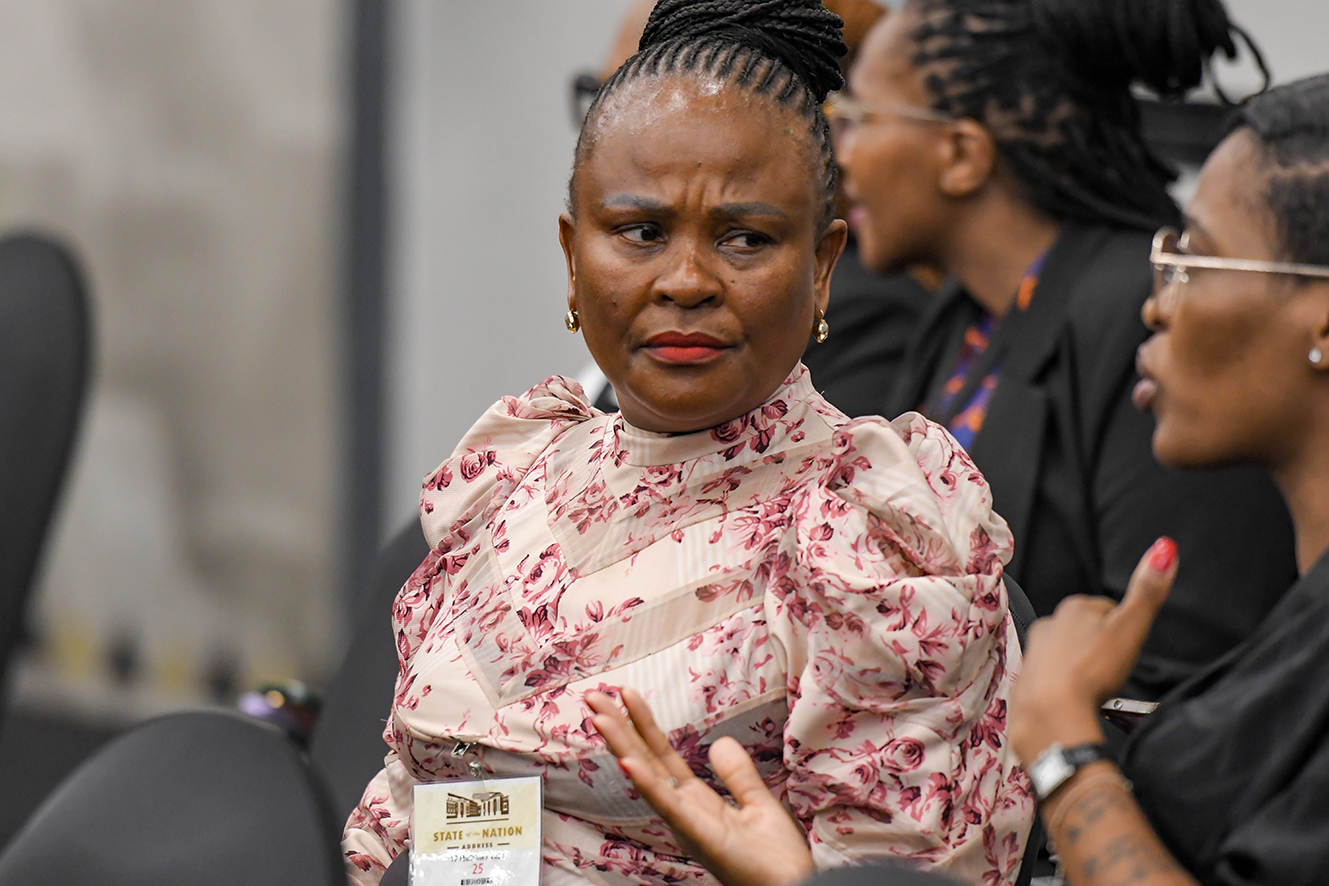
Former public protector Busisiwe Mkhwebane says she agrees with parts of an anonymous legal opinion circulating on WhatsApp that argues her perjury acquittal could weaken the findings used to remove her from office and support the pending bid to strike her from the advocates’ roll.
The opinion argues that Wednesday’s Section 174 discharge has broken an “institutional confirmation loop” in which disputed evidence from Mkhwebane’s Absa-Bankorp investigation travelled from the courts to Parliament, the criminal prosecution and ultimately the Legal Practice Council (LPC).
Mkhwebane told Sunday World she did not know the author personally and described the person only as an analyst who was “not popular”.
She said she agreed with some of the comments contained in the document.
“[The] LPC case is dislodged and even the gratuity case. We stand a good chance,” Mkhwebane added.
The Pretoria Magistrate’s Court discharged Mkhwebane after the state closed its case in the perjury trial arising from differing versions she gave about meetings with then-president Jacob Zuma during the Bankorp investigation.
The anonymous opinion argues that the criminal case shared a “common factual spine” with the Constitutional Court litigation and Parliament’s Section 194 inquiry. It points to Mkhwebane’s meetings with Zuma, her affidavits, handwritten notes and former public protector investigator Tebogo Kekana’s evidence.
“Each successive process made the original inference appear more firmly established, although much of the supposed confirmation came from the same factual source,” the opinion states.
Its central argument is that an earlier chain of reasoning – contradictions, followed by findings of deliberate dishonesty, misconduct and ultimately unfitness for office – must be tested again after the criminal prosecution failed.
“The acquittal breaks the crucial connection between alleged contradiction and deliberate dishonesty,” it states.
The document proposes a legality review aimed at affected findings of the Section 194 Committee and the National Assembly resolution.
It also proposes asking Parliament to reconsider or qualify portions of its record linked to the perjury narrative.
The most immediate target identified is the LPC’s pending high court application seeking to have Mkhwebane struck from the roll of advocates.
The document argues that the LPC should distinguish between allegations resting on the alleged perjury, allegations repeating the same factual narrative, independent misconduct and competence findings.
“The LPC must establish the conduct upon which its character judgment is based,” it says. “It cannot merely inherit adverse terminology from Parliament and earlier civil litigation and present it as independently proven dishonesty.”
A supplementary answering affidavit placing the acquittal and criminal record before the high court is among the proposed steps.
The document suggests that the 2019 Constitutional Court judgment could potentially face a rescission attempt.
The judgment supplied some of the strongest language later used against Mkhwebane, including findings that she had advanced “falsehoods” during litigation and had not been candid about her engagements.
The opinion argues that her acquittal gives renewed significance to former Chief Justice Mogoeng Mogoeng’s minority judgment, which resisted the majority’s findings of bad faith and dishonesty.
It also raises the possibility of scrutinising the prosecution.
The circulating document also proposes that Mkhwebane use the acquittal to revisit the cumulative reasoning behind her removal from office.
It argues that Parliament should identify which Section 194 findings depended on the alleged perjury, which relied on the same witnesses and documents used in the criminal case and whether pending criminal allegations reinforced the appearance of dishonesty.
It says those findings should be tested against the criminal record.
It further suggests that the acquittal could be relevant to Mkhwebane’s fight over her approximately R10-million end-of-service gratuity.
The document seeks to turn the end of the perjury prosecution into the starting point for challenges to findings flowing from the disputed Bankorp evidence.
- Former public protector Busisiwe Mkhwebane says she agrees with parts of an anonymous legal opinion circulating on WhatsApp that argues her perjury acquittal could weaken the findings used to remove her from office and support the pending bid to strike her from the advocates’ roll.
- The opinion argues that Wednesday’s Section 174 discharge has broken an “institutional confirmation loop” in which disputed evidence from Mkhwebane’s Absa-Bankorp investigation travelled from the courts to Parliament, the criminal prosecution and ultimately the Legal Practice Council (LPC).
- Mkhwebane told Sunday World she did not know the author personally and described the person only as an analyst who was “not popular”.
- She said she agreed with some of the comments contained in the document.


