


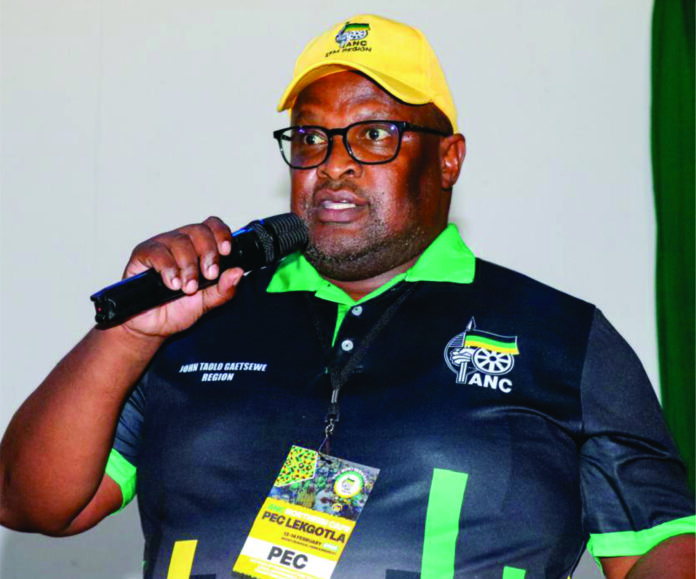
African National Congress (ANC) Northern Cape provincial secretary Deshi Ngxanga has personally defended the use of legislature caucus funds to supplement his salary ahead of a media briefing on Wednesday, but he has not answered the question at the centre of the controversy: what legislative work did he perform in return for the public money?
Ngxanga, who is the subject of the payment, issued the ANC’s response himself. He is expected to address the same matter at Wednesday’s briefing.
His statement explains that the party may appoint and manage its own support staff. It does not identify his approved caucus position, disclose his job description or list any work he performed for MPLs or the ANC caucus.
READ MORE: Taxpayers’ cash tops up ANC boss’ salary
Nor does it explain how the decision to peg the salary of a full-time ANC official to that of an MEC served a prescribed legislative purpose.
“The use of its caucus allocation to remunerate its employees is neither a new arrangement nor an irregular practice,” Ngxanga said in the statement.
“It is an established arrangement that has been in place for years and is expressly provided for in the Northern Cape Provincial Legislature’s Financial Assistance to Political Parties Policy.”
Ngxanga relied on clause 9 of the policy. He said clause 9.1 allowed political parties to appoint support staff, while clause 9.2 made the parties responsible for recruiting, employing and managing those workers.
But those provisions answer only who may appoint and manage support staff. They do not turn the caucus allocation into a general party payroll or settle what the public money may lawfully finance.
Purpose, not payroll
Section 116(2)(c) of the Constitution provides for financial and administrative assistance to a represented party “to enable the party and its leader to perform their functions in the legislature effectively”.
That purpose creates the missing link in Ngxanga’s response. He must still show that he occupied an authorised support position and performed work connected to the caucus, MPLs or the business of the legislature.
No such information appears in the statement.
Sunday World previously reported that Ngxanga received his ANC remuneration together with a top-up financed through the legislature-administered caucus fund.
Ngxanga said the arrangement flowed from a decision taken by the party in 2017.
“In 2017, a decision was taken that the salary of the provincial secretary should be equal to that of an MEC, and the difference should be topped up,” he said.
That explanation establishes why the ANC wanted to pay him more. It does not establish what legislative service was bought with the top-up.
Ngxanga also said:
“I do not appoint myself. There are institutional processes.”
The existence of an approval process does not answer whether the expenditure fell within the prescribed purpose of the fund.
A payslip seen by Sunday World reflects “ANC Northern Cape Provincial Legislature” as the company, “Provincial Office” as the cost centre and 173 working hours a month. Ngxanga has not explained what work accounted for those hours.
A history that widens the question
In the statement he issued, Ngxanga argued that he had been unfairly singled out. He said almost the entire collective of ANC provincial officials, except the deputy provincial chairperson, had previously received money from the caucus fund while working full time for the organisation.
“This is not an arrangement that was introduced for the benefit of one individual,” the ANC said. “It has been part of the ANC’s broader approach to ensuring that its full-time employees are remunerated.”
READ MORE: Legislature wants its R3.5m back from MK Party
That defence may widen the question instead of closing it. A longstanding arrangement does not establish compliance. If those officials performed internal party work rather than prescribed legislative support, the same question would arise about each payment.
Ngxanga said other employees had received entire salaries from the allocation, while some received only top-ups. He said these practices should be understood within the history of how the ANC managed and remunerated its staff.
“The mere fact that an ANC employee receives remuneration from the caucus allocation does not, in itself, constitute wrongdoing,” the party said.
That is true, but it is not the test being put to the ANC. The unanswered issue is what the public paid for.
The records that remain missing
Ngxanga has yet to provide his appointment letter, the approved caucus-support post he occupied, his job description, his work records or the basis on which an MEC’s salary became the benchmark for the payment.
READ MORE: ANC leader rides gravy train in Northern Cape
His response establishes that the ANC employed him and that similar arrangements had existed before. It does not establish that his salary top-up financed the legislative work for which the caucus allocation was created.
Wednesday’s briefing gives Ngxanga an opportunity to identify the work the public paid for, produce the records behind the arrangement and explain why an MEC’s salary was used as its benchmark.
Subscribe To Our Newsletter or get the news delivered to your phone via our WhatsApp Channel.
- ANC Northern Cape provincial secretary Deshi Ngxanga defended using legislature caucus funds to supplement his salary but did not specify the legislative work he performed in return.
- Ngxanga stated the ANC may appoint and manage its own support staff as provided for in the Northern Cape Provincial Legislature’s Financial Assistance to Political Parties Policy, but did not disclose his official caucus position or job description.
- The ANC decided in 2017 that the provincial secretary’s salary should match that of an MEC, with any difference topped up using caucus funds, according to Ngxanga.
- While Ngxanga claims other ANC provincial officials have received similar payments from the caucus fund, the issue remains whether these payments financed prescribed legislative work or internal party activities.
- Ngxanga has yet to provide crucial documents such as his appointment letter, approval of his caucus-support post, job description, work records, or justification for using an MEC’s salary as the payment benchmark.


