


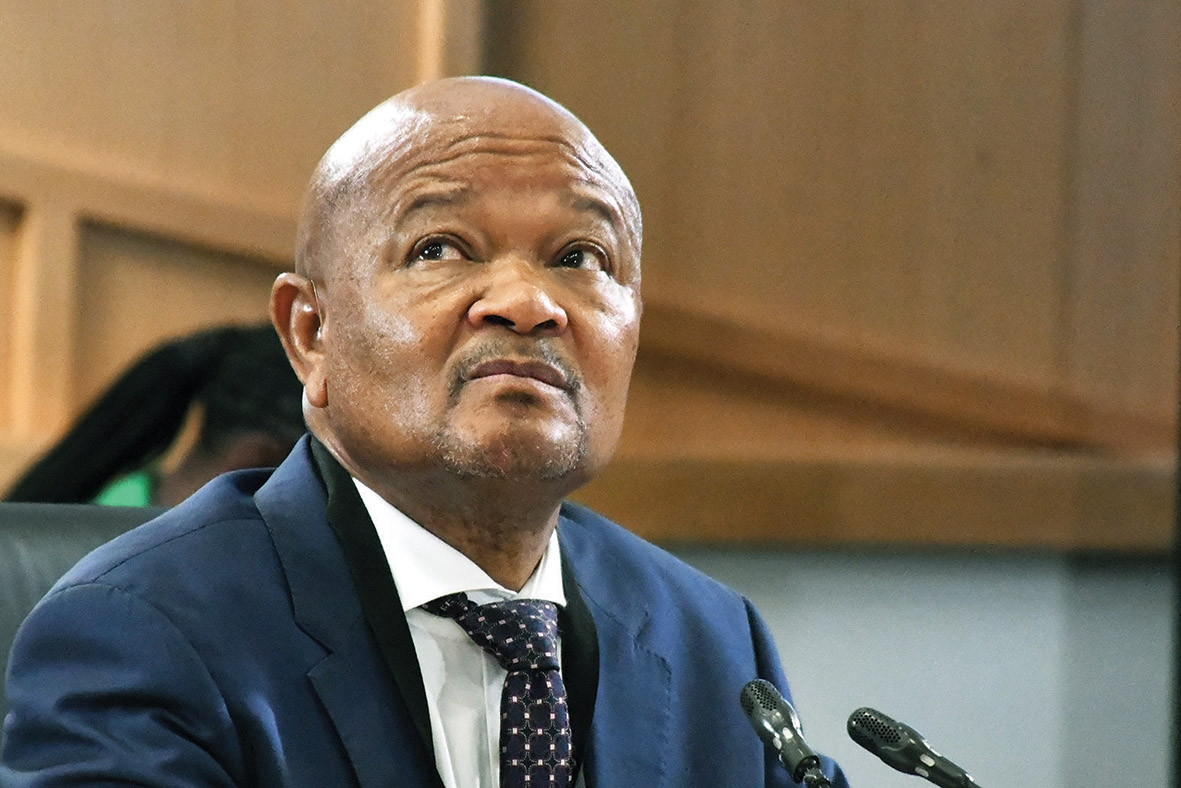
Police are investigating whether suspended police minister Senzo Mchunu crossed the line from political contradiction into a criminal offence when he spoke to Parliament about his relationship with Brown Mogotsi, with a High Court search warrant showing investigators are testing a possible offence linked to parliamentary oversight.
The September 21 warrant used to seize Mchunu’s cellphone lists fraud, corruption, defeating the ends of justice and, “potentially”, a contravention of section 27 read with sections 7(a) and 7(b) of the Powers, Privileges and Immunities of Parliaments and Provincial Legislatures Act.
The clue to what that possible parliamentary offence means appears in proceedings of Parliament’s ad hoc committee investigating allegations made by KwaZulu-Natal police commissioner Lieutenant-General Nhlanhla Mkhwanazi.
On October 13 last year, evidence leader Advocate Norman Arendse read from an affidavit by Brigadier William Kunene, the investigator who had obtained search warrants against Mchunu, suspended deputy national commissioner Shadrack Sibiya and Cedrick Nkabinde.
Kunene’s affidavit recorded a criminal complaint opened by DA MP Lisa-Maré Schickerling on July 10, 2025.
Arendse said the complaint alleged that Mchunu committed fraud and breached the parliamentary privileges law by “lying to Parliament that he did not know Mr Brown Mogotsi, when in truth, he knew him”.
Schickerling’s complaint alleged that, if the deception was intentional, it obstructed MPs from carrying out their oversight duties, conduct contemplated in sections 7(a) and 7(b).
That turns what could have remained a political dispute over words into a criminal question: what exactly did Mchunu tell Parliament, what did he know, and did any false statement impede MPs from doing their work?
The contradiction became sharper when Mchunu appeared before the ad hoc committee on October 16.
Arendse put Mogotsi’s name directly to him: “Brown Mogotsi, whom, I think, you said you know him?”
Mchunu answered, “Yes, I know him.”
But Mchunu later disputed that this contradicted what he had told Parliament months earlier.
Under questioning on October 22, he said, “I have never said I don’t know him … I said he is not an associate.”
That distinction is central because Parliament’s evidence leaders later took a different view.
In their May 2026 evidentiary report, they recorded that Mchunu had told the Portfolio Committee on Police on March 5, 2025, that he did not know Mogotsi but later acknowledged knowing him before the ad hoc committee.
The new warrant adds another unexplained detail.
Among several devices linked to Mchunu, investigators identify one IMEI with a relevant period of use specifically on October 14, 2025.
That was the day Sibiya was testifying before Parliament and objected to questions from MK Party MP David Skosana, another complainant in the criminal investigation.
“I’m raising a concern if I can get protection,” Sibiya told the committee.
The chairperson ruled that Skosana could continue asking questions, saying, “We must allow him to ask the questions.”
The timing is significant because a day earlier Parliament had heard that Skosana and Schickerling were complainants in criminal matters involving people appearing before the committee.
The issue forced MPs to confront whether complainants could continue questioning witnesses they had reported to police.
Parliament’s legal services advised that such MPs could continue participating, although they should withdraw where a direct conflict arose.
- Police are investigating whether suspended police minister Senzo Mchunu crossed the line from political contradiction into a criminal offence when he spoke to Parliament about his relationship with Brown Mogotsi, with a High Court search warrant showing investigators are testing a possible offence linked to parliamentary oversight.
- The September 21 warrant used to seize Mchunu’s cellphone lists fraud, corruption, defeating the ends of justice and, “potentially”, a contravention of section 27 read with sections 7(a) and 7(b) of the Powers, Privileges and Immunities of Parliaments and Provincial Legislatures Act.
- The clue to what that possible parliamentary offence means appears in proceedings of Parliament’s ad hoc committee investigating allegations made by KwaZulu-Natal police commissioner Lieutenant-General Nhlanhla Mkhwanazi.
- On October 13 last year, evidence leader Advocate Norman Arendse read from an affidavit by Brigadier William Kunene, the investigator who had obtained search warrants against Mchunu, suspended deputy national commissioner Shadrack Sibiya and Cedrick Nkabinde.
- Kunene’s affidavit recorded a criminal complaint opened by DA MP Lisa-Maré Schickerling on July 10, 2025.


