


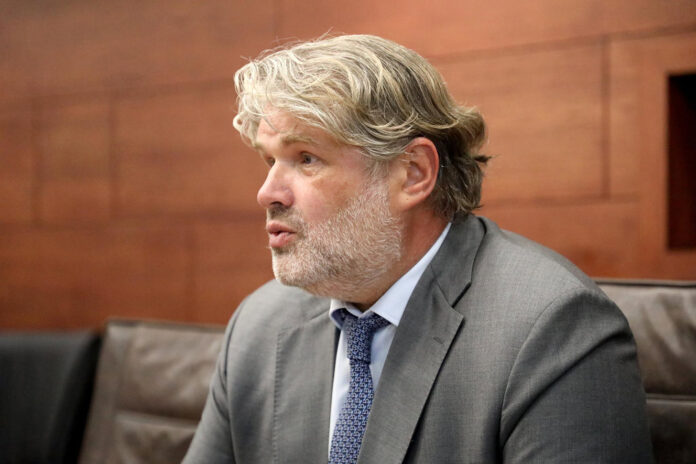
Russia wants a bigger role in Africa’s energy, security and development sectors, with Moscow presenting itself as a long-term partner for countries seeking investment, infrastructure and technology, says Russian ambassador to South Africa and Lesotho Roman Ambarov.
Ambarov’s comments follow Foreign Minister Sergey Lavrov’s July 2026 tour of Ethiopia, Niger, Mozambique and Burundi, where Russia said it focused on expanding cooperation in areas that affect economic growth, including energy, trade, security and industrial development.
The message from Moscow is that Africa is becoming a stronger force in global affairs and should have greater control over its economic and technological future.
“Political decolonisation must be followed by economic, financial and technological sovereignty,” Ambarov wrote, arguing that Russia saw itself as a partner supporting African priorities rather than prescribing political models.
Ambarov said Russia believed there was growing interest in a different model of cooperation based on “sovereign equality, mutual respect, non-interference and practical cooperation”.
He criticised a Western approach built on “aid, conditionality and dependency”, saying investment had often been linked to political conditions.
Ambarov said Lavrov’s meetings focused on practical areas, including energy, industrialisation, education, healthcare, food security, technology and investment. The focus on energy and infrastructure reflected where Moscow said it could make a difference in Africa’s development challenges.
“These priorities closely correspond with the African Union’s Agenda 2063,” he wrote, saying the areas were becoming central to Russia-Africa relations.
Russia’s push is not only economic. Moscow is also positioning itself as a supporter of Africa’s demand for greater influence in global institutions.
Ambarov said Lavrov reaffirmed Russia’s support for the African Common Position contained in the Ezulwini Consensus and Sirte Declaration, which call for reforms to improve Africa’s representation in global decision-making.
Russia also promoted the idea of “African solutions to African problems”, saying conflicts in regions such as the Sahel, Sudan, South Sudan, Libya and the Great Lakes should be addressed through African-led approaches.
Education and scientific cooperation remained another part of Moscow’s strategy. Ambarov said thousands of African graduates from Russian universities worked in government, medicine, engineering, academia and business, while expanded scholarships and training programmes were strengthening people-to-people ties.
Russia is also expanding its diplomatic footprint on the continent. Ambarov said Russia had opened embassies in Niger, Sierra Leone and South Sudan, with new missions expected in Gambia, Liberia, Togo and Comoros.
The next major test of the relationship would come at the Third Russia-Africa Summit in Moscow in October 2026.
Ambarov said the summit would focus on investment, digital technologies, artificial intelligence, agriculture, transport, energy and industrial development.
Russia’s vision, he said, was a partnership based on “sovereign equality, pragmatic cooperation, respect for national priorities and a shared vision of a more representative international order”. The measure of the partnership will be whether the commitments translate into projects, investment and economic opportunities that African countries and citizens can see.
- Russia aims to expand its role in Africa's energy, security, and development sectors, positioning itself as a long-term investment and technology partner.
- Russian Foreign Minister Sergey Lavrov's July 2026 tour focused on cooperation in energy, trade, security, industrial development, education, healthcare, and food security.
- Moscow supports Africa's demand for greater global influence, endorsing reforms for better representation as outlined in the Ezulwini Consensus and Sirte Declaration.
- Russia promotes "African solutions to African problems" for resolving conflicts in regions including the Sahel, Sudan, South Sudan, Libya, and the Great Lakes.
- Russia is increasing its diplomatic presence in Africa by opening embassies in Niger, Sierra Leone, and South Sudan, with more planned in Gambia, Liberia, Togo, and Comoros, ahead of the Third Russia-Africa Summit in October 2026.


