


The Democratic Alliance (DA) in the National Assembly has welcomed an advisory note from the Public Service Commission (PSC), cautioning against the risk of public servants participating in African National Congress (ANC) study groups.
The advisory note from the PSC, led by Dr Somadoda Fikeni, acknowledged that these meetings may reasonably give rise to perceptions of bias.
The DA found the practice of study groups to unfairly advantage the ANC and risk compromising state officials who have a constitutional responsibility for impartiality and honesty.
The PSC agrees with the blue party, and advised that state officials should limit themselves to official and formal meetings that are recorded, with minutes available.
‘Real or perceived political bias’
“Participation by public servants in political party study groups creates several governance risks, including erosion of administrative impartiality; real or perceived political bias; unequal access to state information; exposure of officials to improper political influence; and potential breaches of confidentiality obligations,” reads the PSC note.
“Even where no improper conduct occurs, the perception of political alignment may itself undermine confidence in the integrity of public administration.”
The PSC went further to caution public servants from participating in study group meetings that:
- Are not formally authorised;
- Occur outside official parliamentary or executive processes;
- Are not transparent or institutionally accountable;
- Provide selective political access to official information; and
- Compromise or reasonably appear to compromise impartiality.
Furthermore, the PSC advised that political parties may lawfully maintain internal caucus and study group structures for political and parliamentary coordination purposes until stringent conditions are met.
It also noted that there exists no constitutional or legislative prescript authorising public servants to participate in political party study groups outside formal governmental or parliamentary processes.
“Public servants must conduct themselves in a manner that preserves impartiality, transparency, accountability, and professional independence.
“Participation by public servants in informal political party structures discussing official governmental business creates governance and ethical risks inconsistent with constitutional principles governing public administration,” added the commission.
Study groups controversy
The study groups’ subject matter has been a source of some political controversy.
Higher education portfolio committee chairman Tebogo Letsie was recently accused of taking political pressure from an ANC study group into consideration when he postponed a meeting where his ANC cadre—beleaguered higher education minister Buti Manamela—was meant to be taken to task over shenanigans at the National Student Financial Aid Scheme (NSFAS).
The study groups faced similar allegations regarding Manamela’s predecessor, Dr Nobuhle Nkabane, who they are accused of having defended until it was untenable to do so.
DA to forward advisory note to Speaker
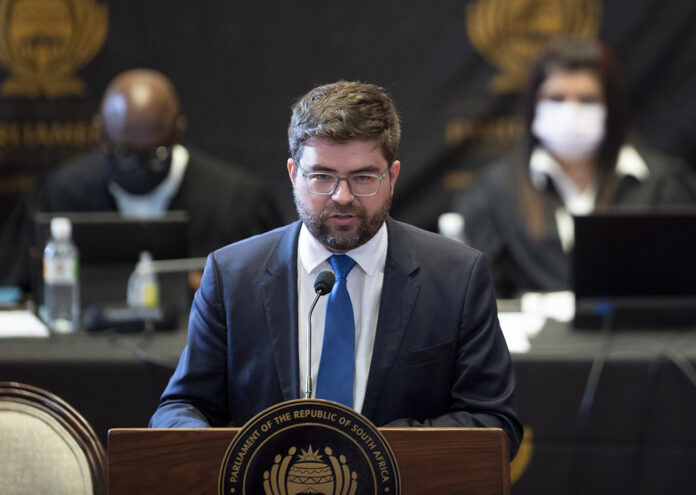
DA leader in parliament, George Michalakis welcomed the PSC’s advisory note.
“The DA was recently criticised by, among others, the ANC, for pointing this out, stating that civil servants are allowed to provide information in a professional manner to political parties without being politically involved,” said Michalakis.
“The DA welcomes the advisory note from the PSC, and we will forward this advisory note to both the Leader of Government Business (Paul Mashatile) and the Speaker (Thoko Didiza) with a request to inform both public servants and the whippery that all such interactions should cease immediately.
“We will also write to the Speaker to request that Parliament’s Rules Committee formulate guidelines for political parties regarding the interaction between public servants and political party structures outside of the parliamentary oversight and accountability processes.”
ANC to continue with study groups
Meanwhile, the ANC has described the study groups as “meetings of ANC members of Parliament that discuss a variety of issues including oversight of government departments and organs of state”, among other things, calling it “infactually correct” to suggest that these platforms enable Members of Parliament (MPs) to “become embedded in administrative processes.”
Despite the PSC’s warning, the party says it will continue with the study groups, adding that Government of National Unity (GNU) partner opinions about the groups are ill-informed and misguided.
Read More:
Ramaphosa to address nation as ANC study group demands action against top cop Masemola
- The Public Service Commission (PSC) issued an advisory cautioning against public servants' participation in ANC study groups, citing risks of perceived political bias and compromised impartiality.
- The PSC emphasized that public servants should only engage in official, formal, and transparent meetings recorded and accountable via minutes to preserve administrative impartiality.
- The Democratic Alliance (DA) welcomed the PSC’s advisory and plans to urge parliamentary leaders to halt such informal interactions and develop formal guidelines on public servant and political party engagements.
- The African National Congress (ANC) defended its study groups as legitimate parliamentary coordination forums and dismissed criticisms, stating they will continue despite the PSC's warnings.
- The PSC highlighted governance risks from these groups including erosion of impartiality, unequal access to information, potential political influence, and breaches of confidentiality.


