


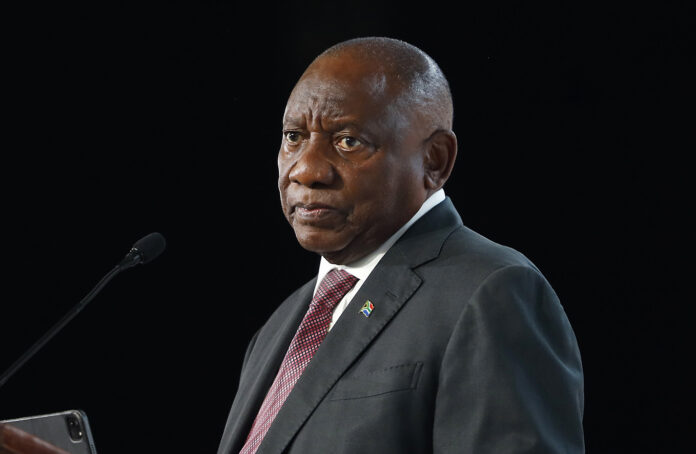
President Cyril Ramaphosa has been ordered to pay the legal costs of activists who took his government to court before the 2024 general elections over concerns that changes to South Africa’s political funding laws had created uncertainty around donation limits and transparency.
A full bench of three judges in the Western Cape High Court ruled in favour of civil society organisation My Vote Counts (MVC) and overturned an earlier cost order that had partly gone against the activists.
The court found that MVC had achieved substantial success when it rushed to court in May 2024, warning that amendments to the Political Party Funding Act had created a potential gap in the law governing political donations to parties contesting the elections.
Temporary court order granted
Before the amendments, individual donors could not give more than R15-million a year to a political party, while donations above R100 000 had to be disclosed.
MVC argued that the amendments had repealed the old system before new donation limits and disclosure thresholds had been determined, creating uncertainty over what rules applied in the crucial weeks before South Africans headed to the polls.
Fearing that voters could be left in the dark about who was funding political parties, the organisation approached the court on an urgent basis.
The court at the time granted a rule nisi, a temporary court order that keeps a matter alive and requires affected parties to return to court on a later date to explain why the order should not be made final.
In simple terms, it allowed the legal challenge to continue while the constitutional issues were properly debated.
However, the court refused to make the order immediately enforceable and directed MVC to pay some of the costs linked to that part of the case. The organisation appealed.
Overall outcome was not considered
In the latest judgment, the full court found that the earlier court had focused too narrowly on one aspect of the litigation instead of considering the overall outcome.
“The litigation plainly bore the hallmarks of constitutional litigation contemplated in Biowatch,” the court said.
The judges noted that the case involved political funding transparency, accountability, and voters’ constitutional right to make informed choices during an election period.
The court found that MVC had succeeded in obtaining the central relief it wanted.
“MVC secured the principal relief sought in the urgent court, namely the grant of the rule nisi,” the judgment stated.
The judges also pointed out that there had never been any finding that the organisation had acted frivolously, recklessly, or improperly.
“An adverse costs order against MVC cannot be sustained,” the court ruled.
The judgment also overturned a cost order against the DA, which had unsuccessfully sought to intervene in the original proceedings.
The court held that once the DA’s intervention application had been dismissed, it could not be held liable for costs associated with the main proceedings.
The full bench ultimately ordered Ramaphosa and Home Affairs Minister Leon Schreiber, cited as the first and third respondents, respectively, to pay the costs linked to the rule nisi proceedings.
The state respondents were also ordered to pay the costs of the appeal.
Genuine attempt to protect transparency
The ruling reinforces a long-standing constitutional principle that public-interest organisations should not be discouraged from challenging government decisions through the threat of adverse legal costs when they raise legitimate constitutional concerns.
“The Constitutional Court accordingly held that successful private litigants in constitutional matters should ordinarily recover their costs from the state, while unsuccessful private litigants ought not ordinarily to be mulcted in costs unless their conduct is frivolous, vexatious, or manifestly inappropriate,” ruled the court.
For MVC, the court concluded that its election-period challenge was a genuine attempt to protect transparency in political funding and should not have attracted a costs penalty.
“Significantly, there was never any finding by the court a quo that MVC’s litigation was frivolous, abusive, reckless, vexatious, or manifestly inappropriate.
“To the contrary, the judgment demonstrates careful engagement with MVC’s concerns and acceptance that the issues warranted judicial scrutiny and fuller ventilation upon the return date.”
- President Cyril Ramaphosa has been ordered by the Western Cape High Court to pay legal costs to activists from My Vote Counts (MVC) who challenged changes to South Africa's political funding laws before the 2024 elections.
- MVC argued that amendments to the Political Party Funding Act created legal uncertainty around donation limits and transparency, potentially misleading voters ahead of the polls.
- The court granted a temporary order (rule nisi) allowing the legal challenge to continue and later ruled MVC had achieved substantial success, overturning an earlier partial cost order against them.
- The full bench emphasized the constitutional importance of transparency and accountability in political funding and ruled that public-interest litigants like MVC should not be penalized with adverse costs unless acting frivolously.
- The court also reversed a cost order against the DA and mandated President Ramaphosa and Home Affairs Minister Leon Schreiber to pay the costs linked to the case, reinforcing protection for election-related transparency challenges.


