


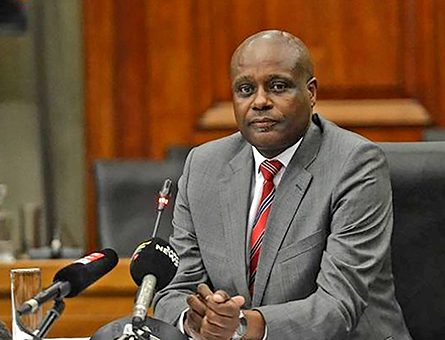
The Presidency has kept secret the full report of the inquiry that cleared Johannesburg Director of Public Prosecutions Adv Andrew Chauke, providing no explanation for its decision and leaving unanswered the panel’s assessment of evidence and conduct involving some of the country’s most senior prosecutors and top cops.
The public hearings of the inquiry chaired by retired Justice Bess Nkabinde were broadcast, exposing the testimony and arguments presented before the panel.
But the report containing the panel’s analysis of that evidence — including which versions it accepted, what conclusions it reached and what implications its findings carry for officials who featured in the inquiry — remains undisclosed.
‘No plan to release report’
Presidential spokesperson Vincent Magwenya confirmed that there was currently no plan to release the report.
“At this stage, there’s no plan to release it,” Magwenya said.
Asked why it would not be released, he said: “That might change though.”
The Presidency has released only President Cyril Ramaphosa’s letter informing Chauke that the inquiry found no basis to remove him from office.
Ramaphosa said the panel reached its conclusions after considering “extensive oral evidence, documentary evidence, expert opinions, witness statements and legal submissions”.
The unresolved issue is not whether the public heard the evidence. It did.
The unanswered question is what the panel made of it.
The inquiry examined allegations linked to Chauke’s handling of the Cato Manor matter, his decision to provisionally withdraw murder and related charges against former Crime Intelligence boss Gen Richard Mdluli, and the institution of racketeering charges against
Maj-Gen Johan Booysen and members of the Cato Manor Unit.
‘Chauke did not act unlawfully’
In the summary released by Ramaphosa, the panel found there was “no credible evidence upon which it could conclude that you took prosecutorial decisions as alleged in respect of the Cato Manor matter”.
It also found Chauke had not “acted unlawfully in the performance of your coordination functions”.
On the Mdluli matter, the panel found Chauke’s decision to withdraw the charges provisionally and refer the matter for further investigation was not irrational.
Reasoning behind conclusions
But the full report would reveal the reasoning behind those conclusions.
It would show how the panel dealt with the competing versions around the Cato Manor saga, including the long-running allegations surrounding the unit and claims that it operated as a “death squad”.
It would also provide the panel’s assessment of former National Director of Public Prosecutions Adv Shamila Batohi’s evidence.
During the hearings, Batohi’s testimony attracted attention after questions were raised about her incomplete preparation and her admission that she had not read certain material relevant to the issues before the inquiry.
The panel’s report would show whether it accepted her explanations, whether it considered her conduct relevant to the allegations against Chauke and what conclusions it drew from her evidence.
Batohi’s walkout
The same applies to Batohi’s decision to walk out of the hearings, an episode that raised questions about her engagement with the process.
Without the report, the public has the outcome but not the judicial reasoning behind it.
Ramaphosa said he accepted the panel’s findings and recommendations.
“I accept the findings and recommendations of the Panel,” he wrote.
He said the allegations against Chauke “have not been substantiated by the evidence presented before the Enquiry” and that there was “no basis upon which to conclude that you are unfit to hold office as Director of Public Prosecutions”.
The inquiry has cleared Chauke. The unresolved battle is over the meaning of the evidence that produced that clearance.
- The Presidency has withheld the full report from an inquiry that cleared Johannesburg Director of Public Prosecutions Adv Andrew Chauke, providing no explanation and leaving key assessments of senior officials' conduct undisclosed.
- Public hearings chaired by retired Justice Bess Nkabinde were broadcast, but the panel's detailed analysis and reasoning behind its conclusions remain secret, with no current plan to release the report.
- The inquiry investigated allegations against Chauke related to the Cato Manor case, the provisional withdrawal of charges against former Crime Intelligence boss Gen Richard Mdluli, and racketeering charges involving Maj-Gen Johan Booysen.
- The released summary states Chauke did not act unlawfully and his prosecutorial decisions were not irrational, but the full report would clarify how the panel evaluated conflicting evidence, including testimonies from former National Director of Public Prosecutions Adv Shamila Batohi, who notably walked out of the hearings.
- President Cyril Ramaphosa accepted the panel’s findings, declaring no evidence substantiated allegations against Chauke or his unfitness for office, leaving public debate unresolved over the interpretation of evidence behind Chauke's clearance.


