


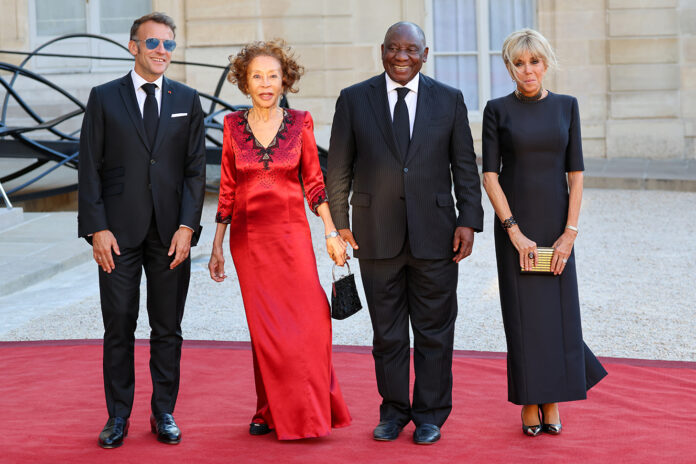
President Cyril Ramaphosa has issued a call to action to the global community, warning that international education targets will remain out of reach unless nations fundamentally transform how they treat and compensate their teaching workforce.
Addressing the Transforming Education Summit in Paris, Ramaphosa
said the teaching profession stands at the heart of education reform. However, he noted that teachers globally continue to work under increasingly untenable
conditions.
“Across our world, teachers strive to perform their duties under extremely difficult conditions,” Ramaphosa said, pointing to a stark list of systemic failures: inadequate compensation, insufficient professional development, overwhelming classroom sizes, and the profound emotional toll of navigating an era of growing mental health crises among young people.
Ramaphosa stressed that transforming education requires improving the conditions in which teachers work and restoring the respect they deserve. He said achieving SDG 4 depends on a clear and deliberate commitment to equity and inclusion, ensuring that every pupil, regardless of gender, physical ability, location, or socioeconomic background, has access to quality education. Without placing equity at the centre of global education policies, he warned, reforms risk reinforcing the same structural inequalities they seek to address.
With the international community now halfway between the 2022 summit commitments and the 2030 deadline,he warned that the time for incremental policy adjustments has passed, calling for urgent action to accelerate progress.
“This is a time for bold, system-wide transformation that builds more resilient, adaptive, and future-ready education systems.” He added that true resilience means building systems that act not as “fragile branches bending in the wind but as sturdy forests with deep roots and the capacity to regenerate”.
Achieving this vision, he argued, requires a broad range of global efforts: sustained political commitment at the highest levels, innovative and sustainable financing, and actively centring the voices of young people as partners in shaping policy.
In his closing remarks, Ramaphosa provided a hopeful example from South Africa to show how education can eradicate ignorance. Despite systemic challenges, South Africa recently achieved the highest school-leaving certificate pass rate in its democratic history.
Crucially, the majority of students who qualified for university entry came from impoverished communities.
“These are young people who will go on to pursue their dreams at a university, technical, or vocational college of their choice,” Ramaphosa said, noting a cornerstone of the country’s social equity policy: “where they will study for free.” – CGTN
- President Cyril Ramaphosa emphasized that global education goals require a fundamental transformation in how teachers are treated and compensated, highlighting systemic issues like low pay, inadequate support, and mental health challenges.
- He stressed that improving teachers' working conditions and restoring their respect is central to education reform and achieving sustainable development goal 4 (SDG 4) focused on equity and inclusion.
- Ramaphosa warned that incremental changes are insufficient as the world nears the 2030 deadline, calling for bold, system-wide transformation to create resilient and adaptive education systems.
- He called for sustained political commitment, innovative financing, and involving young people as active partners in education policy reforms.
- Citing South Africa’s recent success in achieving its highest school-leaving pass rate, Ramaphosa highlighted social equity efforts, such as free tertiary education for disadvantaged youth, as a hopeful model for global education progress.


