


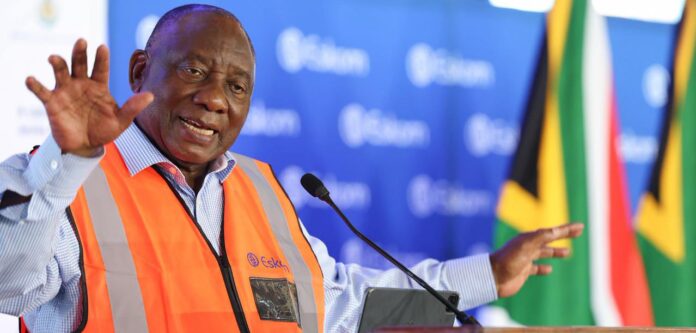
President Cyril Ramaphosa’s approval of the first phase of Eskom’s restructuring plan has moved the future of South Africa’s electricity system from debate to implementation, while workers and communities are still demanding a say over what will be transferred, who will control it and who will carry the risks.
The Eskom Restructuring Task Team recommends creating an independent Transmission System Operator separate from Eskom. The government presents the change as a way to attract investment, expand the transmission grid and strengthen energy security.
The decision is described as restructuring, but its effect could extend far beyond the organisation of Eskom.
From producers to consumers
Transmission is the part of the electricity system that moves power from producers to consumers. Control over it determines which generators can connect to the grid, how electricity enters the system and how the future power market develops.
That is why the National Union of Mineworkers says moving transmission assets, employees and operations out of Eskom could gradually change who holds power over electricity.
“Transferring transmission assets away from Eskom carries significant risks of fragmentation, increased private sector influence, and the gradual erosion of public control,” NUM said.
The government’s stated aim is to bring investment into a system that needs major expansion. NUM’s warning is that the same process could allow private interests to gain influence over infrastructure built and financed as a public asset.
The contradiction sits at the centre of the reform.
Protecting energy security
Government says the plan is needed to protect energy security. NUM says energy security could be weakened if strategic assets are separated from Eskom and placed in a system shaped increasingly by commercial interests.
Government says investment will help expand the grid. NUM asks whether the benefits of that investment will remain under public control or flow to companies entering a new electricity market.
Government has already approved the political direction of the reforms. Labour and communities are being invited to participate during the implementation stage, after the main decision to establish an independent operator has been accepted.
“Labour must not be treated as passive observers in decisions that affect thousands of livelihoods,” the union said.
NUM has demanded that no transmission assets, infrastructure, employees or operational functions be transferred without the full consent and consultation of organised labour.
It also wants firm guarantees that no worker will lose a job, suffer worse working conditions or lose collective bargaining rights because of the restructuring.
“Restructuring must not come at the cost of jobs, working conditions, collective bargaining rights, or public ownership,” NUM said.
The union’s concern is that the language of efficiency and investment could hide how the costs and benefits of the new system will be divided.
Private investors will enter the process with capital, technical capacity and access to decision-makers. Workers enter it facing possible transfers, restructuring and job uncertainty. Communities enter it as electricity users whose main concerns are affordability, access and reliable supply.
NUM says those public needs must not be pushed behind the commercial demands of a new electricity market.
‘Electricity is a strategic national asset’
It has called for the reforms to protect affordable electricity, industrial growth, localisation, employment and national development.
“Electricity is a strategic national asset,” the union said as it rejected what it described as “the gradual privatisation and liberalisation of South Africa’s electricity grid”.
NUM also disputes the argument that Eskom’s structure must be changed before its existing problems are fixed.
It says the government should first address mounting municipal debt, weak revenue collection and poor governance, which continue to threaten Eskom’s financial position.
That argument raises a question the restructuring plan does not settle.
If Eskom’s financial crisis is driven partly by unpaid municipal accounts and governance failures, separating its assets may change the structure without removing the causes of the crisis.
Social agreement with labour and other affected groups
The second phase of the process is expected to produce an implementation plan within three months. NUM wants the government to halt further market reforms until it has reached a social agreement with labour and other affected groups.
The union has warned that it will use legal action, constitutional measures and worker mobilisation if the government proceeds without genuine consultation.
“Restructuring must place workers, communities, and national development at its centre,” NUM said.
The test of the next phase will not only be whether the new operator attracts investment or expands the grid.
It will be whether the people who rely on electricity as a public service retain meaningful control over it after the investors have entered and the assets have moved.
- President Ramaphosa approved the first phase of Eskom’s restructuring, including creating an independent Transmission System Operator separate from Eskom.
- The government aims to attract investment, expand the grid, and improve energy security, while the National Union of Mineworkers (NUM) warns this may erode public control and increase private sector influence.
- NUM demands full consultation and consent on asset transfers, job security, and protection of workers' rights, fearing potential job losses and reduced collective bargaining.
- The union calls for a halt to reforms until social agreements are reached, emphasizing electricity as a strategic national asset and criticizing the failure to address municipal debt and governance issues first.
- The success of reform will depend on maintaining affordable, reliable electricity and public control amid the entrance of private investors and market liberalization.


