


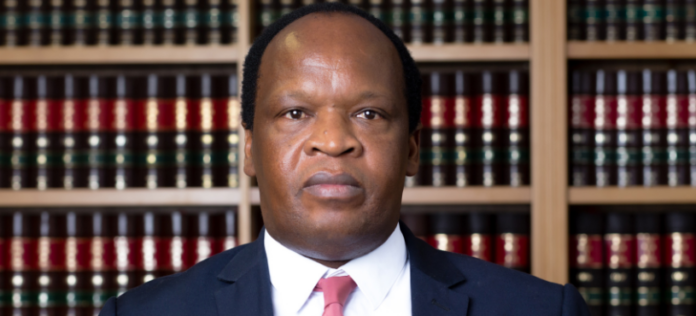
Adv Muzi Sikhakhane delivered an impassioned defence of the Legal Sector Code in the Pretoria High Court, arguing that judges must place South Africa’s racial inequalities and the “black condition” above technical complaints about the code-making process.
Appearing for the Black Conveyancers Association on Thursday, Sikhakhane told the full bench that the challenge against the code was ultimately not about procedure but about whether courts were willing to confront centuries of exclusion faced by Black legal professionals.
“The reason there are disputes about human rights is because we’ve not resolved the dispute about who’s human,” Sikhakhane told the court.
Transformation targets for legal profession
The Legal Sector Code, introduced under the Broad-Based Black Economic Empowerment framework, seeks to impose transformation targets on the legal profession, including ownership, briefing patterns and representation of Black practitioners and women.
Several large law firms and legal bodies have challenged the validity of the code, arguing that the consultation and drafting processes were flawed and unlawful.
Sikhakhane aligned himself with arguments already advanced by other respondents supporting the code, including reliance on precedent holding that administrative processes do not need to be perfect to pass legal scrutiny.
Call for ‘purposive interpretation of law’
He urged the court to adopt what he repeatedly called a “purposive interpretation” of the law, warning judges against becoming “legal positivists” focused only on technical compliance.
“What distinguishes you from us is this: we want to win the case and maybe earn some fees,” Sikhakhane told the judges.
“Judges sit above us and have a bigger and better responsibility to pass judgment on the paradoxes and complexities of disputes between human beings, between structures, between classes, and between races.”
He argued that any procedural irregularities in the adoption of the Legal Sector Code had to be weighed against the constitutional imperative of transformation and the lived reality of Black practitioners in the profession.
‘Deliberate exclusion of Black practitioners’
“The statistics demonstrate to you that there has been a deliberate exclusion of a particular race,” he said.
“In this room, there is no Black female senior counsel. It’s not because they are not talented.”
Sikhakhane repeatedly invoked sections 9 and 10 of the Constitution dealing with equality and dignity, arguing that these constitutional rights outweighed what he described as “mechanics” raised by the applicants.
He accused major commercial law firms of preserving racial and economic exclusion while simultaneously benefiting from both private-sector and state legal work.
“All over the world, the so-called top five or top ten law firms are first preferred by listed companies,” he said.
“In the South African context, it’s the same, except that they are also preferred by the government’s parastatals.”
Double dipping
He described this as “double dipping”, arguing that historically white firms dominated corporate briefing patterns while Black practitioners remained excluded from meaningful participation in both the private and public sectors.
Sikhakhane went further, accusing the democratic state itself of dependence on historically white legal institutions.
“The government itself, as black as it is, suffers from what I call epistemic dependency on whiteness,” he said.
He told the court that black professionals remained “beggars” in a democratic South Africa despite the existence of state power capable of redistributing legal work.
One of the central themes of his address was the distinction between “form” and “substance”.
Relying on case law and legal philosophy, Sikhakhane argued that courts should not invalidate transformation measures merely because of procedural imperfections if the broader purpose of the legislation remained constitutionally legitimate.
He cited the work of American legal philosopher Lon L. Fuller, including Fuller’s fictional “cave” case involving judges deciding the fate of starving men who killed and ate one of their companions while trapped underground.
Sikhakhane used the story to contrast rigid legal formalism with judges willing to interpret law through the lens of human necessity and dignity.
“What was exactly the purpose that made those people in the cave eat one of them?” he asked.
“Is it possible for us to apply the law in the condition of people who ate one of them, because the conditions were conditions of indignity and starvation?”
He told the court that South African judges were being asked to make a similarly profound choice.
“Form can perpetuate the condition,” he said.
“But you are called judges because you’re better than us.”
‘Bench to show courage’
Sikhakhane also quoted former chief justice Pius Langa, urging the bench to show courage even if its decision proved unpopular.
“Sometimes it takes a dissenter to change the course of history,” he said, quoting Langa.
The advocate repeatedly framed the case as an existential battle over dignity and survival for Black legal practitioners rather than a narrow administrative-law dispute.
“There are corpses, living corpses, who have come out from these firms,” he said of Black lawyers working in historically white commercial firms.
He argued that many Black practitioners experienced exclusion, marginalisation and humiliation inside elite legal institutions despite formal transformation commitments.
The hearing forms part of a broader legal battle over the future of transformation measures within South Africa’s legal profession and the extent to which courts should defer to government policy choices aimed at correcting racial inequality.
The case continues.
- Adv Muzi Sikhakhane delivered an impassioned defence of the Legal Sector Code in the Pretoria High Court, arguing that judges must place South Africa’s racial inequalities and the “black condition” above technical complaints about the code-making process.
- Appearing for the Black Conveyancers Association on Thursday, Sikhakhane told the full bench that the challenge against the code was ultimately not about procedure but about whether courts were willing to confront centuries of exclusion faced by Black legal professionals.
- Transformation targets for legal profession The Legal Sector Code, introduced under the Broad-Based Black Economic Empowerment framework, seeks to impose transformation targets on the legal profession, including ownership, briefing patterns and representation of Black practitioners and women.
- Several large law firms and legal bodies have challenged the validity of the code, arguing that the consultation and drafting processes were flawed and unlawful.


