


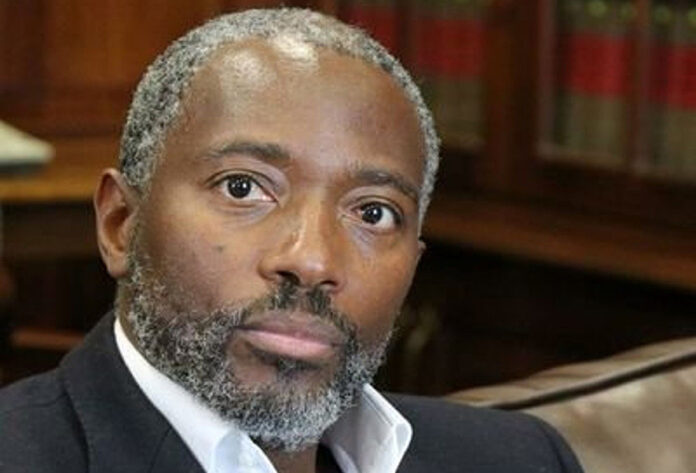
Adv Vuyani Ngalwana SC’s nomination to become evidence leader in Parliament’s Section 89 impeachment inquiry came under scrutiny on Wednesday as members of parliament (MPs) clashed over whether his previous involvement in matters relating to the Section 89 report created a real or perceived conflict of interest.
The dispute dominated a meeting of Parliament’s Section 89 Impeachment Committee, which is tasked with recommending a senior counsel to lead evidence in the inquiry into whether President Cyril Ramaphosa committed a serious violation of the Constitution or the law.
ANC MP Mika Mhlaule argued that Ngalwana, who was nominated by the MK Party, should be eliminated from the shortlist because of his previous involvement in matters relating to the Section 89 process.
Perceived conflict of interest
“My view is that for us to enter into a clean process, we need to look at the perceived conflict of interest that is around his name and rid ourselves, for lack of a better word, of entering into a dirty relationship with a person who is perceived to be conflicted on the matter. I propose that we eliminate the name and continue with names which will not cause problems for us,” Mhlaule said.
His concerns were echoed by Freedom Front Plus MP Wouter Wessels and IFP MP Nhanhla Radebe, who said the committee had to ensure that the successful candidate would be free from both actual and perceived conflicts of interest.
The debate followed a briefing by Parliament’s legal services, which informed members that it had already approached Ngalwana to address concerns about whether his previous legal work presented any real or perceived conflict of interest.
Parliamentary legal adviser Sueanne Isaac said Ngalwana had, in his capacity as an acting judge, made a ruling in which he referred to matters contained in the Independent Panel report on the Phala Phala matter.
“As an acting judge he made a ruling and did refer to matters in the Independent Panel report [on Phala Phala]. We did put that to him and asked if that issue will give rise to a real or perceived conflict of interest,” Isaac said.
Ngalwana denies conflict of interest
She said Ngalwana had responded in writing, stating that he was not conflicted in relation to serving as evidence leader.
“He did state that he is governed by Clause 58 of the Legal Practitioners’ Code and that his public utterances in the judgment of Mogale and Others v City of Tshwane were criticisms of the legislature, not the president. He feels he was vindicated by the Constitutional Court,” Isaac said.
She added that Ngalwana had also argued that “his views on the Phala Phala report are irrelevant and that the evidence leader is not required to determine whether the president is guilty or innocent”.
In his written submission, Ngalwana also referred the committee to Rule 58 of the Legal Practice Council’s Code of Conduct, which requires legal practitioners to “guard against becoming personally, rather than professionally, associated with a client’s interests”.
He further relied on the rule requiring legal practitioners to avoid situations where personal interests conflict with their professional duties to clients or the court, saying he was confident he would satisfy the ethical standards expected of an advocate should his conduct ever be tested.
MK Party defends Ngalwana
MK Party parliamentary leader John Hlophe dismissed calls for Ngalwana to be removed from consideration, arguing that previous legal representation could not be used as a basis to disqualify an advocate.
Hlophe pointed out that Adv Kate Hofmeyer SC, whose name was submitted by the DA and ActionSA, had also previously represented Ramaphosa in legal matters.
He argued that if previous legal work was to be regarded as a conflict of interest, then the same standard had to be applied consistently to every nominee.
His views were supported by fellow MK Party MP Khanyisile Litchfield-Tshabalala, while EFF leader Julius Malema strongly criticised suggestions that senior counsel would allow politics to influence their work.
Malema said it was insulting to insinuate that experienced advocates would ignore their constitutional and professional obligations because they had previously acted for particular clients. He said such reasoning undermined both the legal profession and the Constitution.
Committee chairperson Makashule Gana later proposed that members vote on whether Ngalwana should be removed from the shortlist.
However, ACDP MP Steve Swart requested that the committee first complete its deliberations on all the nominated candidates before taking a decision on any individual nominee.
Members agreed, leaving the matter unresolved.
Pool of available senior counsel too small
In a separate decision, the committee resolved to extend the nomination process by a further 48 hours after concerns were raised that the pool of available senior counsel was too small.
Parliament informed members that only five senior counsel are currently available to accept the appointment despite several nominations having been submitted by political parties. Those available are Advocates Zinzile Matebese SC, Kate Hofmeyer SC, Vuyani Ngalwana SC, Ismail Jamie SC and Pule Seleka SC, although Matebese has indicated that pre-arranged commitments would delay her availability until November.
The committee said the additional 48-hour window would allow political parties to submit more names in an effort to broaden the pool of candidates before making a final recommendation.
The Section 89 Impeachment Committee is expected to reconvene next Wednesday, when members will decide which senior counsel to recommend as evidence leader for the impeachment inquiry.
- Adv Vuyani Ngalwana SC's nomination as evidence leader in Parliament's Section 89 impeachment inquiry faced scrutiny over alleged real or perceived conflict of interest due to his prior involvement in related legal matters.
- MPs from multiple parties, including the ANC, Freedom Front Plus, and IFP, argued that Ngalwana's previous rulings referencing the Phala Phala report could compromise the impartiality of the inquiry.
- Ngalwana denied any conflict of interest, citing professional ethics and clarifying that his past critiques targeted the legislature, not President Ramaphosa, and that the evidence leader's role is to present evidence, not determine guilt.
- The MK Party defended Ngalwana, asserting previous legal representation should not disqualify advocates and criticized politicizing professional appointments; EFF leader Julius Malema called such insinuations insulting to the legal profession.
- The committee postponed a vote on Ngalwana, agreed to extend the nomination period by 48 hours due to a limited pool of available senior counsel, and plans to reconvene to finalize the evidence leader recommendation.


