


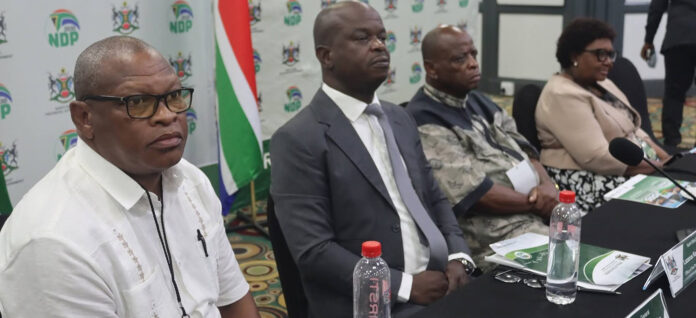
Municipalities and infrastructure are at the core of the North West government’s economic recovery plan, with Premier Lazarus Mokgosi highlighting the need for effective local government in fostering growth and drawing in investment.
During the launch of the Provincial Growth and Development Strategy (PGDS), Mokgosi said that municipalities were the main forces behind community development.
“Municipalities remain strategic hubs for the socio-economic development of our communities,” he said.
However, he acknowledged that many municipalities have struggled to fulfil their mandates, particularly in delivering basic services, a challenge the province now aims to confront directly. “The PGDS is unequivocal in its support towards municipalities to restore their administrative functionality.”
This restoration, he said, was essential in creating an environment where businesses can operate and expand.
“This would ensure that we create conducive conditions that would attract investments, enable businesses to thrive, and create jobs through adequate provision of basic services such as water, electricity, refuse removal, and road maintenance,” he said.
Mokgosi said the strategy links municipal performance directly to economic outcomes, recognising that failing infrastructure and weak governance can deter investment and limit growth.
To strengthen coordination across government, he said, the province will implement the strategy through a district-based approach.
“The implementation of this strategy will be driven at the provincial level through the District Development Model,” Mokgosi said.
Each district has been assigned specific economic priorities aligned with its strengths. He said in Bojanala, for example, the focus will be on industrialisation and tourism.
“Bojanala Platinum, identified to drive the economy through mineral beneficiation, industrialisation and tourism.”
Other districts will pursue tailored development pathways, reflecting the diversity of the provincial economy.
Beyond governance reforms, infrastructure investment is a central pillar of the strategy, particularly in road development.
“These efforts will be bolstered by an allocation of over point R5-billion towards road infrastructure projects in the province over the Medium-Term Expenditure Framework,” Mokgosi said.
- The North West government’s economic recovery plan centers on strengthening municipalities and infrastructure to drive growth and attract investment.
- Premier Lazarus Mokgosi emphasized the critical role of municipalities in community socio-economic development but acknowledged their struggles in delivering basic services.
- The Provincial Growth and Development Strategy (PGDS) aims to restore municipal administrative functionality to create conducive conditions for business operations and job creation.
- The strategy uses a district-based approach under the District Development Model, assigning tailored economic priorities to each district, such as industrialization and tourism in Bojanala.
- Infrastructure investment, especially in road development, is prioritized with over R5 billion allocated for road projects over the Medium-Term Expenditure Framework.


